
6 Key Advantages of FDA-Approved Tests for Drug Screening

TL;DR:
- FDA-approved drug tests undergo rigorous review ensuring accuracy, reliability, and regulatory compliance.
- They enable faster, easier testing with improved workflow and patient cooperation.
- Using FDA-approved tests reduces legal, audit, and reputational risks, offering long-term operational benefits.
Procurement officers and clinic administrators face a genuinely difficult challenge right now. The market for drug testing supplies has expanded rapidly, and not every product on a vendor’s shelf carries the same level of regulatory oversight. Pressure to control costs can pull organizations toward cheaper, less scrutinized alternatives, while rising liability concerns push in the opposite direction. Choosing tests that are FDA approved for Drug Screening is no longer just a checkbox exercise. It directly shapes patient safety outcomes, audit results, insurance reimbursement success, and the long-term credibility of your entire drug testing program.
Table of Contents
- FDA-approved vs. LDTs: What sets them apart?
- Advantage 1: Proven accuracy and reliability
- Advantage 2: Fast, user-friendly testing—improved efficiency
- Advantage 3: Lower risk through robust manufacturing and safety oversight
- Advantage 4: Acceptance, coverage, and smoother audits
- Our perspective: Why the real ROI of FDA-approved tests is underestimated
- Streamline your testing program with FDA-approved solutions
- Frequently asked questions
Key Takeaways
| Point | Details |
|---|---|
| Rigor and reliability | FDA-approved tests are validated for accuracy and consistency, minimizing false results. |
| Workflow efficiency | Rapid, less invasive FDA-cleared tests save time and boost satisfaction in clinical settings. |
| Lower risk profile | Quality system regulations and mandatory reporting help reduce post-market and legal hazards. |
| Smoother compliance | FDA-approved tests simplify insurance claims, audits, and regulatory reporting. |
| Long-term value | While sometimes more expensive up front, FDA-approved tests deliver lasting operational savings and protection. |
FDA-approved vs. LDTs: What sets them apart?
To make smart procurement choices, it is crucial to understand how FDA-approved tests differ from alternatives. The two main categories you will encounter are FDA-approved or FDA-cleared tests and Laboratory Developed Tests, commonly called LDTs.
FDA-approved tests go through rigorous premarket review before reaching your shelves. Manufacturers must demonstrate analytical validity, accuracy, precision, and clinical performance to a defined regulatory standard. The drug test FDA compliance pathway is demanding by design. It ensures that every production batch meets the same validated specifications.
LDTs, by contrast, are tests designed, manufactured, and used within a single laboratory. Historically, they fell under Clinical Laboratory Improvement Amendments (CLIA) oversight rather than full FDA device review. That regulatory gap is now closing. FDA-approved tests undergo rigorous premarket review ensuring analytical validity, accuracy, precision, and clinical performance, unlike LDTs regulated only under CLIA.
Regulatory oversight is not bureaucratic friction. It is the mechanism that transforms a chemical reaction into a trustworthy clinical decision.
Here is a side-by-side look at the key differences:
| Criteria | FDA-approved tests | Laboratory developed tests (LDTs) |
|---|---|---|
| Premarket review | Required, rigorous | Historically exempt |
| Analytical validation | Standardized, documented | Lab-dependent, variable |
| Insurance acceptance | Widely covered | Often denied or disputed |
| Legal defensibility | High | Variable, declining |
| Manufacturing oversight | Quality System regulations | CLIA standards only |
| Post-market reporting | Mandatory adverse event reporting | Limited requirements |
FDA-approved tests offer standardized, validated performance with insurance coverage and widespread acceptance, while LDTs, though useful for unmet clinical needs, are facing tightening oversight as the FDA phases out its former discretionary policy.
Key distinctions to keep in mind:
- FDA-approved tests have manufacturer accountability baked into every step
- LDTs carry institutional liability because the lab itself functions as the manufacturer
- Payers and courts increasingly favor FDA-regulated devices when disputes arise
- Audit trails are far more complete with FDA-approved products
Understanding this baseline is essential before evaluating any other advantage.
Advantage 1: Proven accuracy and reliability
With regulatory differences clear, see how this translates into meaningful accuracy advantages for your program.
Accuracy is the foundation of any drug testing program. A false positive can damage a patient’s reputation and employment status. A false negative can allow someone in a safety-critical role to remain in place when they should not be. Both outcomes carry legal, ethical, and financial consequences for your organization.
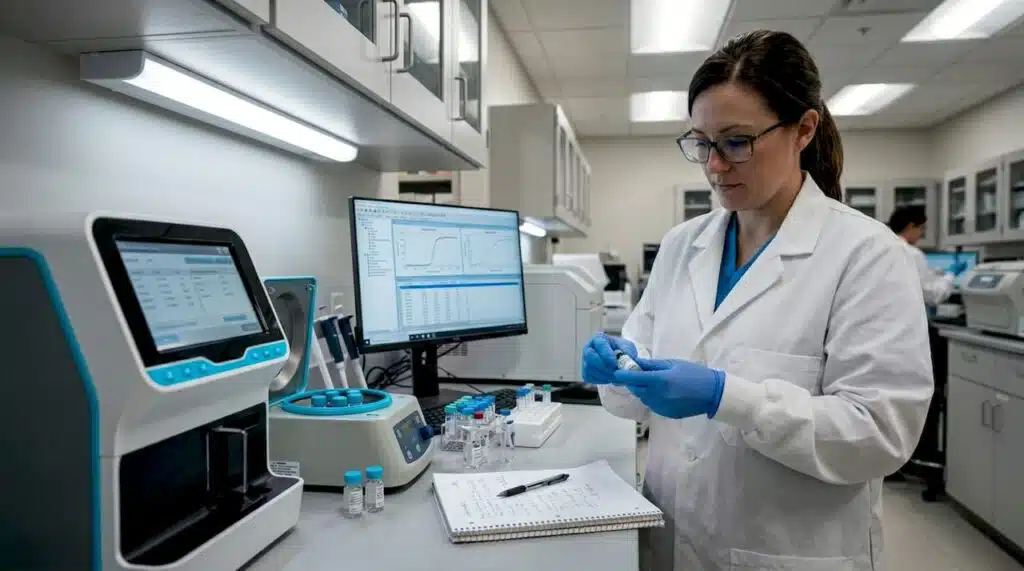
FDA premarket review mandates that manufacturers prove their tests perform consistently before a single unit ships. This is not a self-reported promise. It is a documented, auditable process that requires clinical performance data submitted directly to regulators.
Consider a high-profile example from another diagnostic category. The FDA-cleared Alzheimer’s blood test shows 91.7% positive agreement and 97.3% negative agreement versus PET and CSF gold standards. That level of validated performance is precisely what rigorous FDA review produces. The same principle applies to drug test kits. When the FDA mandates premarket demonstration of accuracy, what reaches your clinic is a product with a known, documented performance profile, not an estimate.
FDA-approved tests undergo rigorous premarket review to confirm accuracy and clinical performance at every panel level, whether you are screening for five substances or twelve.
Accuracy performance snapshot:
| Test type | Sensitivity (typical range) | Specificity (typical range) | False result risk |
|---|---|---|---|
| FDA-approved rapid tests | 97% to 99% | 96% to 99% | Very low |
| Non-FDA rapid tests | 85% to 94% | 84% to 92% | Moderate to high |
| CLIA-only LDTs | Variable | Variable | Inconsistent |
Benefits of validated accuracy for your program include:
- Reduced legal exposure when test results face challenge in court or arbitration
- Fewer retests, which saves both time and supply costs
- Higher staff confidence in result interpretation
- Stronger documentation during regulatory inspections
- Consistent performance across multiple lot numbers and shipments
When you source reliable drug test results from FDA-approved kits, you are not gambling on a product category. You are purchasing documented, repeatable performance.
Advantage 2: Fast, user-friendly testing—improved efficiency
Accuracy is critical, but speed and staff satisfaction also drive program success.
Point-of-care drug testing has transformed workflow in clinics and treatment centers. The ability to screen a patient and have a result before they leave the room is operationally transformative. It eliminates follow-up scheduling, reduces administrative burden, and allows clinical decisions to be made in real time.FDA-cleared point-of-care tests like the fentanyl urine test deliver results in 10 minutes and are less invasive than laboratory confirmation alternatives. That speed matters enormously at scale. If your clinic processes 40 to 80 drug screens per day, shaving even 15 minutes per patient creates hours of recovered capacity across your staff.
Efficiency gains your team will notice immediately:
- Immediate clinical decisions: providers can act on results during the same appointment
- Reduced patient wait times: no holding patients for pending lab results
- Lower administrative overhead: fewer lab requisitions, less follow-up documentation
- Staff simplicity: non-laboratory staff can operate CLIA-waived rapid tests with minimal training
- Streamlined electronic records: results can be documented in real time during the visit
- Faster throughput: more patients seen per shift without compromising care quality
Understanding rapid oral test benefits can also open up additional workflow options, particularly for programs where urine collection creates logistical challenges or privacy concerns.
Pro Tip: If your clinic runs high volumes of same-day admissions or pre-employment screens, prioritize FDA-cleared cups or panels with the broadest analyte coverage per test. Reviewing top rapid panel options before placing bulk orders helps you match panel configuration to your specific testing population, avoiding unnecessary analytes that add cost without clinical value.
The non-invasive nature of many FDA-cleared rapid tests also improves patient cooperation. Programs that report lower refusal rates consistently point to reduced collection complexity as a primary factor. When testing feels manageable for patients, compliance improves, and compliance directly affects the quality of your data.
Advantage 3: Lower risk through robust manufacturing and safety oversight
Beyond clinical performance, consider how oversight impacts your risk profile and organizational reputation.
Buying an FDA-approved test does not just get you a validated diagnostic. It brings an entire regulatory infrastructure that protects your organization before, during, and after testing occurs. This is where many procurement officers undervalue what they are actually purchasing.
FDA Quality System regulations require approved manufacturers to control every step of production. That includes raw material sourcing, component traceability, in-process quality checks, finished device testing, storage conditions, and post-market surveillance. When something goes wrong with a non-FDA-regulated product, your institution absorbs the consequences. When something goes wrong with an FDA-approved product, the regulatory framework has already built in accountability mechanisms.
Your organization’s risk does not end when a test delivers a result. It begins there. FDA oversight ensures that result is defensible from production floor to courtroom.
The four safeguards that matter most:
- Quality System controls: manufacturers must document and maintain procedures for every production stage, reducing lot-to-lot variability that causes inconsistent results
- Mandatory Medical Device Reporting (MDR): FDA mandates adverse event reporting, meaning clinics receive timely alerts about performance issues before they affect patient outcomes
- Device recalls and corrections: FDA-regulated manufacturers must execute formal recalls when safety signals emerge, giving your procurement team clear guidance on inventory decisions
- Labeling and traceability requirements: every approved device carries standardized labeling that supports chain of custody documentation and audit readiness
Staying current with 2026 drug testing trends also shows a clear shift toward regulatory alignment, with more payers, accreditation bodies, and government contracts explicitly requiring FDA-regulated testing products.
Pro Tip: Register your organization with the FDA’s MedWatch Safety Reporting Program. This free resource alerts you to safety communications, voluntary recalls, and corrective actions affecting the medical devices your clinic already uses. It is one of the simplest ways to turn FDA oversight into a proactive advantage for your team. Your CLIA-waived tests should all appear in the FDA device database, making verification straightforward before any new order.
Advantage 4: Acceptance, coverage, and smoother audits
One more compelling reason to choose FDA-approved tests: they bring practical administrative and financial benefits that compound over time.
Insurance coverage is one of the most immediate impacts. FDA-approved tests offer standardized, validated performance with insurance coverage and widespread acceptance, while LDTs face growing scrutiny from payers who question whether non-standardized tests meet reimbursement criteria. Denied claims on drug testing services represent direct revenue loss. Switching to FDA-approved devices removes one of the most common grounds for denial.
Legal defensibility also improves significantly. When a drug test result is challenged in an employment dispute, a custody case, or a criminal proceeding, the first question is often: was this test validated and approved for the intended use? An FDA-approved device has a documented answer. An LDT or non-approved rapid test creates ambiguity that opposing counsel will exploit.
Audit-friendly documentation advantages:
- Clear device labeling: FDA requirements mandate specific labeling that supports chain of custody and specimen integrity documentation
- Lot number traceability: approved devices carry trackable lot numbers that satisfy both internal compliance audits and external inspections
- Published performance data: reviewers can independently verify the test’s claimed specifications against FDA submission records
- Adverse event transparency: your facility can demonstrate awareness and response protocols tied to the FDA’s post-market surveillance system
- Accreditation alignment: Joint Commission, SAMHSA, and other bodies expect FDA-regulated tests in applicable settings
Understanding the full benefits of rapid drug kits in this context reveals that the value is not just clinical. It is operational, financial, and reputational.
Government agencies deserve particular attention here. Federal and state contracts increasingly specify FDA-approved or CLIA-waived tests as a baseline procurement requirement. Agencies that have historically used cheaper non-approved alternatives are discovering that contract renewals and grant compliance checks are forcing a transition anyway. Getting ahead of that shift protects your program’s continuity.
Our perspective: Why the real ROI of FDA-approved tests is underestimated
We talk with procurement officers regularly who are under real budget pressure. The instinct to compare line-item costs and choose the cheapest per-unit option is understandable. But it misses where the actual financial exposure lives.
The true cost of a drug testing program is not what you pay per cup. It is what you pay when something goes wrong. A single denied insurance claim on a hundred-dollar test costs more than the price difference between an approved and a non-approved kit. A failed regulatory inspection that triggers a corrective action plan costs more than an entire year of supply upgrades. One adverse event that could have been caught by better post-market surveillance but was not, because your vendor had no reporting obligations, can redefine your organization’s risk exposure for years.
FDA approval is not a marketing stamp. It is a signal that a manufacturer has subjected their product to independent scrutiny and passed. That matters more than most administrators realize until they are sitting across from an auditor or defending a result in legal proceedings.
The organizations that genuinely get this right treat their testing supplies the same way they treat their clinical staff credentials. They verify. They document. They choose the option with the most defensible regulatory foundation, not the lowest price tag.
We also see this play out in long-term supplier relationships. Facilities that invest in bulk drug testing best practices with FDA-approved products build institutional knowledge, audit trails, and supplier accountability that compound in value over time. That is the return on investment that never shows up on a per-unit price comparison but absolutely shows up when it matters.
Streamline your testing program with FDA-approved solutions
If this breakdown has clarified why regulatory standing belongs at the top of your procurement criteria, the logical next step is reviewing your current supply against those standards.
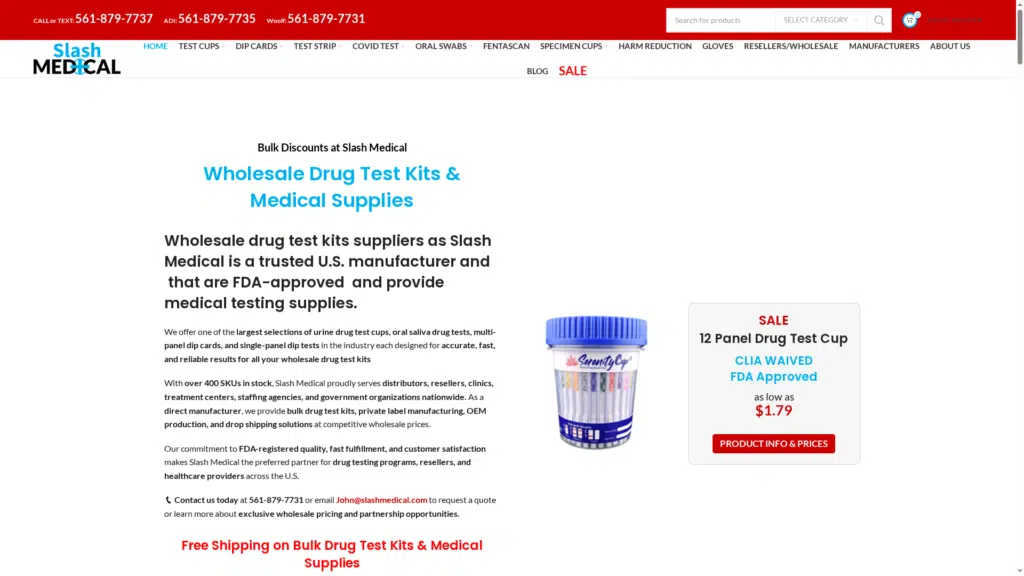
Slash Medical offers a complete catalog of FDA-approved, CLIA-waived drug testing products designed for the volume and complexity that clinics, treatment centers, and government agencies actually operate at. Whether you need FDA-approved testing strips for high-throughput screening or full-featured 12 panel FDA drug tests that cover the widest range of substances, the product line is built for institutional buyers who cannot afford performance uncertainty. Bulk pricing, private label options, and nationwide shipping make it straightforward to standardize your program without disrupting your existing workflow. Contact the team directly to discuss your volume requirements or request samples before committing to a full order.
Frequently asked questions
What makes a test FDA approved?
An FDA-approved test has passed strict premarket review for accuracy, precision, and clinical performance before it can be marketed. FDA-approved tests undergo rigorous premarket review confirming analytical validity and clinical performance at a documented standard.
Are FDA-approved tests required for all clinics?
FDA-approved or CLIA-waived tests are strongly preferred for compliance, though some labs may still use LDTs in special circumstances. The regulatory landscape is shifting, with FDA phasing out LDT discretion to align oversight across all diagnostic testing categories.
Do FDA-approved tests cost more than LDTs?
Upfront unit costs are sometimes higher, but reduced error risk, fewer denied insurance claims, and stronger audit outcomes typically produce net savings over the life of a program.
How quickly can FDA-cleared point-of-care tests deliver results?
FDA-cleared point-of-care tests can deliver results in as little as 10 minutes, making them practical for same-visit clinical decisions.
Why do insurers prefer FDA-approved tests?
FDA-approved tests offer standardized, validated performance with insurance coverage and widespread acceptance, reducing the grounds payers use to deny reimbursement claims tied to drug screening services.