
Forensic Drug Screening: Ensuring Compliance and Accuracy
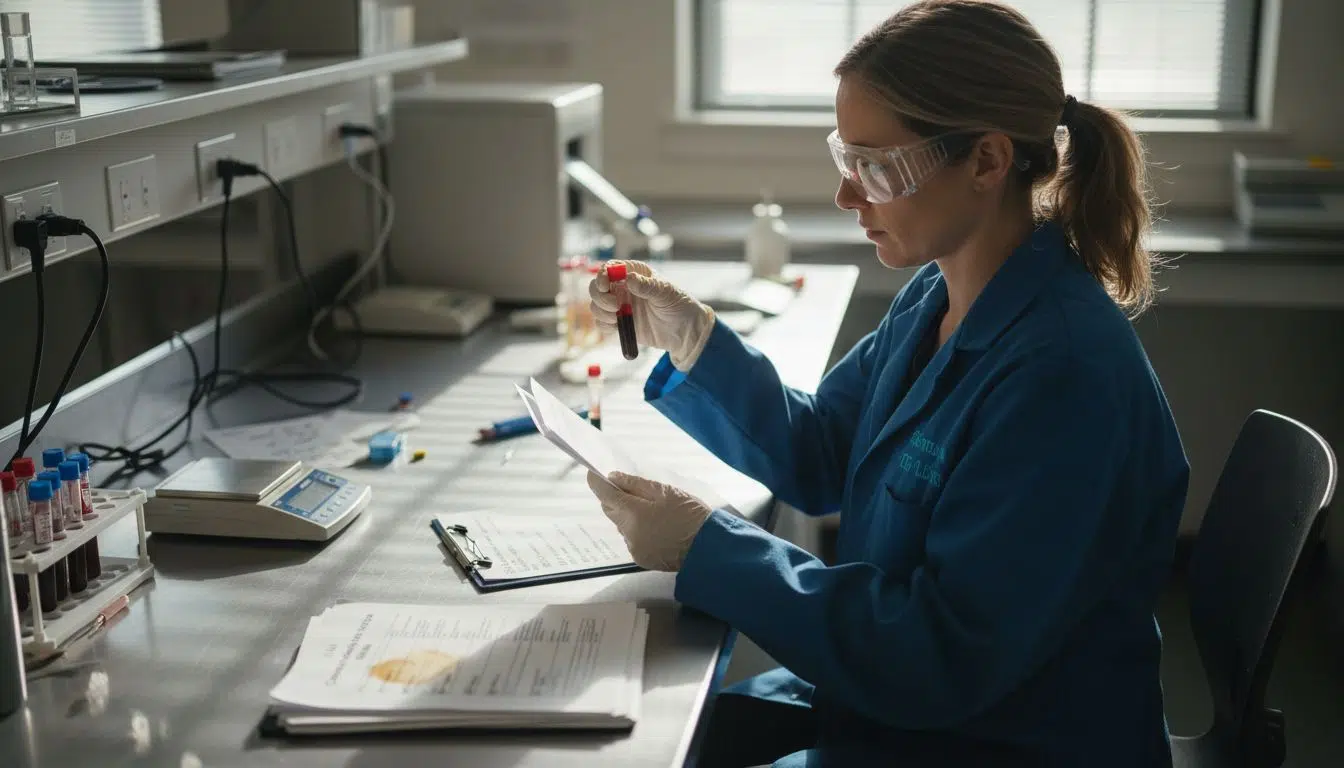
Choosing trustworthy forensic drug screening supplies can feel complicated when regulatory standards and technological advancements shift so quickly. Clinics and treatment centers worldwide rely on precise, validated testing methods to support compliance and keep patient care and legal reporting on track. This article clarifies scientifically rigorous forensic drug screening, revealing how up-to-date supplies and processes help your team meet global standards and maintain efficiency.
Table of Contents
- Forensic Drug Screening Defined and Debunked
- Types of Forensic Drug Screening Tests
- The Screening Process: Collection to Results
- Legal Standards and Compliance Obligations
- Procurement Challenges and Common Pitfalls
Key Takeaways
| Point | Details |
|---|---|
| Importance of Forensic Drug Screening | Forensic drug screening is vital for ensuring accurate identification and analysis of controlled substances in legal contexts. |
| Validation and Compliance | Rigorous validation processes and adherence to legal standards are essential for maintaining the integrity of screening results. |
| Technology Adaptation | Continuous investment in updated technologies is crucial due to the rapid evolution of illicit substances and detection methods. |
| Procurement Strategies | Effective procurement requires strategic planning to handle costs, equipment compatibility, and training needs while anticipating future challenges. |
Forensic Drug Screening Defined and Debunked
Forensic drug screening represents a sophisticated scientific process crucial to modern law enforcement and legal systems. This specialized analytical technique enables professionals to detect, identify, and verify the presence of controlled substances through rigorous methodological approaches.
At its core, forensic drug chemistry is an interdisciplinary field that merges multiple scientific domains to identify complex substance compositions. By integrating chemistry, pharmacology, and legal protocols, forensic experts can accurately analyze substances found at crime scenes, track drug distribution patterns, and provide critical evidence for criminal investigations.
Key components of forensic drug screening include:
- Precise substance identification
- Chemical composition analysis
- Detection of synthetic and designer drugs
- Validation of analytical methodologies
- Establishing legal-grade evidentiary standards
The validation process for forensic drug screening is exceptionally stringent. Scientific methodologies must undergo comprehensive verification to ensure accuracy, reliability, and legal defensibility. This means each testing protocol must demonstrate:
- Consistent performance across different environments
- Minimal false positive/negative rates
- Reproducible scientific standards
- Compliance with judicial requirements
Accuracy matters. False results can dramatically impact legal proceedings, potentially leading to wrongful prosecutions or overlooked criminal activities. Forensic drug screening serves as a critical safeguard in maintaining justice system integrity.
Pro Tip: Always verify the accreditation and validation standards of forensic drug screening facilities before accepting their analytical results.ey Takeaways
Types of Forensic Drug Screening Tests
Forensic drug screening encompasses a diverse range of analytical techniques designed to detect and identify controlled substances with scientific precision. Multiple screening methods exist to address various detection requirements across different professional environments.
Primary forensic drug screening techniques include:
- Handheld infrared spectroscopy
- Immunoassays
- Colorimetric spot tests
- Ion mobility spectrometry
- Mass spectrometry (considered the gold standard)
- Raman spectroscopy
Each technique offers unique advantages and limitations. Advanced forensic narcotics analysis now incorporates innovative approaches like miniaturized sensors and ambient ionization mass spectrometry, dramatically enhancing detection capabilities for both traditional and emerging psychoactive substances.
Here’s a comparison of major forensic drug screening techniques and their best use cases:
| Technique | Detection Strength | Ideal Application |
|---|---|---|
| Immunoassay | High sensitivity, fast | Initial screening, roadside |
| Mass Spectrometry | High specificity, precise | Laboratory confirmation |
| Handheld Infrared Spectroscopy | Portable, rapid ID | Field assessment |
| Raman Spectroscopy | Non-destructive, accurate | Direct sample analysis |
| Ion Mobility Spectrometry | Quick, detects trace levels | Security checkpoints |
| Colorimetric Spot Test | Simple, immediate response | Presumptive field test |
The selection of an appropriate screening method depends on several critical factors:
- Required sensitivity levels
- Specificity of detection
- Available technological resources
- Complexity of the testing environment
- Budget constraints
- Speed of results needed
Accuracy is paramount. Different testing methods provide varying levels of precision, with more advanced techniques offering higher reliability and comprehensive substance identification.
Pro Tip: Consult forensic experts to determine the most appropriate drug screening technique for your specific institutional requirements and operational constraints.
The Screening Process: Collection to Results
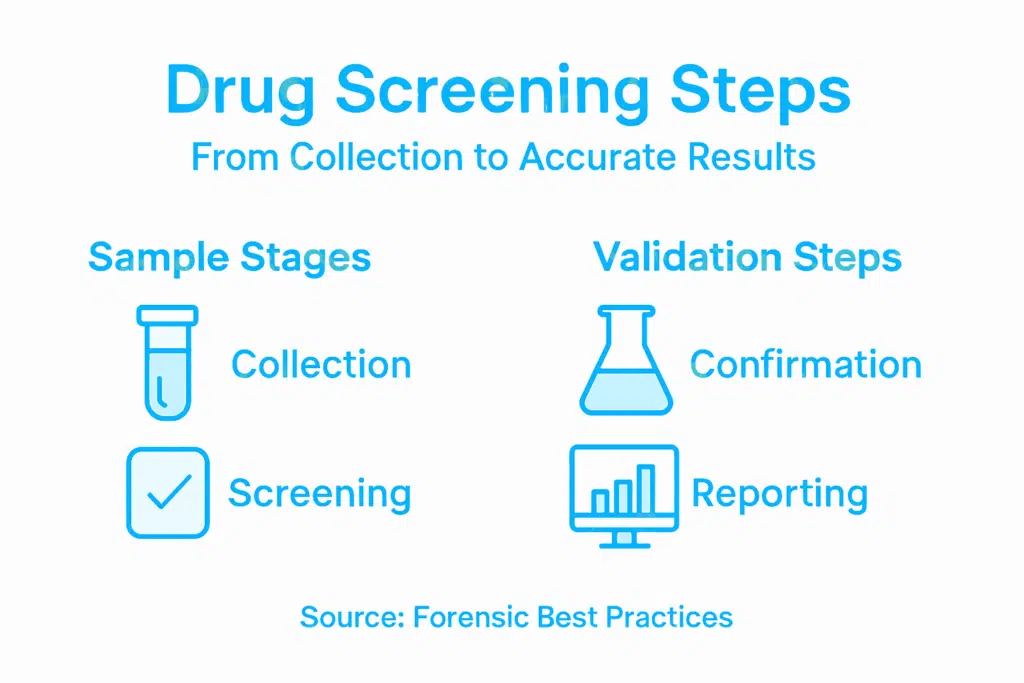
Forensic drug screening is a meticulously structured process that transforms biological samples into actionable scientific evidence. Forensic drug screening workflows involve multiple critical stages designed to ensure maximum accuracy and legal defensibility.
The comprehensive screening process typically follows these essential stages:
- Sample Collection: Obtaining biological specimens with strict chain of custody
- Initial Screening: Rapid immunoassay testing
- Confirmatory Testing: Advanced instrumental analysis
- Result Validation: Comprehensive verification protocols
- Reporting: Secure documentation of findings
Forensic drug analysis methods require rigorous attention to procedural details. Initial screening often utilizes enzyme immunoassays to quickly identify potential drug presence. Non-negative results then proceed to highly specific confirmatory tests like liquid chromatography-mass spectrometry (LC-MS), which provides precise substance quantification.
Critical considerations throughout the screening process include:
- Maintaining specimen integrity
- Following strict procedural protocols
- Preventing cross-contamination
- Documenting every step meticulously
- Ensuring technician qualifications
- Calibrating equipment regularly
Precision matters. Each stage of the forensic drug screening process requires unwavering attention to detail, with potential implications for legal, clinical, and investigative outcomes.
Pro Tip: Implement comprehensive staff training programs that emphasize procedural consistency and technical precision in forensic drug screening workflows.
Legal Standards and Compliance Obligations
Forensic drug screening operates within a complex framework of legal standards designed to ensure scientific integrity and judicial reliability. Legal standards for forensic activities establish rigorous requirements that forensic units must meet to maintain credibility and prevent potential errors.
Key compliance obligations encompass multiple critical domains:
- Methodological Validation: Proving scientific reliability
- Quality Assurance: Maintaining consistent performance
- Personnel Competence: Ensuring professional expertise
- Documentation: Comprehensive record-keeping
- Ethical Standards: Upholding legal and scientific integrity
International drug testing standards promote evidence-based prevention strategies and ethical enforcement practices. These frameworks help organizations align forensic practices with human rights principles, ensuring investigations remain scientifically credible and legally defensible.
Critical compliance requirements include:
- Obtaining proper accreditations
- Following approved testing methodologies
- Maintaining equipment calibration records
- Implementing rigorous staff training programs
- Documenting chain of custody
- Protecting individual privacy rights
Precision protects justice. Adherence to legal standards prevents wrongful convictions and maintains the integrity of forensic drug screening processes.
Pro Tip: Develop comprehensive internal audit protocols that regularly assess compliance with evolving legal and scientific standards.
Procurement Challenges and Common Pitfalls
Forensic drug screening procurement presents complex challenges that extend far beyond simple equipment acquisition. Emerging forensic screening challenges demand continuous technological adaptation and strategic investment.
Primary procurement challenges include:
- Rapid technological obsolescence
- High equipment costs
- Complex instrumentation requirements
- Limited training resources
- Emerging substance detection capabilities
Forensic laboratories frequently encounter significant obstacles when attempting to maintain cutting-edge detection capabilities. The landscape of illicit substances evolves continuously, requiring procurement strategies that prioritize flexibility, adaptability, and ongoing technological investment.
This table summarizes critical risks faced during forensic drug screening procurement and effective mitigation strategies:
| Procurement Challenge | Example Risk | Mitigation Strategy |
|---|---|---|
| Rapid tech obsolescence | Outdated instruments | Scheduled tech reviews |
| High equipment costs | Budget overruns | Multi-year budgeting |
| Limited training resources | Inadequate staff expertise | Ongoing external training |
| Complex instrumentation | Hard-to-use systems | Vendor-assisted onboarding |
| Emerging substances | Missed detection of new drugs | Regular library updates |
Critical considerations during procurement involve:
- Evaluating long-term technological compatibility
- Assessing vendor support and training programs
- Understanding emerging substance detection requirements
- Budgeting for continuous system upgrades
- Developing flexible procurement frameworks
- Maintaining comprehensive reference libraries
Technology moves fast. Procurement teams must anticipate future needs while managing current budgetary constraints, a delicate balance requiring strategic foresight and continuous learning.
Pro Tip: Develop a rolling three-year technology roadmap that anticipates emerging substance detection requirements and aligns procurement strategies accordingly.
Enhance Accuracy and Compliance with Reliable Forensic Drug Screening Supplies
Ensuring precise forensic drug screening demands validated testing methods, strict quality assurance, and dependable materials that withstand legal scrutiny. The challenges of maintaining accuracy, adhering to legal standards, and managing procurement complexities mean you need a trusted partner who can provide FDA-approved, CLIA waived drug test kits and supplies suited for forensic use. Slash Medical offers a broad selection of wholesale drug testing products designed to support your compliance goals, including urine and oral drug test cups, dip cards, and adulterant testing solutions.
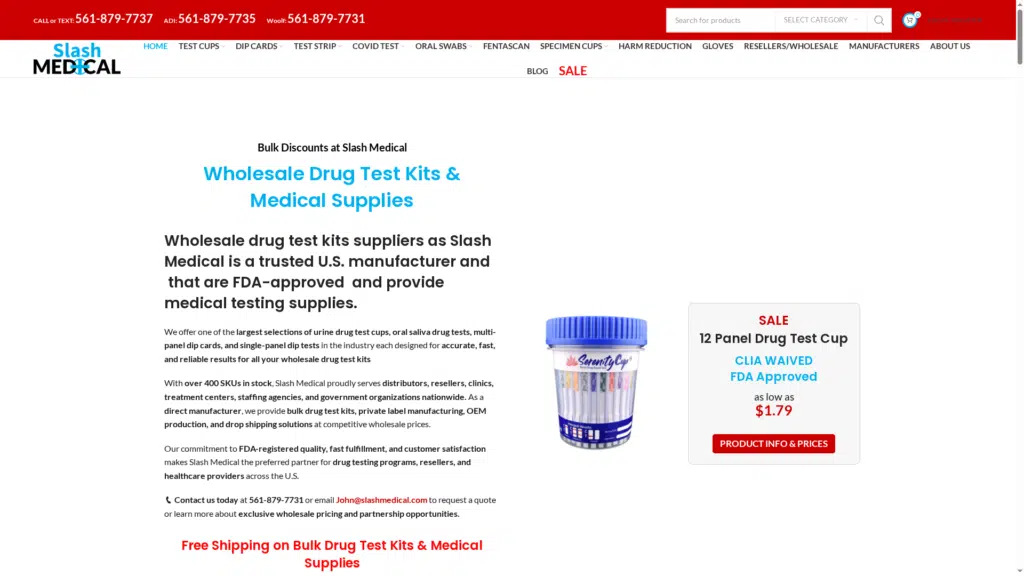
Take control of your forensic drug screening process today with Slash Medical. Benefit from bulk purchasing options, private label services, and expert support to keep your testing programs accurate and legally defensible. Explore our full range of testing supplies and streamline your ordering at Slash Medical. Discover how our quality products can support your legal compliance and reduce procurement risks by visiting Slash Medical’s homepage now.
Frequently Asked Questions
What is forensic drug screening?
Forensic drug screening is a scientific process used in law enforcement to detect, identify, and verify the presence of controlled substances using various analytical techniques.
What are the primary types of forensic drug screening techniques?
Common methods include immunoassays, mass spectrometry, handheld infrared spectroscopy, colorimetric spot tests, and ion mobility spectrometry, each with its advantages depending on the specific detection needs.
How does the forensic drug screening process ensure accuracy?
The process includes rigorous stages such as sample collection, initial screening, confirmatory testing, result validation, and reporting, all designed to maintain high precision and legal defensibility.
What are the legal standards for forensic drug screening compliance?
Legal standards require methodological validation, quality assurance, proper documentation, and ensuring personnel competence to uphold the integrity and reliability of forensic drug screening processes.