
Regulatory Compliance in Drug Testing: Risks and Realities

Staying compliant with evolving federal drug testing standards can feel like a high-stakes puzzle for American clinics and treatment centers. With regulations from the Department of Transportation and Federal Motor Carrier Safety Administration guiding every stage from specimen collection to result reporting, even a single misstep puts both patient safety and facility credentials at risk. This article clarifies the essentials of regulatory compliance in drug testing, helping your team select supplies that support both legal requirements and efficient operations.
Table of Contents
- Defining Regulatory Compliance In Drug Testing
- Types Of Drug Tests And Regulatory Standards
- Federal And State Laws Shaping Compliance
- Certification And Documentation Requirements For Labs
- Common Compliance Challenges And Legal Risks
Key Takeaways
| Point | Details |
|---|---|
| Regulatory Compliance Framework | Adhering to federal guidelines is essential for accurate and fair drug testing practices. Organizations must understand various regulatory standards, including those set by the Department of Transportation. |
| Types of Drug Tests | Employers should utilize a range of drug testing methods, each with specific compliance requirements to ensure workplace safety and legal accountability. |
| Legal Landscape | Navigating the complex intersection of federal and state laws is crucial, especially concerning cannabis regulations that vary significantly by location. |
| Documentation and Certification | Laboratories must maintain rigorous certification and documentation practices to ensure compliance and the integrity of drug testing processes. |
Defining Regulatory Compliance in Drug Testing
Regulatory compliance in drug testing represents a complex framework of legal, procedural, and ethical standards designed to ensure accurate, fair, and consistent workplace screening practices. At its core, compliance means adhering to precise federal guidelines that govern every aspect of drug testing, from specimen collection to result reporting.
The Department of Transportation (DOT) establishes comprehensive standards that define regulatory compliance across multiple dimensions. These standards outline critical requirements for transportation workplace drug testing procedures, including:
- Specific testing protocols for safety-sensitive employees
- Mandated testing scenarios (pre-employment, random, post-accident)
- Confidentiality requirements for test results
- Procedures for specimen collection and validation
- Clear roles and responsibilities for employers and testing agents
Comprehensive regulatory compliance requires organizations to understand and implement a structured approach that goes beyond simple checklist completion. It demands a systematic commitment to maintaining workplace safety, protecting employee rights, and following federally mandated testing protocols.
Key components of robust drug testing regulatory compliance include:
- Understanding specific federal regulations
- Implementing standardized testing procedures
- Maintaining strict documentation protocols
- Protecting employee privacy rights
- Ensuring consistent application of testing standards
Regulatory compliance is not just about following rules – it’s about creating a safe, transparent, and fair workplace environment.
Workplace drug testing operates within a nuanced legal landscape that requires continuous education and adaptation. Organizations must stay current with evolving DOT drug testing regulations to maintain effective screening programs.
Pro tip: Conduct annual training sessions to ensure your team understands the latest regulatory requirements and testing procedures.
Types of Drug Tests and Regulatory Standards
Workplace drug testing involves multiple testing methodologies, each with unique regulatory standards and specific applications across different industries. The most common types of drug tests are designed to detect substance use while maintaining strict compliance with federal guidelines and protecting employee privacy.
The primary types of drug tests regulated by federal agencies include:
- Urine Drug Tests: The most prevalent method, used extensively in workplace screening
- Blood tests for precise substance concentration measurements
- Oral fluid tests for recent substance detection
- Hair follicle tests for long-term substance use history
- Breath alcohol tests for immediate impairment assessment
Regulatory standards mandate specific protocols for each testing method, ensuring accuracy, reliability, and fairness. The Federal Motor Carrier Safety Administration (FMCSA) outlines comprehensive testing requirements that include:
Here’s a summary of major drug test types and their best-use scenarios:
| Test Type | Ideal Use Case | Key Compliance Concern |
|---|---|---|
| Urine | Routine workplace screening | Safeguarding sample integrity |
| Blood | Confirming impairment | Strict chain of custody |
| Oral Fluid | Recent use detection | Proper collection timing |
| Hair Follicle | Long-term history checks | Ensuring privacy during collection |
| Breath Alcohol | On-site impairment checks | Device calibration and accuracy |
- Pre-employment screening procedures
- Random testing protocols
- Post-accident testing guidelines
- Reasonable suspicion testing criteria
- Return-to-duty testing requirements
Effective drug testing goes beyond simple detection – it requires a systematic approach that balances workplace safety with individual rights.
Each testing method must adhere to stringent guidelines established by agencies like SAMHSA and DOT. These regulations specify precise requirements for:
- Laboratory certification
- Specimen collection procedures
- Chain of custody documentation
- Confirmation testing protocols
- Result reporting standards
Regulatory compliance in drug testing is a dynamic process that requires continuous adaptation to evolving federal guidelines and technological advancements. Organizations must stay informed about drug and alcohol testing program regulations to maintain effective and legally compliant screening processes.
Pro tip: Develop a comprehensive understanding of federal testing regulations and regularly update your organization’s drug testing protocols to ensure ongoing compliance.
Federal and State Laws Shaping Compliance
Drug testing regulations represent a complex legal landscape where federal mandates frequently intersect with varying state-level requirements. Drug testing policies create intricate legal challenges that demand careful navigation by employers and compliance professionals.
Federal laws establishing core drug testing standards include:
- Drug-Free Workplace Act: Mandates drug-free environments for federal contractors
- Department of Transportation (DOT) Regulations: Comprehensive testing requirements for safety-sensitive positions
- Americans with Disabilities Act (ADA): Provides protections for employees with medical conditions
- Controlled Substances Act: Defines legal parameters for drug classifications
State-level variations introduce significant complexity to drug testing compliance. Key considerations include:
- Cannabis legalization differences
- Employee privacy protections
- Medical marijuana accommodation requirements
- Limitations on pre-employment testing
- Restrictions on disciplinary actions
Legal compliance demands more than following a checklist – it requires understanding the nuanced interplay between federal and state regulations.
Regulatory frameworks must account for multiple legal dimensions. Organizations need sophisticated strategies to manage workplace drug testing resources while maintaining legal integrity.
The primary challenge lies in reconciling conflicting regulations. Federal law continues to classify cannabis as illegal, while numerous states have legalized its medical or recreational use. This creates a complex compliance environment where employers must carefully balance legal obligations, workplace safety, and employee rights.
The table below contrasts federal and state compliance factors:
| Compliance Area | Federal Focus | State Variations |
|---|---|---|
| Cannabis Policy | Always prohibited | Legalized in some states |
| Employee Privacy | General guidelines | Protections vary widely |
| Testing Triggers | Clearly defined scenarios | Some limits or bans apply |
| Medical Marijuana | Not recognized | May require accommodation |
Pro tip: Consult with legal counsel specializing in employment law to develop a comprehensive drug testing policy that addresses both federal and state regulatory requirements.
Certification and Documentation Requirements for Labs
Laboratory certification represents a critical component of reliable drug testing, ensuring that testing facilities meet rigorous federal standards for accuracy, integrity, and legal defensibility. National Laboratory Certification Program guidelines establish comprehensive requirements that labs must satisfy to conduct federally regulated drug tests.
Key certification requirements for drug testing laboratories include:
- Compliance with Department of Health and Human Services (HHS) standards
- Maintenance of strict chain-of-custody documentation
- Regular proficiency testing and external audits
- Implementation of approved testing methodologies
- Comprehensive quality control protocols
- Secure specimen handling procedures
The certification process involves multiple critical components:
- Initial application and comprehensive review
- Detailed facility infrastructure assessment
- Technical competency evaluation
- Ongoing performance monitoring
- Periodic recertification requirements
Certification is not a one-time achievement, but a continuous commitment to maintaining the highest standards of scientific accuracy and legal compliance.
Instrumented Initial Testing Facilities (IITFs) must demonstrate exceptional capabilities to manage workplace drug testing resources. These facilities undergo stringent evaluation to ensure they can reliably process and validate drug test specimens.
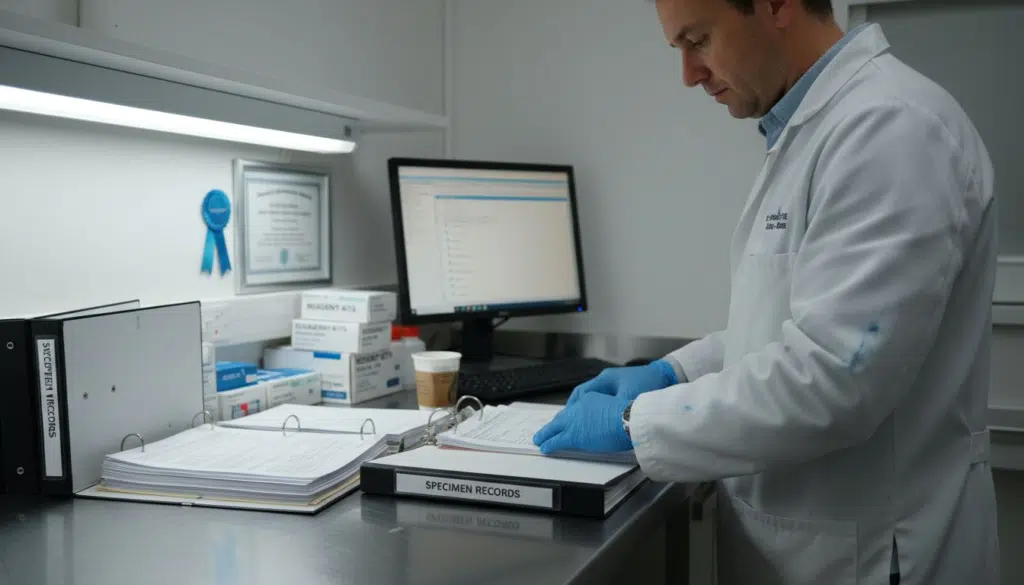
Documentation requirements are equally demanding. Labs must maintain meticulous records that can withstand potential legal scrutiny, including comprehensive logs of specimen collection, transportation, testing procedures, and results verification. Any breakdown in this documentation chain can invalidate test results and compromise an organization’s entire drug testing program.
Pro tip: Implement a robust internal audit system that continuously monitors documentation practices and ensures compliance with certification requirements.
Common Compliance Challenges and Legal Risks
Drug testing compliance presents a minefield of legal complexities that can expose organizations to significant financial and reputational risks. Drug testing policies create substantial legal challenges for employers navigating an increasingly intricate regulatory landscape.
Primary compliance challenges include:
- Conflicting federal and state cannabis regulations
- Protecting employee privacy rights
- Maintaining consistent testing protocols
- Avoiding discriminatory testing practices
- Managing medical marijuana accommodations
- Ensuring accurate documentation
Key legal risks organizations must carefully manage:
- Potential discrimination lawsuits
- Wrongful termination claims
- Privacy violation penalties
- Regulatory enforcement actions
- Reputational damage from noncompliance
Successful compliance requires a proactive approach that anticipates legal challenges before they emerge.
Regulatory enforcement mechanisms are increasingly sophisticated, with FDA compliance reports highlighting the critical importance of meticulous documentation and adherence to testing protocols. Organizations must develop comprehensive strategies that balance workplace safety with robust legal protections.
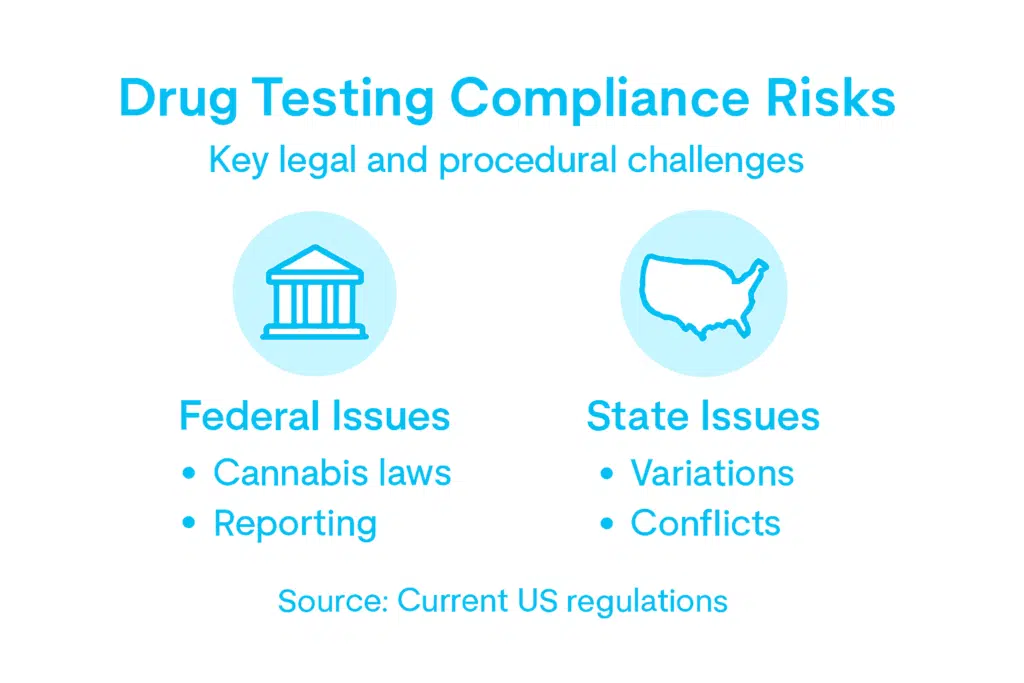
The most significant compliance challenge stems from the complex interplay between federal and state regulations. For instance, cannabis remains illegal at the federal level, while numerous states have legalized medical or recreational use. This creates a nuanced legal environment where employers must carefully craft policies that protect both organizational interests and employee rights.
Pro tip: Develop a flexible drug testing policy that can be quickly adjusted to accommodate evolving legal requirements and emerging regulatory guidance.
Ensure Regulatory Compliance with Trusted Testing Supplies from Slash Medical
Managing regulatory compliance in drug testing is complex and critical for every organization focused on workplace safety and legal integrity. You must navigate federal and state guidelines, maintain accurate documentation, and provide reliable testing methods that protect employee rights while reducing legal risks. Key challenges like adhering to precise testing protocols, maintaining chain of custody, and managing diverse test types demand trusted partners who understand these intricate demands.

Slash Medical offers over 400 FDA-approved, CLIA-waived drug testing supplies designed to support your compliance efforts effectively. From urine and oral drug test cups to adulterant test strips, our products meet rigorous standards so you can implement consistent screening protocols with confidence. Explore our wholesale drug testing kits and benefit from bulk pricing, private label options, and nationwide shipping tailored for clinics, treatment centers, staffing agencies, and government organizations. Visit Slash Medical now to strengthen your drug testing program and reduce legal exposure with dependable, cost-effective solutions.
Frequently Asked Questions
What is regulatory compliance in drug testing?
Regulatory compliance in drug testing refers to the adherence to legal, procedural, and ethical standards set by federal guidelines to ensure that workplace drug screening practices are accurate, fair, and consistent.
What are the main types of drug tests used in the workplace?
The most common types of drug tests include urine tests, blood tests, oral fluid tests, hair follicle tests, and breath alcohol tests. Each has specific applications and regulatory standards governing their use.
What are the key components of drug testing regulatory compliance?
Key components include understanding federal regulations, implementing standardized testing procedures, maintaining documentation protocols, protecting employee privacy, and ensuring consistent application of testing standards.
What legal risks are associated with drug testing compliance?
Legal risks can include discrimination lawsuits, wrongful termination claims, privacy violation penalties, regulatory enforcement actions, and reputational damage resulting from noncompliance.