
What Is Pre-Employment Drug Screening and Why Staffing Agencies Rely on It

Over eighty-four percent of American employers now require pre-employment drug screening to protect their businesses and staff. For HR managers in staffing agencies, balancing thorough testing with legal compliance often feels like walking a tightrope. This overview unpacks the realities and myths behind drug screening, equipping you to make informed decisions that safeguard your agency from hiring risks and costly mistakes.
Table of Contents
- Pre-employment Drug Screening Defined And Debunked
- Common Drug Test Types And Detection Windows
- How The Screening Process Works Step-by-step
- Legal Compliance And Employer Obligations
- Mitigating Risks And Avoiding Costly Mistakes
Key Takeaways
| Point | Details |
|---|---|
| Pre-employment drug screening | Critical for managing workplace safety, productivity, and liability. Employers use various testing methods to detect unlawful substance use before hiring candidates. |
| Testing methods vary significantly | Options include urine, blood, hair, oral fluid, and sweat patch tests, each with distinct detection windows and invasiveness levels. Employers should choose methods based on specific needs and regulations. |
| Legal compliance is essential | Employers must establish clear, transparent drug testing policies that comply with federal and state laws, safeguarding candidate privacy and preventing discrimination claims. |
| Risk mitigation strategies | Developing robust, standardized drug testing protocols and conducting regular staff training minimizes legal and financial risks associated with improper screening practices. |
Pre-employment drug screening defined and debunked
Pre-employment drug screening is a systematic process where potential job candidates undergo testing to detect recent drug use before being hired. Employers utilize these screenings as a critical risk management strategy, designed to ensure workplace safety, maintain productivity, and reduce potential liability. When employers conduct these tests, they typically analyze biological samples to identify the presence of illegal or controlled substances that might compromise job performance or workplace security.
Multiple testing methods exist for pre-employment drug screening, each with unique detection capabilities and timeframes. Biological samples like urine, blood, and hair can reveal traces of substances including amphetamines, cocaine, marijuana, opioids, and PCP. While urine tests are most common, hair follicle tests can detect drug use over a longer historical period, sometimes up to 90 days prior to testing. Blood tests provide the most immediate and precise snapshot of current substance presence.
Legal frameworks surrounding pre-employment drug screening vary across industries and jurisdictions. Some federal regulations mandate drug testing for specific safety-sensitive roles like transportation, aviation, and defense contracting. Private sector employers generally have discretion in implementing drug screening policies, though they must navigate complex legal requirements to avoid discrimination or privacy violations. Most reputable organizations develop clear, transparent drug testing protocols that protect both employer interests and employee rights.
Pro tip: When developing a drug screening program, consult legal counsel to ensure your testing protocols comply with state and federal regulations while maintaining fairness and candidate privacy.
Common drug test types and detection windows
Employers have several drug testing methods at their disposal, each with unique characteristics and detection capabilities. Workplace drug testing methods typically include urine, blood, hair, oral fluid, and sweat patch tests. These approaches vary in their invasiveness, accuracy, detection windows, and ability to identify specific substances, allowing organizations to select the most appropriate screening technique for their needs.
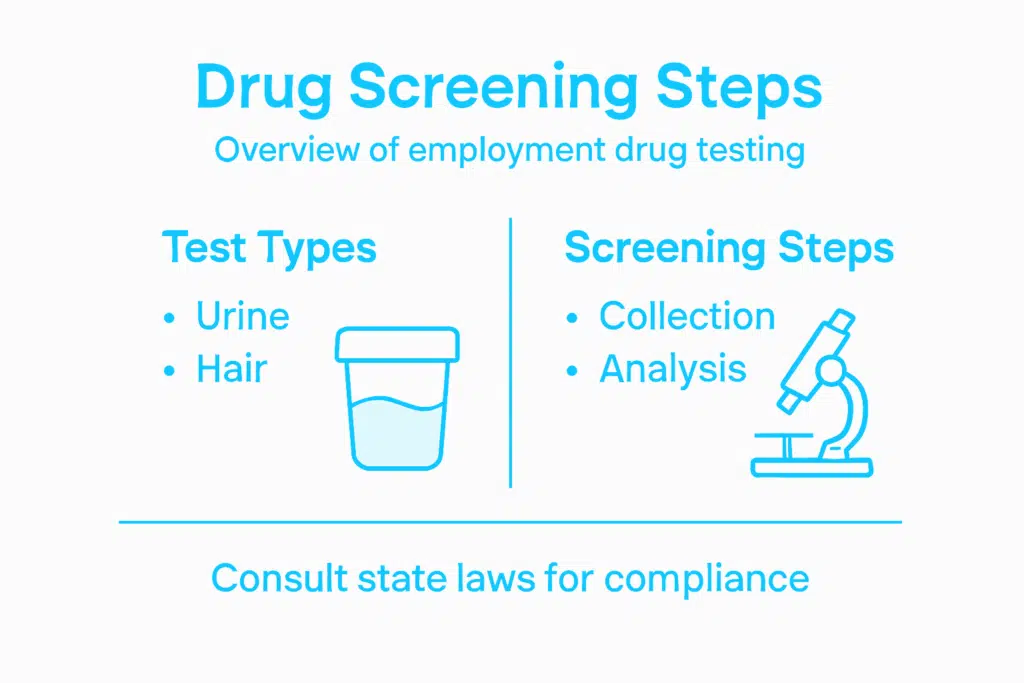
Urine tests remain the most common pre-employment screening method, offering a balance between affordability and effectiveness. They can typically detect drug use within the past few days to weeks, depending on the specific substance and individual metabolic factors. Hair follicle testing provides the longest detection window, potentially revealing drug use up to 90 days prior to testing, making it particularly useful for identifying long-term or habitual substance use patterns. Blood tests offer the most immediate and precise snapshot of current drug presence, though they are more invasive and typically more expensive.
Detection windows differ significantly across testing methods and substances. Marijuana, for instance, might be detectable in urine for 3-30 days in occasional users, while heavy users could test positive for up to 90 days. Cocaine typically appears in urine tests for 2-10 days, whereas hair tests can detect usage for much longer periods. Amphetamines and methamphetamines usually remain detectable for 2-5 days in urine, with variations based on individual metabolism and frequency of use.
Pro tip: Consider consulting with a medical professional or drug testing specialist to determine the most appropriate testing method for your specific workplace requirements and industry regulations.
Here is a comparison of common drug testing methods and their practical workplace implications:
| Test Method | Typical Detection Window | Invasiveness Level | Best Use Case |
|---|---|---|---|
| Urine | 2-30 days | Moderate | Routine pre-hire screening |
| Blood | Hours to 2 days | High | Confirming current impairment |
| Hair | Up to 90 days | Low (non-invasive) | Detecting long-term use patterns |
| Oral Fluid | 1-48 hours | Low | Immediate post-incident testing |
| Sweat Patch | 7-14 days | Moderate | Ongoing monitoring requirements |
How the screening process works step-by-step
The pre-employment drug screening process follows a structured, systematic approach designed to protect both employer interests and candidate rights. Screening procedures typically begin with collecting comprehensive information to assess candidate eligibility and suitability for employment. This initial phase involves reviewing job application materials, conducting preliminary interviews, and preparing candidates for the upcoming drug testing protocol.
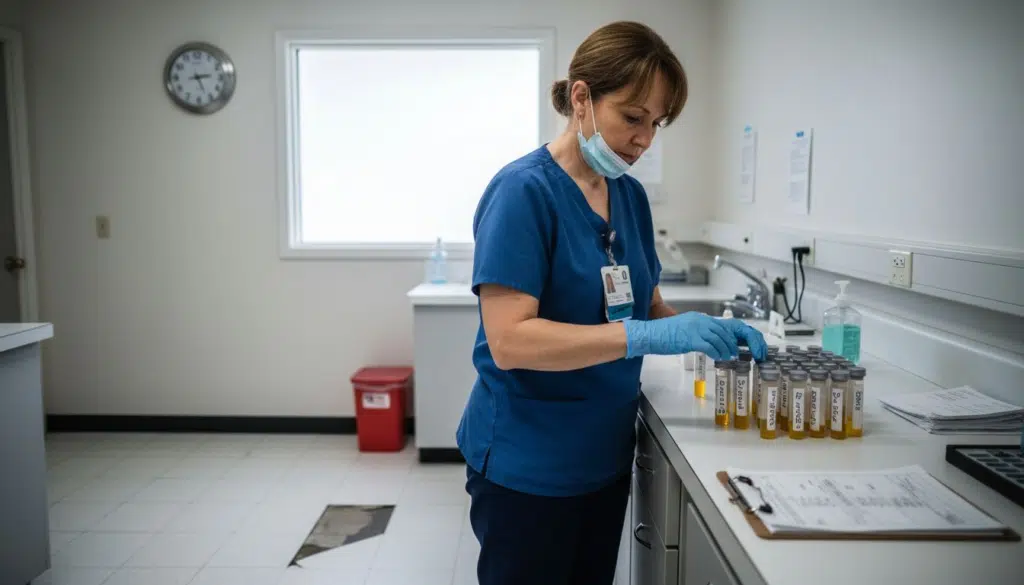
Once a candidate is selected for drug screening, they receive detailed instructions about the testing process. This typically involves scheduling an appointment at an approved testing facility, presenting valid identification, and understanding consent requirements. The candidate will be asked to provide a biological sample (usually urine, but potentially hair, blood, or oral fluid) under carefully controlled conditions that ensure accuracy and prevent potential tampering. Laboratory technicians follow strict chain-of-custody protocols to maintain sample integrity, documenting every step from collection through analysis.
After sample collection, the specimen undergoes comprehensive testing using advanced screening methodologies. Sophisticated laboratory equipment analyzes the sample for specific drug metabolites, checking for the presence of substances like marijuana, cocaine, amphetamines, opioids, and other controlled substances. Most drug tests utilize multi-panel screening techniques that can detect multiple substances simultaneously. Employers receive a confidential report indicating whether the candidate passed or failed the drug screening, with positive results typically requiring confirmation through more precise follow-up testing to eliminate potential false positives.
Pro tip: Develop a consistent, transparent drug screening policy that clearly communicates expectations to candidates and ensures fair, standardized testing procedures across all potential hires.
Legal compliance and employer obligations
Employers must navigate a complex legal landscape when implementing pre-employment drug screening programs. Employment drug testing regulations require organizations to develop comprehensive, legally defensible policies that protect both employer interests and employee rights. These policies must carefully balance the need for workplace safety with constitutional protections against discrimination and invasion of privacy.
The legal framework surrounding drug testing involves multiple layers of federal and state regulations. Key legislation like the Drug-Free Workplace Act mandates specific requirements for federal contractors, while the Americans with Disabilities Act provides critical protections for individuals with past substance use disorders. Employers must ensure their drug screening protocols are consistently applied, meaning they cannot selectively test candidates based on race, gender, age, or other protected characteristics. Written drug testing policies must be transparent, clearly communicating the substances being tested, the testing methodology, and potential consequences of positive results.
Confidentiality represents a critical legal consideration in pre-employment drug screening. Medical information obtained through drug tests is considered highly sensitive and protected health information. Employers must implement strict protocols to maintain the privacy of test results, limiting access to only those with a legitimate business need. This typically involves secure storage of medical records, controlled access systems, and clear guidelines about how and when test results can be shared. Failure to protect candidate medical information can result in significant legal liability, including potential lawsuits for privacy violations and regulatory penalties.
Pro tip: Consult with legal counsel annually to review and update your drug testing policies, ensuring ongoing compliance with evolving federal, state, and local regulations.
The following table summarizes employer obligations for legal and risk management compliance:
| Obligation | Purpose | Key Risk if Ignored |
|---|---|---|
| Written Policy | Ensure clear expectations and standards | Disputes and inconsistent results |
| Confidentiality Measures | Protect candidate privacy and legal rights | Lawsuits or regulatory penalties |
| Consistent Application | Prevent discrimination claims | Legal liability and reputational harm |
| Regular Legal Review | Adapts policy to changing laws | Non-compliance, fines, litigation |
Mitigating risks and avoiding costly mistakes
Staffing agencies must develop comprehensive strategies to minimize drug testing risks through proactive management and strategic planning. The potential financial and legal consequences of improper drug screening can be substantial, making risk mitigation a critical priority for organizations. Implementing a robust, well-documented screening process helps protect against potential lawsuits, regulatory penalties, and reputational damage that can arise from inconsistent or discriminatory testing practices.
Risk mitigation begins with developing clear, consistent drug testing protocols that are applied uniformly across all candidate pools. This includes creating detailed written policies that specify exactly when and how drug tests will be conducted, the substances being screened, and the potential consequences of positive results. Organizations should invest in comprehensive staff training to ensure those involved in the screening process understand legal requirements, maintain confidentiality, and apply testing protocols consistently. Partnering with accredited laboratories that follow strict chain-of-custody procedures and maintain high standards of testing accuracy further reduces organizational risk.
Technological and procedural safeguards play a crucial role in minimizing potential mistakes. Implementing advanced verification processes, such as confirmatory testing for initial positive results, helps prevent false positives that could unfairly impact candidate employment opportunities. Staffing agencies should also develop clear appeal processes that allow candidates to contest test results, provide additional context, or explain potential medical exceptions. Regular external audits of drug testing procedures, coupled with ongoing legal counsel review, can help identify potential vulnerabilities and ensure continued compliance with evolving regulatory requirements.
Pro tip: Develop a comprehensive risk management checklist that includes regular policy reviews, staff training updates, and periodic assessments of your drug testing protocols to stay ahead of potential legal and operational challenges.
Simplify Your Pre-Employment Drug Screening with Slash Medical
Navigating the complexities of pre-employment drug screening requires reliable, accurate, and cost-effective testing supplies. Staffing agencies and employers face challenges such as ensuring consistent test quality, maintaining compliance with legal requirements, and managing the risks of false positives or candidate privacy issues. With the need for various drug test types—from urine cups to oral fluid tests—finding a trusted supplier that can deliver a wide range of high-quality products is critical to your success.
At Slash Medical, we specialize in supporting organizations just like yours with over 400 FDA-approved and CLIA waived medical testing products, including a broad selection of drug test kits tailored for pre-employment screening programs. Whether you require bulk ordering, private label manufacturing, or dependable nationwide shipping, we are your direct manufacturer and distributor partner. Let us help you seamlessly implement consistent, legally compliant drug testing protocols that protect your candidates and reduce your organizational risk.
Discover how easy it is to enhance your hiring safety measures today with Slash Medical.
Start optimizing your drug screening program now by browsing our extensive catalog of drug test kits and medical supplies at https://slashmedical.com. Take control of your pre-employment process with confidence and reliability.
Frequently Asked Questions
What is pre-employment drug screening?
Pre-employment drug screening is a testing process where potential job candidates are evaluated for recent drug use before being hired. Employers use these tests to ensure workplace safety and maintain productivity.
Why do staffing agencies rely on pre-employment drug screening?
Staffing agencies rely on pre-employment drug screening to reduce liability, ensure safety in the workplace, and identify candidates who may pose risks due to substance use. This helps protect their clients and maintain a reliable workforce.
What are the common types of drug tests used in pre-employment screenings?
Common types of drug tests include urine tests, blood tests, hair follicle tests, oral fluid tests, and sweat patch tests. Each method varies in detection windows, invasiveness, and substance identification capabilities.
How does the pre-employment drug screening process work?
The screening process generally involves collecting information from candidates, directing them to an approved testing facility to provide a biological sample, and then conducting laboratory analyses for specific drug metabolites. Results are reported confidentially to the employer.