
How to Start a Drug Testing Supply Business Successfully

Finding the right pathway to start a drug testing supply business can feel complex for distributors and resellers in North America, especially when strict federal guidelines and state-specific regulations come into play. The opportunity is clear as the market grows in response to increasing workplace safety demands, but aligning your business with Department of Transportation compliance and certified products is the key to success. This guide walks through crucial procurement steps and compliance requirements so you can build a credible operation ready to meet market needs.
Table of Contents
- Step 1: Assess Market Needs And Legal Requirements
- Step 2: Secure Reliable Wholesale Suppliers
- Step 3: Establish Business Structure And Licensing
- Step 4: Develop Branding And Private Label Solutions
- Step 5: Launch Sales Channels And Verify Compliance
Quick Summary
| Key Insight | Explanation |
|---|---|
| 1. Conduct In-Depth Market Research | Understand industry regulations and market trends for effective drug testing supply business strategy. |
| 2. Choose Reliable Wholesale Suppliers | Establish partnerships with compliant suppliers to ensure high-quality testing products and service reliability. |
| 3. Select Appropriate Business Structure | Carefully evaluate business types and licensing to protect interests and comply with regulations effectively. |
| 4. Build a Strong Branding Strategy | Develop a distinctive brand that emphasizes reliability and professionalism to stand out in the market. |
| 5. Develop Effective Sales Channels | Create robust sales pathways while ensuring adherence to compliance and regulatory standards for transactions. |
Step 1: Assess Market Needs and Legal Requirements
Launching a drug testing supply business requires strategic market research and comprehensive understanding of complex legal landscapes. Your success depends on accurately assessing both market demands and regulatory requirements across different industries and jurisdictions.
To begin, you’ll want to thoroughly investigate the drug testing market trends which reveal critical insights about industry growth and opportunities. Key research areas should include:
- Workplace drug screening regulations
- Transportation industry testing requirements
- Healthcare compliance standards
- State and federal legal mandates
Specifically, businesses must understand federal regulations like Department of Transportation (DOT) guidelines and compliance with industry standards. This means knowing the specific legal frameworks governing drug testing procedures, including:
- Specimen collection protocols
- Confidentiality requirements
- Accuracy verification processes
- Training certification standards
By meticulously researching these regulatory environments, you’ll position your business to serve multiple sectors effectively. Different industries – from transportation to healthcare – have unique testing needs and compliance requirements.
Understanding legal nuances is not just about following rules, but creating a foundation for a credible and trustworthy drug testing supply business.
Pro tip: Always consult with a legal professional specializing in medical compliance to ensure your business model meets all current regulatory standards.
Step 2: Secure Reliable Wholesale Suppliers
Building a successful drug testing supply business hinges on establishing robust partnerships with dependable wholesale suppliers who can consistently deliver high-quality, compliant testing products. Your goal is to identify manufacturers and distributors that not only meet industry standards but also align with your business’s strategic objectives.
To accomplish this, you’ll need to conduct comprehensive research into potential suppliers who specialize in drug testing equipment and certification. Critical evaluation criteria should include:
- SAMHSA certification verification
- Federal regulatory compliance
- Product accuracy and reliability
- Technical support capabilities
- Supply chain stability
- Pricing and volume discount structures
When evaluating potential wholesale partners, prioritize those who demonstrate a proven track record of supplier reliability and industry compliance. This means thoroughly investigating their:
- Manufacturing processes
- Quality control mechanisms
- Regulatory documentation
- Customer support infrastructure
Selecting the right wholesale suppliers is not just a procurement decision, but a strategic partnership that will define your business’s reputation and operational effectiveness.
Successful supplier relationships require ongoing communication, periodic performance reviews, and a mutual commitment to maintaining the highest standards of product quality and regulatory compliance.
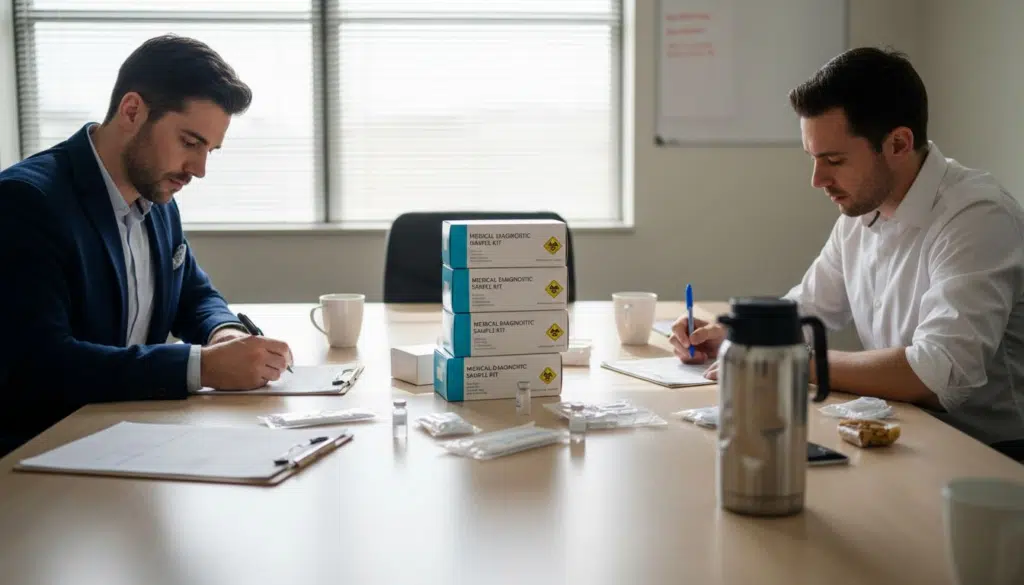
Pro tip: Request sample product batches and conduct independent verification before committing to large-volume wholesale partnerships to ensure consistent quality and performance.
Step 3: Establish Business Structure and Licensing
Foundational success for your drug testing supply business starts with establishing a robust legal framework that protects your interests and ensures regulatory compliance. Selecting the right business structure and obtaining necessary licenses will set the stage for long-term growth and credibility.
Begin by exploring business structure and licensing requirements that are critical for your drug testing supply venture. Your key considerations should include:
Here’s how common business structures compare for a drug testing supply company:
| Structure Type | Liability Protection | Tax Implications | Setup Complexity |
|---|---|---|---|
| LLC | Shields personal assets | Pass-through or corporate tax | Moderate paperwork |
| S Corporation | Strong asset protection | Pass-through with IRS scrutiny | Requires annual filings |
| Partnership | Limited, varies by type | Partners taxed individually | Basic agreement needed |
| Sole Proprietorship | No separation from owner | Owner pays self-employment tax | Easiest to establish |
- Business entity types
- Limited Liability Company (LLC)
- S Corporation
- Partnership
- Sole proprietorship
- Regulatory certifications needed:
- SAMHSA certification
- State-level business registration
- Healthcare industry licenses
- Department of Transportation (DOT) compliance credentials
The licensing process involves several strategic steps:
- Research state-specific business registration requirements
- Obtain federal Employer Identification Number (EIN)
- Select appropriate business insurance
- Complete industry-specific certification applications
- Establish business banking relationships
Proper business structure and licensing are not mere bureaucratic formalities, but fundamental pillars that determine your company’s legal and financial protection.
Navigating these requirements demands meticulous attention to detail and potentially consulting with legal and tax professionals who understand the nuanced landscape of medical supply businesses.
Pro tip: Consult with a business attorney specializing in healthcare regulations to ensure your licensing strategy comprehensively covers all potential legal and operational requirements.
Step 4: Develop Branding and Private Label Solutions
Establishing a distinctive brand identity in the drug testing supply market requires strategic positioning and thoughtful design that communicates professionalism, reliability, and expertise. Your brand will serve as the critical first impression for potential clients across various industries.

To create a compelling market presence, explore branding strategies for drug testing businesses that emphasize your unique value proposition. Key branding elements should include:
Key branding elements can shape market perception:
| Branding Component | Business Impact | Example Action |
|---|---|---|
| Consistent Visuals | Enhances professionalism | Use a signature color |
| Technical Messaging | Builds customer trust in expertise | Highlight compliance |
| Custom Packaging | Supports private label growth | Design unique boxes |
| Value Proposition | Differentiates from competitors | Emphasize reliability |
- Visual brand identity
- Professional logo design
- Consistent color palette
- Clean, authoritative typography
- Marketing collateral templates
- Brand messaging components
- Accuracy and compliance emphasis
- Confidentiality commitment
- Technical expertise highlights
- Industry-specific value propositions
Developing private label solutions involves strategic manufacturing partnerships that allow customization of testing products:
- Identify manufacturers with flexible private labeling capabilities
- Design custom packaging and branding
- Ensure regulatory compliance for branded products
- Create scalable product customization options
- Develop pricing strategies for branded offerings
Your brand is more than a logo – it’s a promise of quality, reliability, and professional service that differentiates you in a competitive marketplace.
Successful branding in the drug testing industry requires a nuanced approach that balances technical credibility with approachable, trustworthy messaging across all customer touchpoints.
Pro tip: Invest in professional graphic design and brand strategy consultation to ensure your visual identity resonates with healthcare and corporate clients seeking reliable testing solutions.
Step 5: Launch Sales Channels and Verify Compliance
Transitioning from business planning to active market engagement requires strategic sales channel development and rigorous compliance verification. Your goal is to create robust sales pathways while maintaining impeccable legal and regulatory standards across all operational touchpoints.
Begin by exploring comprehensive sales channel strategies that align with industry regulations. Potential sales channels should include:
- Direct sales channels
- Online ecommerce platform
- B2B wholesale relationships
- Direct institutional contracts
- Targeted industry networking
- Compliance verification requirements
- HIPAA data protection protocols
- Federal and state regulatory adherence
- Accurate testing methodology documentation
- Secure recordkeeping systems
Implementing successful sales strategies involves multiple critical steps:
- Develop comprehensive sales presentation materials
- Create secure digital ordering infrastructure
- Establish transparent pricing models
- Build robust compliance tracking mechanisms
- Design customer onboarding processes
Successful sales channel development is not just about reaching customers, but building trust through demonstrated professionalism and regulatory excellence.
Your sales approach must balance aggressive market penetration with meticulous compliance, ensuring every transaction meets the highest standards of accuracy and legal requirements.
Pro tip: Invest in comprehensive compliance management software that automates regulatory tracking and documentation to streamline your sales verification processes.
Streamline Your Drug Testing Supply Business Launch with Slash Medical
Starting a drug testing supply business involves navigating complex compliance requirements, securing reliable suppliers, and building a strong brand foundation. If you are looking to overcome these challenges with confidence Slash Medical offers a dependable solution tailored for your needs. By partnering with a specialized B2B ecommerce platform providing over 400 FDA-approved and CLIA-waived drug testing products you can ensure your inventory meets the highest standards for workplace and healthcare compliance.
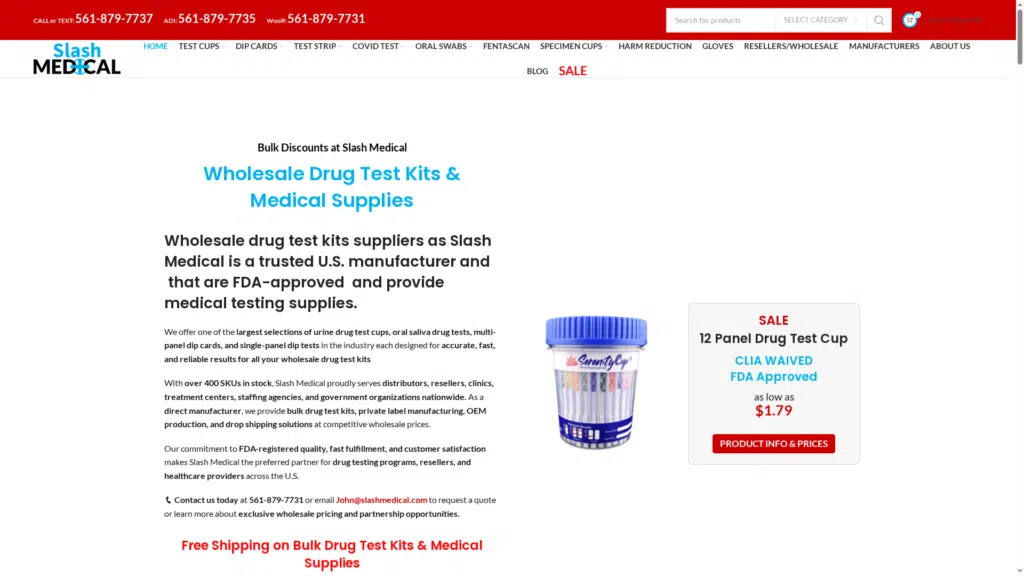
Discover the advantages of buying from a direct manufacturer and distributor focused on bulk purchasing private labeling and drop shipping services. Visit Slash Medical to explore our comprehensive product catalog including urine and oral drug test cups dip cards and adulterant testing supplies. Take control of your business growth today by securing quality wholesale supplies and full regulatory confidence. Ready to build a trusted brand with reliable supplies Start here at Slash Medical and transform your drug testing supply business journey.
Frequently Asked Questions
What are the initial steps to starting a drug testing supply business?
To start a drug testing supply business, first assess market needs and legal requirements, such as industry regulations and compliance standards. Conduct thorough market research to identify potential opportunities within 30 days, ensuring you understand the specific legal frameworks governing drug testing procedures.
How can I find reliable wholesale suppliers for drug testing products?
Identify dependable wholesale suppliers by researching manufacturers that specialize in drug testing equipment. Focus on their compliance with regulations and quality control processes; reach out to at least five potential suppliers within a month to evaluate product samples.
What business structure should I choose for my drug testing supply company?
Choosing the right business structure, such as an LLC or S Corporation, impacts your liability protection and tax implications. Research different structures and consult with a legal professional to determine the best fit for your business within two weeks, ensuring proper setup and compliance.
How can I develop effective branding for my drug testing supply business?
Developing branding involves creating a professional visual identity and consistent messaging that reflects your company’s values. Create a branding strategy that includes a logo and marketing materials, aiming for completion within 60 days to establish a strong market presence.
What sales channels should I consider for selling drug testing supplies?
Consider multiple sales channels such as an online ecommerce platform and B2B wholesale relationships to reach a wider audience. Develop a sales strategy that incorporates at least three different channels within three months to maximize exposure and customer engagement.
How do I ensure compliance while operating my drug testing supply business?
Ensuring compliance requires staying updated on federal and state regulations, implementing HIPAA data protection protocols, and maintaining accurate testing methodology documentation. Regularly review compliance processes every quarter to avoid potential legal issues and ensure your operations meet industry standards.