How to Expand Drug Test Offerings for Clinics Easily 2026

More than 90 percent of American clinics now identify expanded drug testing as a top strategic priority, yet navigating the process can raise complicated compliance and budget concerns. As new drug threats and evolving regulations transform the market, procurement managers must not only modernize their offerings but also safeguard regulatory standards and control costs. This guide you how to expand drug test offerings and walks through practical, actionable steps so your American clinic can confidently strengthen its drug testing program while staying ahead of emerging risks and regulatory requirements.
Table of Contents
- Step 1: Assess Current Testing Needs And Gaps
- Step 2: Identify New Drug Testing Products To Offer
- Step 3: Source Compliant Wholesale Test Kits
- Step 4: Incorporate Private Label Or Oem Options
- Step 5: Verify Compliance And Staff Readiness
Quick Summary
| Essential Insight | Detailed Explanation |
|---|---|
| 1. Assess Existing Testing Methods | Evaluate your current drug testing capabilities and identify gaps in coverage and detection methodologies to better meet market demands. |
| 2. Explore New Testing Products | Research emerging drugs and technologies, adapting test panels to effectively detect both traditional and new substances relevant to your clientele. |
| 3. Source Reliable Suppliers | Partner with FDA-compliant wholesalers for test kits, ensuring they meet regulatory standards and provide accurate, high-quality products. |
| 4. Utilize Private Label Options | Consider private labeling to create customized testing solutions that cater specifically to regional drug trends and market needs. |
| 5. Ensure Staff Compliance and Training | Develop comprehensive training and compliance protocols to maintain testing integrity and regulatory adherence across your clinic staff. |
Step 1: Assess Current Testing Needs and Gaps
Determining your clinic’s current drug testing capabilities is the critical first step in expanding your testing offerings. You’ll systematically evaluate your existing testing framework and identify potential gaps in coverage and detection methods.
Start by conducting a comprehensive internal audit of your current drug testing processes. The Current Consulting Group’s annual industry survey highlights the importance of understanding emerging testing trends and market demands. Review your existing panel configurations, detection methodologies, and the types of substances currently being screened. Pay special attention to recent shifts in drug use patterns such as synthetic opioids and new psychoactive substances that might require updated testing strategies.
Next, analyze your testing volumes and client requirements. Scientific research indicates that many clinics struggle with detecting complex and evolving drug profiles. Examine your current test kit inventories, panel ranges, and sensitivity levels. Look for opportunities to expand your detection capabilities particularly around emerging substances that traditional tests might miss. This might involve upgrading to multi panel tests with broader substance coverage or investing in more sophisticated screening technologies.
Pro tip: Create a detailed spreadsheet tracking your current testing capabilities, detection rates, and identified gaps to help guide your expansion strategy.
Here’s a comparison of common drug test panel types and their detection scope:
| Panel Type | Number of Substances | Detects Synthetic Drugs | Use Case Examples |
|---|---|---|---|
| Basic (5-panel) | 5 | Limited | Pre-employment screenings |
| Extended (10-panel) | 10 | Some | Clinical & workplace testing |
| Multi-Panel (12+) | 12 or more | Broad | High-risk environments |
| Specialty Panels | Varies | Customized | Designer/synthetic drug focus |
Step 2: Identify New Drug Testing Products to Offer
Expanding your drug testing product lineup requires strategic research and understanding of emerging market trends and technological innovations. Your goal is to identify comprehensive testing solutions that address evolving clinical and workplace drug screening needs. Recent FDA drug therapy approvals provide critical insights into new pharmaceutical developments that may necessitate updated testing protocols. Clinics should closely monitor emerging substances and design test panels that can accurately detect both traditional and novel drug compounds. This means looking beyond standard multi panel tests and considering specialized screenings for synthetic opioids, designer drugs, and newer psychoactive substances that standard tests might overlook.
To effectively expand your offerings, review industry publications, attend medical conferences, and connect with toxicology experts who track drug trends. World Health Organization research on diagnostic tools highlights emerging detection technologies that can enhance your testing capabilities. Focus on test kits with broader substance coverage, improved sensitivity, and faster processing times. Consider adding panels for prescription medication misuse, emerging synthetic substances, and alcohol screening to provide more comprehensive testing solutions.
Pro tip: Develop relationships with pharmaceutical researchers and toxicology laboratories to stay ahead of emerging drug detection technologies and market trends.
Step 3: Source Compliant Wholesale Test Kits
Navigating the complex landscape of wholesale drug testing supplies requires a strategic approach to ensure regulatory compliance and quality assurance. Your primary objective is to identify and partner with reputable wholesalers who meet stringent federal guidelines for medical testing products.

Compliance requirements under the Drug Supply Chain Security Act mandate that clinics carefully verify the legitimacy of their wholesale suppliers. This means conducting thorough due diligence on potential vendors to confirm they are licensed, registered, and capable of providing authentic drug testing materials. Investigate each potential supplier’s credentials, including their FDA registration, state licensing, and track record of regulatory compliance.
When evaluating wholesale test kit sources, prioritize vendors who can provide comprehensive documentation and demonstrate drug safety and checking protocols. Look for suppliers offering detailed product specifications, clear labeling, and comprehensive instructions. Pay close attention to test kit specificity, accuracy rates, and alignment with current medical testing standards. Consider factors such as panel diversity, detection sensitivity, and the ability to screen for emerging drug types that reflect current substance abuse trends.
Pro tip: Maintain a detailed vendor scorecard to systematically evaluate and compare potential wholesale suppliers based on compliance, product quality, pricing, and regulatory adherence.
Below is a summary of factors to consider when selecting a wholesale drug test kit vendor:
| Factor | Importance | Example Vendor Attribute |
|---|---|---|
| Regulatory Compliance | Ensures legality | FDA and state licenses |
| Product Documentation | Supports proper use | Detailed instructions |
| Detection Sensitivity | Accurate results | High sensitivity panels |
| Panel Diversity | Meets varied needs | Multi-substance capabilities |
Step 4: Incorporate Private Label or OEM Options
Expanding your drug testing offerings through private label and original equipment manufacturer (OEM) strategies can significantly differentiate your clinic’s service portfolio. This approach allows you to customize testing solutions that precisely match your specific market and client needs.

The FDA’s labeling database provides critical guidance for clinics considering private label test kit development. Understanding regulatory requirements is paramount when rebranding or developing custom testing products. Carefully review all documentation to ensure your private label solutions meet stringent medical testing standards, including accurate labeling, proper instructions, and comprehensive product specifications.
Private label products offer clinics a unique opportunity to create branded testing solutions that stand out in a competitive market. Work closely with manufacturers who can provide flexible OEM services, allowing you to customize panel configurations, packaging, and branding while maintaining high quality and regulatory compliance. Focus on developing test kits that address specific regional drug trends, workplace screening requirements, or specialized medical testing needs that generic off-the-shelf products might not cover.
Pro tip: Develop a comprehensive compliance checklist that tracks all regulatory requirements specific to private label drug testing products before finalizing your branded solution.
Step 5: Verify Compliance and Staff Readiness
Ensuring your clinic maintains rigorous standards for drug testing requires a comprehensive approach to compliance and staff preparation. Your goal is to create a robust framework that guarantees accurate testing procedures and regulatory adherence. SAMHSA’s Recovery-Ready Workplace Toolkit provides critical guidance for developing a comprehensive compliance strategy. This involves creating detailed protocols that cover every aspect of your drug testing program from specimen collection to result interpretation. Develop comprehensive training modules that educate staff on current regulatory requirements, proper testing procedures, and the legal implications of drug testing protocols.
Implement a systematic verification process that includes regular staff audits, ongoing training programs, and periodic review of testing methodologies. Focus on creating a culture of precision where every team member understands their role in maintaining testing integrity. This means developing clear documentation processes, establishing strict chain of custody procedures, and ensuring all staff members are fully trained on the latest testing technologies and regulatory standards. Your compliance strategy should include periodic skill assessments, continuing education opportunities, and a transparent approach to addressing any potential procedural gaps.
Pro tip: Create a comprehensive compliance checklist with specific measurable benchmarks that can be reviewed quarterly to ensure ongoing regulatory alignment and staff competency.
Expand Your Clinic’s Drug Testing Capabilities with Slash Medical
The article highlights key challenges clinics face when expanding drug test offerings such as identifying gaps in current testing panels, sourcing compliant wholesale supplies, and ensuring staff readiness for evolving regulatory demands. If your clinic is striving to detect emerging substances, incorporate private label solutions, or improve testing accuracy with FDA-approved kits, these goals require trusted partners and quality products to succeed. Understanding the importance of comprehensive panel diversity, regulatory compliance, and customized solutions is essential to stay ahead in a fast-changing environment.
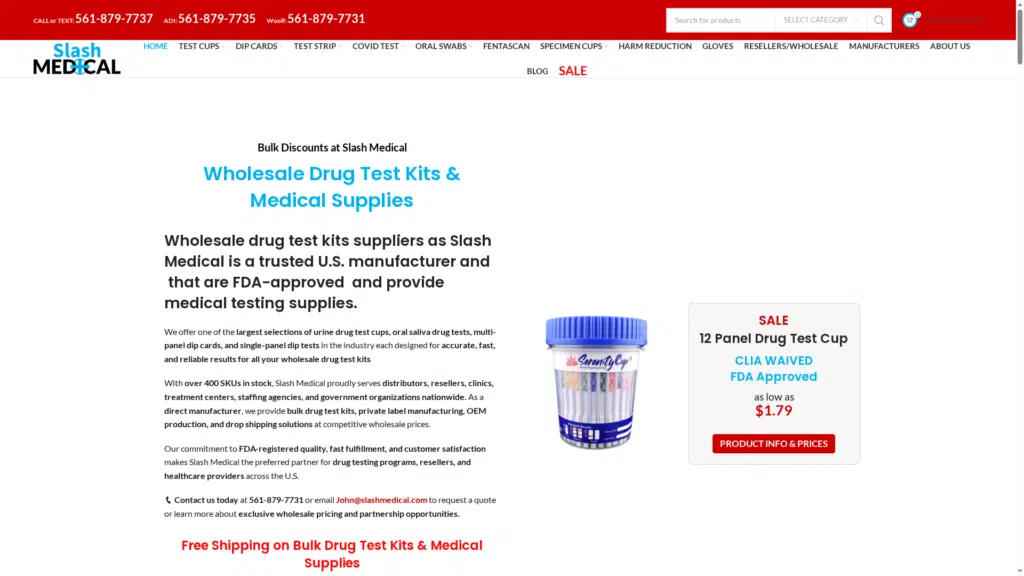
At Slash Medical, we specialize in supporting clinics exactly like yours. Our extensive catalog includes over 400 SKUs of drug testing kits ranging from basic 5-panel to advanced multi-panel options designed to detect both traditional and synthetic substances. As a direct manufacturer and distributor, we assure reliable wholesale pricing and nationwide shipping while offering private label manufacturing and OEM services tailored to your unique needs. Our FDA-approved, CLIA-waived products provide the accuracy and compliance your staff requires for confident testing results.
Take control of your clinic’s drug testing expansion today by exploring our trusted medical testing supplies. Partner with Slash Medical to gain access to comprehensive testing solutions and build a future-proof drug screening program.
Discover how Slash Medical can help meet your clinic’s evolving drug testing needs now. Explore Slash Medical’s drug testing products
Browse FDA-approved drug test kits
Learn about private label and OEM services
Frequently Asked Questions
How can I assess my clinic’s current drug testing capabilities?
Start by conducting a comprehensive internal audit of your current drug testing processes. Review your existing testing frameworks, such as panel configurations and detection methodologies, to identify any gaps in coverage and detection methods.
What types of new drug testing products should I consider offering?
Focus on identifying comprehensive testing solutions that address emerging clinical and workplace needs. Consider expanding your offerings to include specialty panels for synthetic opioids, designer drugs, and newer psychoactive substances that standard tests may miss.
How do I ensure compliance when sourcing wholesale drug test kits?
Choose reputable wholesalers who comply with federal guidelines for medical testing products. Conduct thorough due diligence, including verifying their licensing and regulatory compliance, to ensure that you obtain authentic and compliant drug testing materials.
What are the benefits of private label or OEM drug testing options?
Private label and OEM options allow you to customize drug testing solutions that meet specific market needs. By developing branded products, you can differentiate your offerings and better address regional drug trends and workplace requirements.
How can I prepare my staff for updated drug testing protocols?
Create comprehensive training modules that cover regulatory requirements and proper testing procedures. Regularly conduct staff audits and implement ongoing training programs to maintain knowledge of current testing technologies and compliance standards.
What steps should I take to verify compliance in my drug testing program?
Develop detailed protocols that encompass every aspect of your drug testing program, from specimen collection to result interpretation. Utilize a compliance checklist with measurable benchmarks and review it quarterly to ensure ongoing alignment with regulations and staff competency.