
What Is Clinical Drug Testing and Why Accuracy Matters
Finding dependable drug testing solutions can be a challenge for procurement managers at clinics and treatment centers worldwide. Accuracy and compliance are critical since clinical drug testing must be used as a therapeutic tool, not as punishment, according to the American Society of Addiction Medicine. Understanding the differences in methods, detection windows, and legal standards gives you the power to make smarter purchasing decisions. This overview delivers practical insights so you can source testing tools that safeguard patient care and comply with American, Canadian, and European regulations.
Table of Contents
- Clinical Drug Testing Defined and Debunked
- Core Types and Methods Used Today
- Legal and Regulatory Standards for Testing
- Critical Risks, Errors, and How to Avoid Them
- Procurement and Cost Factors for Clinics
Key Takeaways
| Point | Details |
|---|---|
| Importance of Confirmatory Testing | Always follow up positive screening results with confirmatory tests to ensure accuracy and protect against misdiagnosis. |
| Ethical Considerations | Drug testing should prioritize patient care over punitive measures to maintain trust in treatment programs. |
| Sample Type Selection | Choose the appropriate biological sample based on specific clinical needs, balancing detection windows and ease of collection. |
| Regulatory Compliance | Adhere to legal standards requiring patient consent, confirmatory testing, and accurate documentation to avoid liability. |
Clinical Drug Testing Defined and Debunked
Clinical drug testing detects the presence or absence of specific drugs or metabolites in biological samples like urine, blood, or hair. It’s a straightforward screening tool used in treatment settings to monitor patient progress and support care decisions. What it’s not: a diagnostic tool for substance use disorders. That’s a critical distinction many overlook.
Urine testing remains the most common method in clinical settings because it’s affordable, non-invasive, and reliable when done correctly. However, initial tests can yield false positives or negatives, which is why confirmatory testing through more sophisticated methods like gas chromatography-mass spectrometry is recommended for accuracy. A positive result from a screening test isn’t conclusive without follow-up confirmation.
One major misconception: that drug testing always supports treatment outcomes. In reality, testing policies can be ethically problematic if they prioritize exclusion over care. Effective clinical drug testing requires balancing patient safety with privacy protections and avoiding punitive approaches that undermine trust in treatment programs. The goal should always be enhancing patient care, not creating barriers to it.
Your procurement decisions directly influence testing accuracy. When sourcing supplies, you’re not just purchasing products, you’re investing in the foundation of reliable clinical decisions. Working with sources offering adulterant detection capabilities helps ensure test integrity and prevents false results from invalidated samples.
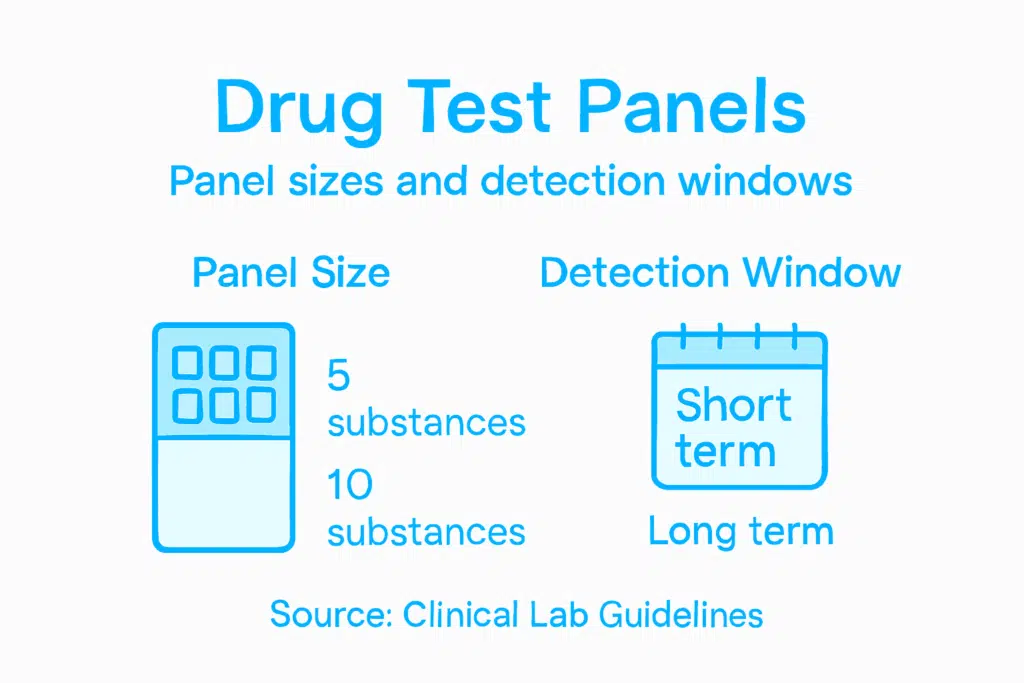
Another myth worth addressing: that all drug tests measure the same thing. Panel sizes vary significantly, detection windows differ by substance and sample type, and cutoff levels differ based on whether testing is clinical or forensic. Understanding these variations prevents misinterpretation and ensures your facility uses appropriate testing protocols for your specific clinical population.
Pro tip: Implement confirmatory testing protocols for all positive results and establish clear cutoff level standards aligned with your clinic’s clinical objectives before ordering testing supplies.
Core Types and Methods Used Today
Clinical drug testing relies on two primary approaches: screening tests and confirmatory tests. Screening tests provide quick initial results but require confirmation for accuracy. Confirmatory tests use sophisticated analytical methods to validate positive findings. This two-step process protects your facility from costly errors and ensures clinical decisions rest on solid evidence.
Urine screening remains most common because it’s fast, cost-effective, and non-invasive. However, medications and supplements can influence results, creating false positives. Blood testing offers a shorter detection window but requires trained personnel. Saliva provides convenience without invasiveness. Hair testing detects substance use over longer periods, sometimes weeks or months back.
Confirmatory testing uses advanced analytical technologies like gas chromatography-mass spectrometry to eliminate false results. These methods are highly specific and sensitive, meaning they accurately identify drugs and their metabolites. While confirmatory tests cost more and take longer, they’re essential for clinical decision-making and legal defensibility.

Choosing the right sample type depends on your specific needs. For routine monitoring in treatment programs, urine testing offers practicality and affordability. For detecting recent use or establishing impairment, blood testing provides precision. Hair testing works when you need historical data spanning months. Your procurement strategy should match testing protocols to clinical objectives rather than defaulting to one method for all scenarios.
Here is a comparison of common biological samples used in clinical drug testing:
| Sample Type | Detection Window | Collection Complexity | Typical Use Case |
|---|---|---|---|
| Urine | 1–3 days | Low | Routine monitoring |
| Blood | Hours–2 days | Moderate | Recent use, impairment |
| Saliva | 12–48 hours | Low | Quick, non-invasive screening |
| Hair | Weeks–months | High | Long-term historical analysis |
Immunoassays are the standard screening method, offering rapid results at reasonable cost. These tests work by detecting antibodies that bind to drug metabolites. Following positive immunoassay results with chromatographic confirmatory testing reduces false positives and protects patients from misdiagnosis or inappropriate treatment adjustments.
Panel sizes also matter significantly. Standard panels test five to ten substances, while expanded panels detect 10-15 or more drugs. Your clinic’s patient population and treatment focus should guide panel selection. Ordering panels that match your actual clinical needs improves cost efficiency and prevents unnecessary testing.
Pro tip: Establish a tiered testing protocol where screening tests identify potential positives and confirmatory testing validates results before any clinical intervention occurs.
Legal and Regulatory Standards for Testing
Drug testing in clinical settings operates within strict legal and regulatory frameworks designed to protect patients and ensure accuracy. Your procurement decisions must align with these standards, or your facility faces liability, compliance violations, and reputational damage. Understanding these requirements isn’t optional—it’s foundational to responsible testing programs.
The American Society of Addiction Medicine (ASAM) establishes clear ethical standards: clinical drug testing must serve as therapeutic tool, not punishment. Legal frameworks mandate confirmatory testing before any clinical decision. You cannot expel patients based solely on positive screening results. This distinction matters because it shapes your entire testing protocol and supply requirements.
Confirmatory testing is legally mandated, not optional. A positive immunoassay screening must be followed by gas chromatography-mass spectrometry (GC-MS) or equivalent before treatment adjustments occur. This requirement protects patients from misdiagnosis and protects your facility from legal liability. Your supplies must support this two-step process reliably.
Patient consent and transparency are legal requirements, not courtesies. Patients must understand what substances are being tested, how results will be used, and what happens with their data. Regulatory standards demand accurate documentation, secure data storage, and clear communication protocols. Your testing program’s legal compliance depends on these procedural safeguards.
FDA oversight applies in clinical trial contexts, emphasizing good clinical practice and human subject protection. Agencies worldwide require documented evidence that your testing supplies meet quality standards. Working with FDA-approved, CLIA-waived products protects your facility’s compliance status and eliminates uncertainty about product validity.
State-level regulations add complexity. Some states impose stricter standards for treatment centers than others. Your procurement strategy should account for the most stringent requirements across all states where your facility operates. This prevents costly supply changes mid-year when regulatory interpretations shift.
Here is a summary of key regulatory, ethical, and operational factors affecting clinical drug testing:
| Factor | Why It Matters | Clinic Impact |
|---|---|---|
| Confirmatory Testing | Ensures result accuracy | Reduces misdiagnosis risk |
| Patient Consent | Legal requirement | Builds patient trust |
| FDA Approval | Product quality control | Protects compliance status |
| State Regulations | Vary by location | May affect supply choices |
Pro tip: Maintain detailed documentation of all testing policies, consent procedures, and confirmatory testing protocols to demonstrate regulatory compliance during audits.
Critical Risks, Errors, and How to Avoid Them
False positives and false negatives represent the most dangerous pitfalls in clinical drug testing. A false positive can trigger unnecessary treatment changes or wrongful exclusion from programs. A false negative can mask substance use when monitoring is critical. These errors aren’t rare occurrences, and they directly impact patient outcomes and your facility’s credibility.
False positives and negatives result from factors like medications, contamination, or methodological errors. Over-the-counter supplements can trigger positive results on immunoassay screening. Sample degradation happens with improper storage. Chain-of-custody violations compromise sample integrity. Trained personnel following standardized protocols catch these issues before they become clinical problems.
One critical mistake is relying solely on presumptive screening without confirmatory testing. This happens when facilities prioritize speed and cost over accuracy. You screen, see a positive result, and act clinically without confirmation. This is how patients get misdiagnosed and treatment plans go sideways. Confirmatory testing through gas chromatography-mass spectrometry eliminates this risk entirely.
Misusing tests for punitive rather than therapeutic purposes creates legal and ethical problems. Some facilities unconsciously shift from “monitoring for treatment” to “building a case for exclusion.” This mindset changes how results get interpreted and communicated. Testing should enhance patient care, not become a mechanism for punishment or discrimination.
Privacy violations and inadequate consent procedures expose your facility to liability. Patients must understand what’s being tested, why, and how results will be used. Poor communication breeds distrust and creates legal exposure. Document everything: consent discussions, test purposes, result interpretation, and how information gets stored and shared.
Your procurement choices directly affect error rates. Higher quality test cups with built-in adulterant detection catch sample tampering. Supplies with clear instructions reduce collection errors. Working with reliable distributors who verify product authenticity prevents counterfeit kits that fail validation standards.
Implement quality control procedures routinely. Run validation tests on new supply batches. Audit chain-of-custody documentation monthly. Train staff on proper collection, storage, and handling quarterly. These systematic checks prevent errors that compound over time.
Pro tip: Establish a mandatory review protocol where every positive result gets independent verification by a different staff member before clinical action occurs.
Procurement and Cost Factors for Clinics
Drug testing procurement involves more than just selecting the cheapest supplier. You’re balancing equipment costs, test kit expenses, personnel training, and confirmatory testing fees. Get this calculation wrong and you either overspend on unnecessary capacity or underspend on accuracy, creating clinical and financial problems.Bulk procurement and evidence-based testing protocols reduce unnecessary expenditures significantly. Ordering larger quantities from reliable distributors typically lowers per-unit costs. But ordering excess inventory that expires unused wastes money. Calculate your monthly testing volume first, then secure contracts that align with realistic demand patterns.
Test kit selection impacts your bottom line more than most procurement managers realize. Basic urine screening cups cost less upfront than cups with built-in adulterant detection. However, adulterant-detecting cups prevent false negatives from tampered samples, avoiding costly misdiagnosis and re-testing expenses. The slightly higher initial cost pays for itself through improved accuracy and reduced repeat testing.
Confirmatory testing represents a substantial ongoing expense. Every positive screening that requires GC-MS confirmation costs more than the initial screen. Budget for this reality. Many clinics under-budget for confirmatory testing, then face mid-year shortfalls when positive rates exceed projections. Accurate volume forecasting prevents this trap.
Personnel training costs are often overlooked in procurement budgets. Staff need quarterly training on proper collection techniques, chain-of-custody procedures, and result interpretation. Poor training leads to collection errors that invalidate samples and require expensive re-testing. Investing in comprehensive training programs reduces costly mistakes.
Centralized laboratory services offer cost advantages for smaller clinics. Rather than maintaining in-house screening and confirmatory capabilities, sending samples to accredited labs reduces equipment investment and personnel requirements. Evaluate whether centralized services or in-house testing makes financial sense for your patient volume and geographic location.
Supplier relationships matter financially. Negotiating volume discounts, establishing standing orders, and securing private label options can reduce costs 15 to 25 percent annually. Building partnerships with distributors offering reliable FDA-approved, CLIA-waived products ensures consistency while protecting your procurement budget from quality issues.
Pro tip: Audit your testing costs quarterly by calculating cost-per-test, including supplies, confirmatory testing, and personnel time, then compare against industry benchmarks to identify savings opportunities.
Elevate Your Clinical Drug Testing Accuracy with Trusted Supplies
The article highlights that clinical drug testing accuracy hinges on reliable screening and confirmatory processes. Facilities face challenges like false positives, adulterated samples, and navigating regulatory requirements. Your goal is clear: reduce costly errors while ensuring patient care remains ethical and compliant. Achieving this balance means securing high-quality testing kits with built-in adulterant detection and partnering with suppliers who understand your need for FDA-approved and CLIA-waived products.
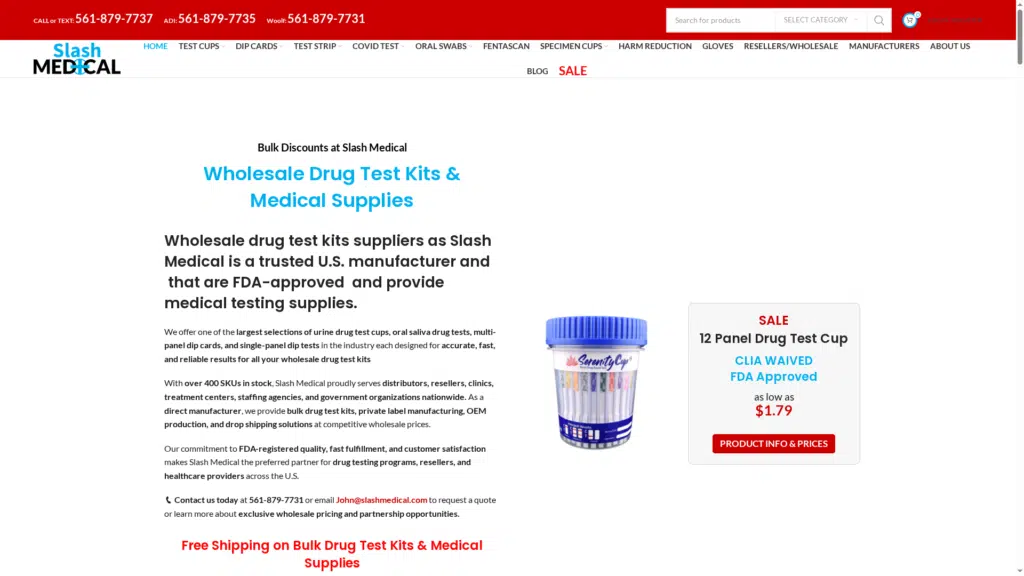
Slash Medical offers an extensive catalog of over 400 SKUs designed to meet diverse clinical needs including urine and oral drug test cups with various panel sizes and adulterant testing features. By choosing Slash Medical, you invest in accuracy and peace of mind. Bulk purchasing, private label options, and nationwide shipping simplify your procurement. Take the first step toward minimizing false results and supporting your treatment programs with dependable supplies. Browse our collection today at Slash Medical and experience a new level of confidence in your clinical drug testing.
Frequently Asked Questions
What is clinical drug testing?
Clinical drug testing refers to the process of detecting the presence or absence of specific drugs or their metabolites in biological samples such as urine, blood, or hair. It is primarily used in treatment settings to monitor patients’ progress and inform care decisions.
Why is accuracy important in clinical drug testing?
Accuracy in clinical drug testing is crucial because false positives or negatives can lead to misdiagnosis, inappropriate treatment decisions, and potential harm to patients. Confirmatory testing using advanced methods ensures the reliability of initial screening results.
What types of samples are used in clinical drug testing, and how do they differ?
Common sample types include urine, blood, saliva, and hair. Urine is most commonly used for routine monitoring due to its cost-effectiveness and non-invasive nature, while blood testing is preferred for its precision in detecting recent use. Saliva tests provide quick results, and hair tests are used for long-term historical analysis.
What are the potential risks of false positives and negatives in drug tests?
False positives can lead to unnecessary treatment changes or exclusion from programs, while false negatives can mask substance use when monitoring is essential. These errors compromise patient safety and the credibility of clinical decisions, emphasizing the need for confirmatory testing.