
Confirmatory Drug Testing: Ensuring Accurate Results
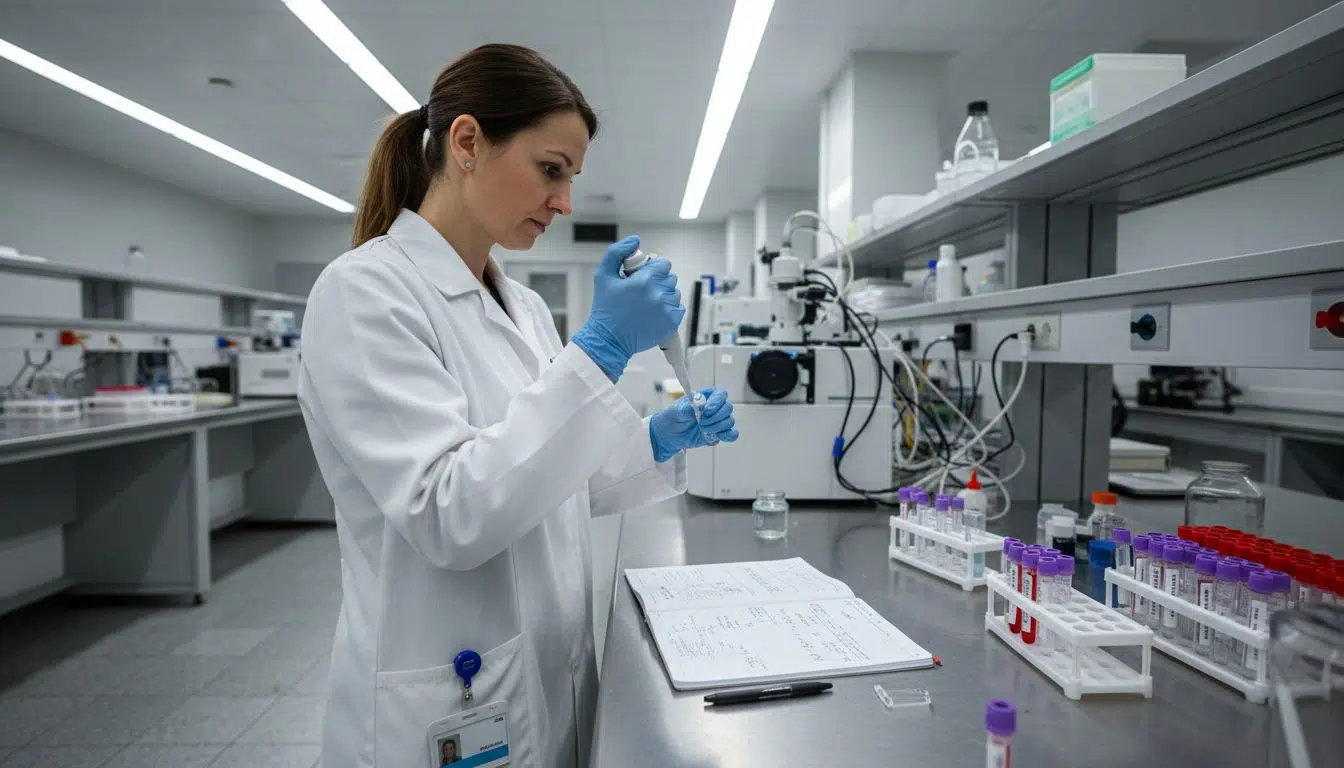
Managing drug testing programs at a busy healthcare facility means constantly weighing the risks of false positives, compliance demands, and budget pressures. Accurate results are essential, yet screening tests alone can miss the mark, sometimes flagging innocent individuals because of medication or sample interference. Confirmatory drug testing using gas chromatography-mass spectrometry (GC-MS) is recognized as the gold standard, providing definitive proof of drug presence and concentration. Choosing the right bulk options helps procurement managers protect their facility from legal issues, maintain regulatory compliance, and simplify operations.
Table of Contents
- Defining Confirmatory Drug Testing Methods
- Key Differences From Initial Screening Tests
- Laboratory Procedures and Analytical Techniques
- Compliance Standards and Regulatory Requirements
- Common Challenges and Cost Considerations
Key Takeaways
| Point | Details |
|---|---|
| Importance of Confirmatory Testing | Confirmatory testing provides definitive drug identification, reducing the risks associated with false positives from initial screening tests. |
| Methodology Distinction | Screening tests are rapid and cost-effective but lack specificity; confirmatory tests use advanced methods like GC-MS for precise results. |
| Regulatory Compliance | Adhering to updated federal and state drug testing guidelines is essential for legal defensibility and operational integrity. |
| Cost Considerations | While confirmatory testing is more expensive, strategic procurement practices can help manage costs without sacrificing accuracy. |
Defining Confirmatory Drug Testing Methods
Confirmatory drug testing is the analytical procedure that verifies the presence of specific drugs or metabolites after an initial screening test shows a positive result. Unlike screening tests that flag potential drug use through quick reactions or immunoassay methods, confirmatory tests provide definitive identification using advanced instrumental techniques. This distinction matters enormously for your operations because a positive screening result doesn’t tell you what drug is actually present or at what concentration. Confirmatory testing fills that critical gap, protecting your facility from the consequences of false positives that could lead to wrongful dismissals or legal complications.Drug confirmation tests utilize different methodologies than screening tests, a requirement mandated by U.S. federal guidelines established by SAMHSA. The most common confirmatory method is gas chromatography-mass spectrometry (GC-MS), which separates drug compounds in a sample and compares their chemical signatures against reference standards. This two-step process works like this: the chromatography component separates the different chemicals in your sample based on how they interact with a special column, while the mass spectrometry component identifies each chemical compound by its unique molecular weight and fragmentation pattern. When you receive results from a GC-MS confirmatory test, you’re getting definitive proof of what drugs are present and in what quantities. Urine remains the most practical specimen type for confirmatory testing across healthcare facilities, though saliva and hair samples can also be tested depending on your program requirements.
Why does this methodology distinction matter for procurement decisions? False positives remain a real concern despite high effectiveness rates. Lab errors, cross-contamination, or certain medications can produce positive results on screening tests that don’t hold up during confirmatory analysis. When you equip your facility with confirmatory testing capabilities, you’re building a quality control system that protects both your staff and the individuals being tested. Different drug types require different detection approaches, which is why having access to comprehensive confirmatory testing methods ensures you can accurately identify the full range of substances your program targets. Your bulk purchasing strategy should prioritize confirmatory test kits that align with the specific panels your facility uses most frequently, allowing you to maintain testing accuracy while optimizing inventory costs.
Pro tip: When negotiating bulk orders for confirmatory testing supplies, prioritize GC-MS compatible collection kits and ensure your laboratory partners use SAMHSA-approved methodologies, which protects your facility from compliance issues while guaranteeing defensible results in any dispute.
Key Differences From Initial Screening Tests
Screening tests and confirmatory tests serve fundamentally different purposes in your drug testing program, and understanding those differences directly impacts your procurement strategy and operational efficiency. Initial screening tests, typically immunoassays, are designed to be rapid and cost-effective. These tests work by looking for antibodies that react to drugs or their metabolites in a sample, producing results in minutes rather than hours. They function as a first-pass filter, flagging any samples that might contain drugs of concern. However, immunoassays have a critical limitation: they lack specificity. A screening test might flag a sample positive for amphetamines when the person actually took a decongestant medication with a similar molecular structure. This is where the false positive problem originates, and why confirmatory testing becomes non-negotiable for your facility.
Confirmatory tests use different, highly sensitive methods compared to screening tests, employing instrumental analysis techniques like gas chromatography and mass spectrometry. When a screening test shows a positive result, the confirmatory test takes that sample through a completely independent analytical process that definitively identifies the exact drug present and measures its concentration. The confirmatory test asks a completely different question: not “might this drug be present,” but “what drug is definitely present, and how much of it is there?” This distinction matters enormously because a screening positive that fails confirmatory testing means you avoid potential legal consequences and protect innocent individuals from wrongful action. Federal guidelines mandate that confirmatory methods be independent from screening methods, a requirement that protects the integrity of your program and makes your results legally defensible.
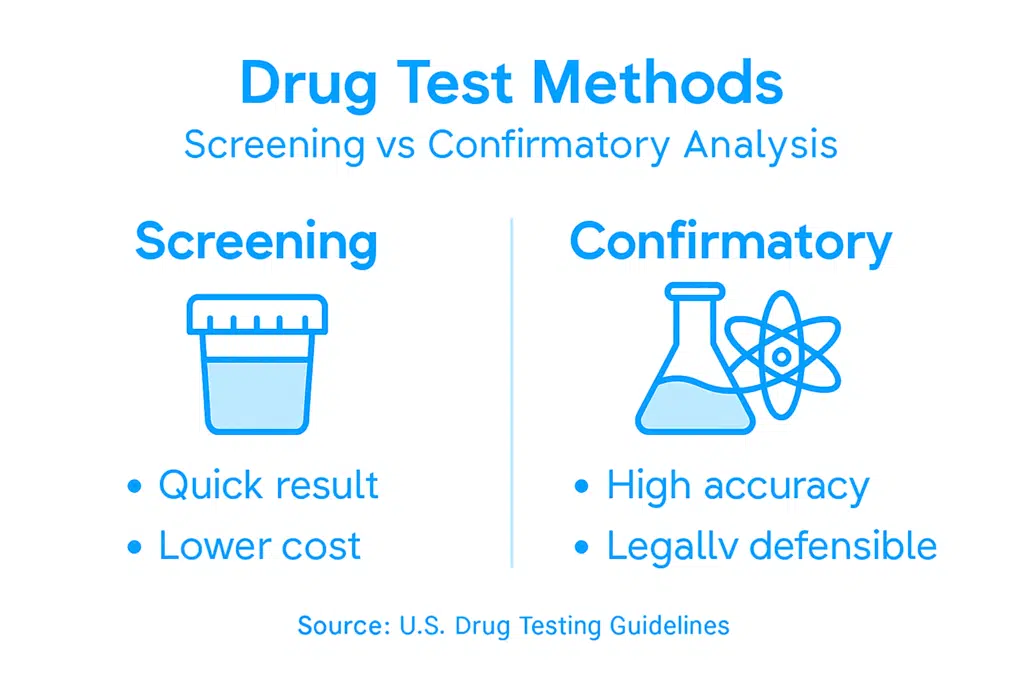
The practical implications for your facility are significant. Screening tests cost less per sample, which is why they serve as your first line of defense. But relying solely on screening results creates liability. Your testing protocol should always follow positive screening results with confirmatory testing before taking any employment-related action or client-facing consequence. This two-step approach improves your overall drug testing accuracy substantially. When you invest in confirmatory testing capabilities, you’re essentially buying protection against false positives that could result in litigation, damaged reputation, or regulatory penalties. Consider this when building your bulk procurement orders: the small additional cost of confirmatory testing is insurance against far more expensive problems down the road.
Pro tip: Establish a standing protocol where every positive screening result triggers automatic confirmatory testing, and track the percentage of screening positives that fail confirmation to identify patterns that might indicate immunoassay interference from medications or environmental factors in your population.
Here is a comparison of key characteristics between screening and confirmatory drug tests:
| Criteria | Screening Test (Immunoassay) | Confirmatory Test (GC-MS or LC-MS/MS) |
|---|---|---|
| Purpose | Initial detection, broad scope | Definitive identification, high specificity |
| Turnaround Time | Minutes | Several hours to days |
| Cost per Sample | Low | Three to five times higher |
| Main Limitation | Prone to false positives | Requires technical expertise |
| Result Detail | Indicates possible presence | Measures exact drug, quantifies level |
Laboratory Procedures and Analytical Techniques
When your facility sends a sample for confirmatory testing, it enters a sophisticated laboratory environment where advanced instrumental analysis takes over. The two primary techniques used in confirmatory drug testing are gas chromatography-mass spectrometry (GC-MS) and liquid chromatography-tandem mass spectrometry (LC-MS/MS). Both methods operate on the same fundamental principle: separating chemical compounds in a sample and identifying them by their unique molecular signatures. GC-MS works best for drugs that can withstand heat, while LC-MS/MS handles heat-sensitive compounds and provides excellent performance with complex sample matrices. Your laboratory partner’s choice between these methods depends on the drug panel you need to cover and the specific substances your facility targets most frequently. Advanced analytical techniques provide precise identification and quantification of substances, which reduces both false positives and false negatives that could plague your testing program.
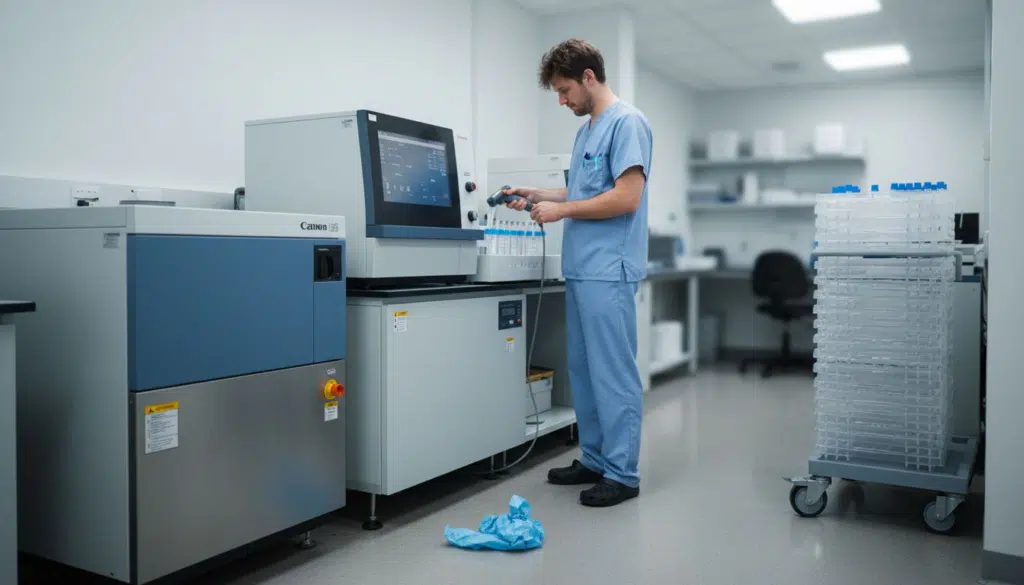
The actual laboratory procedure follows a consistent workflow designed to produce defensible results. The sample arrives at the laboratory where it’s logged, labeled, and stored under strict chain-of-custody protocols. The technician then prepares the sample through a process called extraction, which isolates the drug compounds from the biological matrix. Next, the sample enters the analytical instrument where the chromatography component separates individual compounds based on their physical and chemical properties. As each compound emerges from the chromatograph, the mass spectrometer analyzes its molecular weight and fragmentation pattern, creating a unique fingerprint that gets compared against reference standards. This comparison is where definitive identification happens. The laboratory doesn’t just say a drug is present; it confirms the exact drug and provides a quantitative measurement of its concentration. Standards like SWGDRUG recommend using multiple analytical techniques for identification to ensure reliability, which is why sophisticated laboratories often run samples through more than one method to verify results.
For your procurement decisions, understanding these laboratory procedures matters because you need to ensure your facility partners with laboratories that employ these gold-standard techniques. When you bulk purchase confirmatory testing services or collection kits designed specifically for confirmatory analysis, you’re investing in a process that produces court-admissible results. Different drug combinations require different preparation and analysis approaches, which is why your laboratory partner needs to know exactly which drug panels your facility uses. The chain of custody documentation throughout the laboratory procedure protects your facility legally and ensures results withstand scrutiny if ever challenged. When evaluating laboratory partners for confirmatory testing, always verify they use GC-MS or LC-MS/MS technology and maintain SAMHSA-approved procedures, not cheaper alternatives that might compromise accuracy.
Pro tip: Request your laboratory partner provide you with detailed instrument maintenance schedules and quality control data, which demonstrates their commitment to accuracy and gives you documentation to support your compliance efforts if regulatory agencies ever audit your testing program.
Compliance Standards and Regulatory Requirements
Compliance with regulatory standards isn’t optional for your facility, and the consequences of cutting corners extend far beyond testing accuracy. If your facility operates in the United States, you must follow the Mandatory Guidelines for Federal Workplace Drug Testing Programs, which were significantly revised and took effect February 1, 2024. These guidelines establish the authorized drug testing panels your facility can use, specify biomarker testing requirements, and detail procedures for specimen collection and testing that protect legal defensibility. The guidelines also updated cutoff levels for certain drugs, which means your previous testing thresholds may no longer align with federal requirements. Medical Review Officer verification processes changed as well, and facilities must now submit semiannual reporting on positive results that were later negated during confirmatory testing. Updated federal workplace drug testing guidelines set the scientific and technical requirements your laboratory partners must follow, including certification standards that ensure accuracy and legal defensibility of results.
Beyond federal standards, additional regulatory frameworks govern drug testing depending on your facility’s location and industry. International standards like AS/NZS 4308:2023 establish urine drug testing requirements that cover every phase of the testing process, from specimen collection through confirmatory analysis. This standard introduced updated cutoff values for substances such as cocaine and benzodiazepines, along with revised procedural and reporting requirements. Accredited laboratories operating under these standards have completed comprehensive training and transitioned their procedures accordingly, ensuring their results withstand legal scrutiny. When you’re evaluating laboratory partners or purchasing bulk testing supplies, verify they maintain current certification under whichever standards apply to your jurisdiction and client base. Different states may have additional requirements, and some industries like transportation and healthcare have their own specialized guidelines that layer on top of federal requirements.
For your procurement strategy, compliance standards directly impact which testing products and laboratory partners you can use. You cannot simply purchase the cheapest confirmatory testing kits available; they must come from sources that maintain proper certification and follow authorized procedures. Your facility bears responsibility for ensuring that any laboratory you contract with complies with current regulations, which means requesting documentation of their accreditation and certifications before establishing a relationship. When changes occur, like the February 2024 federal guideline updates, your testing protocols may require adjustment. Budget for periodic updates to your procedure documentation and training materials. Non-compliance can result in test results being inadmissible in legal proceedings, regulatory fines, or loss of your facility’s operating license depending on your industry.
Pro tip: Subscribe to regulatory update notifications from your industry association or the federal government to catch changes like the 2024 guideline revisions before they affect your operations, and allocate time annually to audit your laboratory partner’s current certifications and compliance documentation.
The following table summarizes major compliance standards affecting drug testing programs:
| Standard/Guideline | Jurisdiction/Use | Key Requirements |
|---|---|---|
| SAMHSA Federal Guidelines | U.S. federal workplace | Approved panels, strict procedures |
| AS/NZS 4308:2023 | Australia/New Zealand | Updated drug cutoff values, documentation |
| State/Industry Requirements | Varies by region/sector | May add specific collection or reporting rules |
| SWGDRUG Recommendations | Forensic laboratories | Multiple analytical techniques required |
Common Challenges and Cost Considerations
Confirmatory drug testing presents real operational challenges that go beyond simply ordering test kits and shipping samples to a laboratory. The first challenge you’ll encounter is balancing cost against accuracy. Point-of-care immunoassay screening tests cost significantly less per sample, sometimes just a few dollars, which is why they remain the first line of defense in most testing programs. But confirmatory testing using advanced instrumental techniques like GC-MS or LC-MS/MS typically costs three to five times more per sample because of the sophisticated equipment, trained technicians, and time required. Advanced chromatographic and mass spectrometry techniques provide higher accuracy than screening methods, but this accuracy comes at a premium price. For a facility testing hundreds of employees or program participants annually, those confirmatory costs add up quickly. The challenge becomes determining which screening positives truly warrant confirmatory testing versus which ones you can reasonably predict will confirm, a decision that directly impacts your testing budget.
Another significant challenge is interpreting complex results and managing interference from other substances. A confirmatory test might identify a drug compound, but determining whether that result reflects actual substance use or interference from medications, supplements, or food components requires expertise. For example, certain over-the-counter medications containing phenylephrine can trigger false positives for amphetamines on screening tests, but confirmatory testing typically identifies this interference and prevents wrongful consequences. However, your laboratory must employ experienced toxicologists or forensic chemists who can interpret these edge cases correctly. This expertise requirement means you cannot simply select the cheapest laboratory available; you need one with qualified personnel who understand the science deeply enough to provide defensible interpretations. Additionally, managing the workflow complexity becomes challenging as your testing volume increases. You must track which samples require confirmatory testing, manage specimen storage and chain-of-custody during the often-weeks-long wait for confirmatory results, and coordinate with Medical Review Officers who need to evaluate results before communicating them to your organization.
Cost optimization without sacrificing accuracy requires strategic planning. Rather than sending every screening positive for confirmatory testing, many facilities use threshold-based confirmation protocols where only results exceeding certain concentrations trigger confirmatory analysis, reducing unnecessary expense. Batch processing arrangements with laboratories can lower per-sample confirmatory costs when you commit to regular monthly volumes. Automation and improved informatics systems can streamline your workflow, reducing administrative overhead. When building your bulk purchasing strategy, negotiate volume discounts on screening test kits while establishing service agreements with laboratories that provide transparent pricing on confirmatory services. Understanding which drug panels your facility actually uses most frequently allows you to optimize inventory and avoid stockpiling tests that rarely get used.
Pro tip: Negotiate with your laboratory partner for a fixed monthly retainer covering a baseline number of confirmatory tests, then pay lower per-test rates for volume beyond that threshold, which transforms confirmatory testing from a variable cost wildcard into a predictable line-item budget.
Enhance Accuracy and Confidence with Trusted Confirmatory Testing Supplies
Confirmatory drug testing is vital to protect your organization from false positives and ensure legally defensible results. The article highlights challenges like balancing cost with accuracy and navigating complex federal guidelines. When you invest in high-quality, FDA-approved supplies designed for confirmatory drug testing methodologies such as GC-MS and LC-MS/MS, you safeguard your testing program’s integrity and compliance. Slash Medical understands these industry demands and offers a comprehensive range of bulk drug test kits and specialized collection materials tailored to meet your specific panel requirements.
Laboratory Procedures and Analytical Techniques
When your facility sends a sample for confirmatory testing, it enters a sophisticated laboratory environment where advanced instrumental analysis takes over. The two primary techniques used in confirmatory drug testing are gas chromatography-mass spectrometry (GC-MS) and liquid chromatography-tandem mass spectrometry (LC-MS/MS). Both methods operate on the same fundamental principle: separating chemical compounds in a sample and identifying them by their unique molecular signatures. GC-MS works best for drugs that can withstand heat, while LC-MS/MS handles heat-sensitive compounds and provides excellent performance with complex sample matrices. Your laboratory partner’s choice between these methods depends on the drug panel you need to cover and the specific substances your facility targets most frequently. Advanced analytical techniques provide precise identification and quantification of substances, which reduces both false positives and false negatives that could plague your testing program.
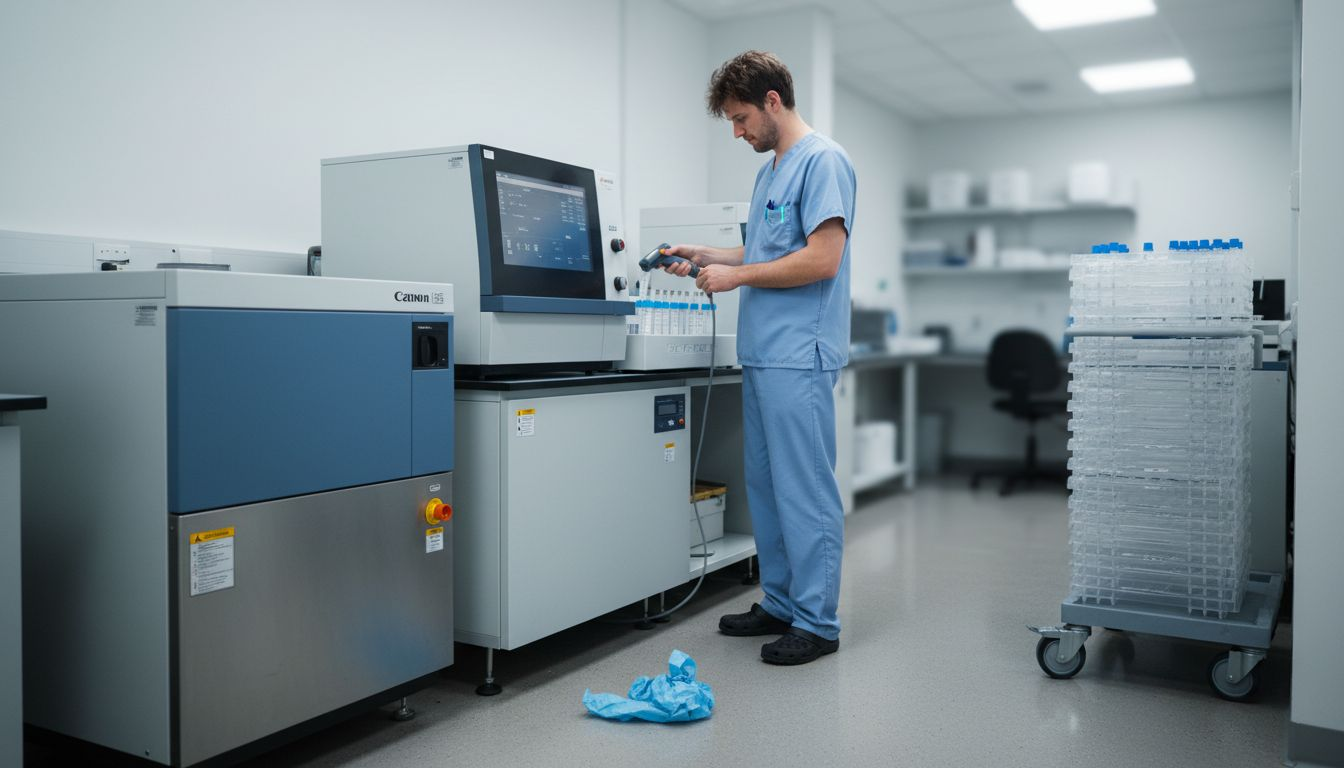
The actual laboratory procedure follows a consistent workflow designed to produce defensible results. The sample arrives at the laboratory where it’s logged, labeled, and stored under strict chain-of-custody protocols. The technician then prepares the sample through a process called extraction, which isolates the drug compounds from the biological matrix. Next, the sample enters the analytical instrument where the chromatography component separates individual compounds based on their physical and chemical properties. As each compound emerges from the chromatograph, the mass spectrometer analyzes its molecular weight and fragmentation pattern, creating a unique fingerprint that gets compared against reference standards. This comparison is where definitive identification happens. The laboratory doesn’t just say a drug is present; it confirms the exact drug and provides a quantitative measurement of its concentration. Standards like SWGDRUG recommend using multiple analytical techniques for identification to ensure reliability, which is why sophisticated laboratories often run samples through more than one method to verify results.
For your procurement decisions, understanding these laboratory procedures matters because you need to ensure your facility partners with laboratories that employ these gold-standard techniques. When you bulk purchase confirmatory testing services or collection kits designed specifically for confirmatory analysis, you’re investing in a process that produces court-admissible results. Different drug combinations require different preparation and analysis approaches, which is why your laboratory partner needs to know exactly which drug panels your facility uses. The chain of custody documentation throughout the laboratory procedure protects your facility legally and ensures results withstand scrutiny if ever challenged. When evaluating laboratory partners for confirmatory testing, always verify they use GC-MS or LC-MS/MS technology and maintain SAMHSA-approved procedures, not cheaper alternatives that might compromise accuracy.
Pro tip: Request your laboratory partner provide you with detailed instrument maintenance schedules and quality control data, which demonstrates their commitment to accuracy and gives you documentation to support your compliance efforts if regulatory agencies ever audit your testing program.
Compliance Standards and Regulatory Requirements
Compliance with regulatory standards isn’t optional for your facility, and the consequences of cutting corners extend far beyond testing accuracy. If your facility operates in the United States, you must follow the Mandatory Guidelines for Federal Workplace Drug Testing Programs, which were significantly revised and took effect February 1, 2024. These guidelines establish the authorized drug testing panels your facility can use, specify biomarker testing requirements, and detail procedures for specimen collection and testing that protect legal defensibility. The guidelines also updated cutoff levels for certain drugs, which means your previous testing thresholds may no longer align with federal requirements. Medical Review Officer verification processes changed as well, and facilities must now submit semiannual reporting on positive results that were later negated during confirmatory testing. Updated federal workplace drug testing guidelines set the scientific and technical requirements your laboratory partners must follow, including certification standards that ensure accuracy and legal defensibility of results.
Beyond federal standards, additional regulatory frameworks govern drug testing depending on your facility’s location and industry. International standards like AS/NZS 4308:2023 establish urine drug testing requirements that cover every phase of the testing process, from specimen collection through confirmatory analysis. This standard introduced updated cutoff values for substances such as cocaine and benzodiazepines, along with revised procedural and reporting requirements. Accredited laboratories operating under these standards have completed comprehensive training and transitioned their procedures accordingly, ensuring their results withstand legal scrutiny. When you’re evaluating laboratory partners or purchasing bulk testing supplies, verify they maintain current certification under whichever standards apply to your jurisdiction and client base. Different states may have additional requirements, and some industries like transportation and healthcare have their own specialized guidelines that layer on top of federal requirements.
For your procurement strategy, compliance standards directly impact which testing products and laboratory partners you can use. You cannot simply purchase the cheapest confirmatory testing kits available; they must come from sources that maintain proper certification and follow authorized procedures. Your facility bears responsibility for ensuring that any laboratory you contract with complies with current regulations, which means requesting documentation of their accreditation and certifications before establishing a relationship. When changes occur, like the February 2024 federal guideline updates, your testing protocols may require adjustment. Budget for periodic updates to your procedure documentation and training materials. Non-compliance can result in test results being inadmissible in legal proceedings, regulatory fines, or loss of your facility’s operating license depending on your industry.
Pro tip: Subscribe to regulatory update notifications from your industry association or the federal government to catch changes like the 2024 guideline revisions before they affect your operations, and allocate time annually to audit your laboratory partner’s current certifications and compliance documentation.
The following table summarizes major compliance standards affecting drug testing programs:
| Standard/Guideline | Jurisdiction/Use | Key Requirements |
|---|---|---|
| SAMHSA Federal Guidelines | U.S. federal workplace | Approved panels, strict procedures |
| AS/NZS 4308:2023 | Australia/New Zealand | Updated drug cutoff values, documentation |
| State/Industry Requirements | Varies by region/sector | May add specific collection or reporting rules |
| SWGDRUG Recommendations | Forensic laboratories | Multiple analytical techniques required |
Common Challenges and Cost Considerations
Confirmatory drug testing presents real operational challenges that go beyond simply ordering test kits and shipping samples to a laboratory. The first challenge you’ll encounter is balancing cost against accuracy. Point-of-care immunoassay screening tests cost significantly less per sample, sometimes just a few dollars, which is why they remain the first line of defense in most testing programs. But confirmatory testing using advanced instrumental techniques like GC-MS or LC-MS/MS typically costs three to five times more per sample because of the sophisticated equipment, trained technicians, and time required. Advanced chromatographic and mass spectrometry techniques provide higher accuracy than screening methods, but this accuracy comes at a premium price. For a facility testing hundreds of employees or program participants annually, those confirmatory costs add up quickly. The challenge becomes determining which screening positives truly warrant confirmatory testing versus which ones you can reasonably predict will confirm, a decision that directly impacts your testing budget.
Another significant challenge is interpreting complex results and managing interference from other substances. A confirmatory test might identify a drug compound, but determining whether that result reflects actual substance use or interference from medications, supplements, or food components requires expertise. For example, certain over-the-counter medications containing phenylephrine can trigger false positives for amphetamines on screening tests, but confirmatory testing typically identifies this interference and prevents wrongful consequences. However, your laboratory must employ experienced toxicologists or forensic chemists who can interpret these edge cases correctly. This expertise requirement means you cannot simply select the cheapest laboratory available; you need one with qualified personnel who understand the science deeply enough to provide defensible interpretations. Additionally, managing the workflow complexity becomes challenging as your testing volume increases. You must track which samples require confirmatory testing, manage specimen storage and chain-of-custody during the often-weeks-long wait for confirmatory results, and coordinate with Medical Review Officers who need to evaluate results before communicating them to your organization.
Cost optimization without sacrificing accuracy requires strategic planning. Rather than sending every screening positive for confirmatory testing, many facilities use threshold-based confirmation protocols where only results exceeding certain concentrations trigger confirmatory analysis, reducing unnecessary expense. Batch processing arrangements with laboratories can lower per-sample confirmatory costs when you commit to regular monthly volumes. Automation and improved informatics systems can streamline your workflow, reducing administrative overhead. When building your bulk purchasing strategy, negotiate volume discounts on screening test kits while establishing service agreements with laboratories that provide transparent pricing on confirmatory services. Understanding which drug panels your facility actually uses most frequently allows you to optimize inventory and avoid stockpiling tests that rarely get used.
Pro tip: Negotiate with your laboratory partner for a fixed monthly retainer covering a baseline number of confirmatory tests, then pay lower per-test rates for volume beyond that threshold, which transforms confirmatory testing from a variable cost wildcard into a predictable line-item budget.
Enhance Accuracy and Confidence with Trusted Confirmatory Testing Supplies
Confirmatory drug testing is vital to protect your organization from false positives and ensure legally defensible results. The article highlights challenges like balancing cost with accuracy and navigating complex federal guidelines. When you invest in high-quality, FDA-approved supplies designed for confirmatory drug testing methodologies such as GC-MS and LC-MS/MS, you safeguard your testing program’s integrity and compliance. Slash Medical understands these industry demands and offers a comprehensive range of bulk drug test kits and specialized collection materials tailored to meet your specific panel requirements.
Take control of your drug testing program today with Slash Medical’s competitive wholesale pricing and reliable product selection. Whether you need customizable private label solutions or efficient drop shipping, we empower clinics, treatment centers, and government agencies to maintain testing accuracy while optimizing budgets. Don’t let compliance challenges and testing errors compromise your operations. Visit Slash Medical to browse our extensive catalog, place bulk orders, and partner with a trusted supplier committed to your success.
Frequently Asked Questions
What is the purpose of confirmatory drug testing?
Confirmatory drug testing verifies the presence of specific drugs or metabolites in a sample after an initial screening test shows a positive result, providing definitive identification and protecting against false positives.
How do confirmatory tests differ from screening tests?
Confirmatory tests like gas chromatography-mass spectrometry (GC-MS) provide high specificity and accurate drug identification, whereas screening tests like immunoassays are rapid and less expensive but may yield false positives due to lack of specificity.
What types of samples can be used for confirmatory drug testing?
Urine is the most practical specimen type for confirmatory testing, but saliva and hair samples can also be tested depending on the specific requirements of your program.
Why is understanding regulatory compliance important for drug testing?
Compliance with regulatory standards, such as SAMHSA guidelines, ensures the validity and legal defensibility of testing results, avoiding penalties, litigation, or challenges regarding the accuracy of test outcomes.