
Drug Testing 2026: 4.65% Growth & Rapid Testing Trends

Procurement managers face a complex landscape in 2026 when selecting drug testing solutions. Balancing cost, compliance, and accuracy requires understanding evolving technologies and regulations. This article provides a clear framework to navigate Rapid Testing Trends 2026, expanded detection panels, and cost optimization strategies that define effective drug testing programs this year.
Table of Contents
- Selection Criteria For Drug Testing Solutions In 2026
- Rise Of Rapid Point-Of-Care Drug Testing
- Expansion Of Multi-Panel Testing Beyond The Basics
- Advances In Adulteration Detection Methods
- Technological Advancements: Alternative Specimens And AI Integration
- Market Growth, Regulatory Impact, And Cost Considerations
- Summary Comparison And Situational Recommendations
- Enhance Your 2026 Drug Testing Program With Slash Medical
- Frequently Asked Questions
Key Takeaways
| Point | Details |
|---|---|
| FDA approval and panel comprehensiveness | Critical for reliable, compliant testing across traditional and emerging synthetic drugs |
| Rapid point-of-care testing | Reduces turnaround times from days to minutes, improving operational efficiency |
| Multi-panel kits | Now include synthetic and emerging drugs for broad detection coverage |
| Adulteration detection | Improves test integrity against tampering through specimen validity testing |
| Cost considerations | Bulk discounts balanced with performance features optimize procurement budgets |
Selection Criteria for Drug Testing Solutions in 2026
Procurement managers must evaluate several critical factors when choosing drug testing solutions. FDA approval and CLIA waiver status ensure legal compliance and test reliability across forensic and clinical applications. These certifications protect your organization from liability while guaranteeing accurate results.
Panel comprehensiveness matters more than ever as synthetic drugs proliferate. Your testing program must cover traditional substances like marijuana and cocaine while detecting emerging threats such as fentanyl analogs and designer opioids. Turnaround times directly impact workflow efficiency, with on-site testing eliminating the delays of laboratory processing.
Adulteration and specimen validity detection protect against tampered samples. Employees and patients attempting to manipulate results create false negatives that compromise program integrity. Compliance reporting and data integration simplify audits and record keeping, particularly for organizations managing multiple testing sites.
Cost per test and bulk purchasing options significantly impact budget management. Here are essential criteria to evaluate:
- Verify FDA approval and CLIA waiver status before purchasing
- Assess panel size against your specific detection requirements
- Compare on-site versus laboratory turnaround times
- Evaluate adulteration detection features for high-risk populations
- Calculate total cost including volume discounts and shipping
Pro tip: Start with drug testing selection tips that align panel size with your actual risk profile. Overpaying for unused detection capabilities wastes budget, while inadequate coverage creates compliance gaps.
Rise of Rapid Point-of-Care Drug Testing
Rapid testing technology has transformed drug screening from a multi-day laboratory process into an immediate point-of-care decision tool. Turnaround times have dropped from days to under one hour, enabling real-time hiring and treatment decisions. This shift eliminates the logistical complexity of sample collection, chain of custody transport, and delayed result reporting.
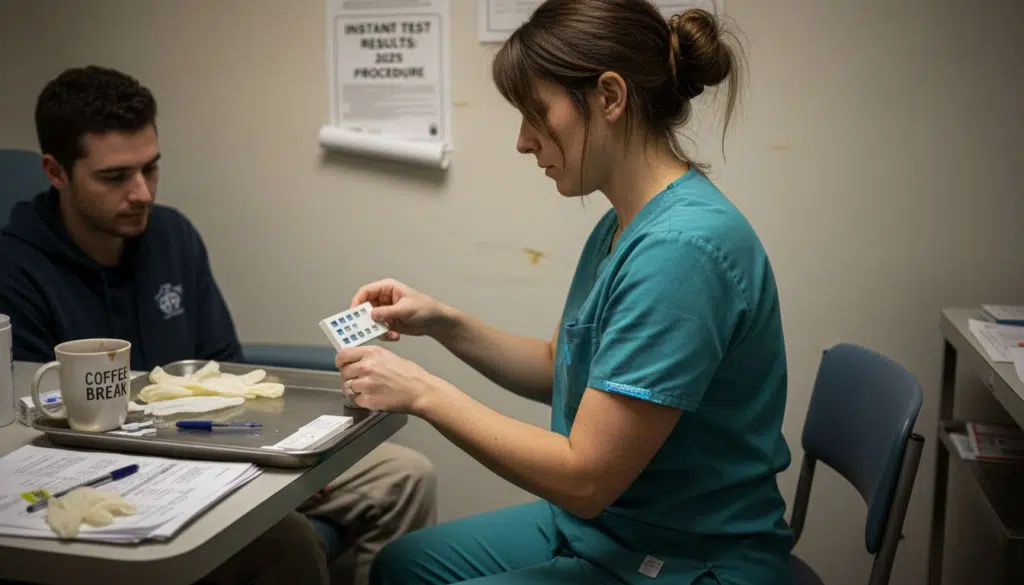
On-site testing reduces staffing requirements and transportation costs. Your team administers tests directly at clinics, job sites, or treatment centers without coordinating with external laboratories. Results appear within 5 to 15 minutes, allowing immediate action on positive screens or proceeding with hiring and patient intake.
Pre-employment screening efficiency improves dramatically with rapid testing. Candidates receive conditional offers faster, reducing dropout rates during extended waiting periods. Regulatory compliance becomes more manageable when you can conduct random testing without disrupting operations for days.
The technology has become an industry standard. Consider these advantages:
- Immediate results enable same-day hiring decisions
- Lower per-test costs when accounting for reduced administrative overhead
- Improved candidate experience with faster turnaround
- Enhanced compliance through simplified random testing programs
“Organizations adopting rapid testing report 60% reductions in time-to-hire while maintaining rigorous screening standards. The technology pays for itself through improved operational efficiency.”
Rapid testing complements rather than replaces laboratory confirmation for positive results. Instant drug testing benefits include preliminary screening speed while maintaining confirmation accuracy when needed. This two-tier approach balances cost with forensic defensibility.
Expansion of Multi-Panel Testing Beyond the Basics
Modern multi-panel drug testing kits have expanded far beyond traditional five-substance screens. Today’s comprehensive panels detect 10 to 15+ substances including synthetic opioids like fentanyl analogs and medetomidine that were rarely tested five years ago. This expansion responds to the evolving drug landscape where designer substances appear faster than regulations can adapt.
Broader panels improve detection accuracy and efficiency by testing multiple drugs simultaneously. A single sample provides comprehensive results rather than requiring multiple tests. This approach reduces costs per substance detected while accelerating screening workflows.
Employers and clinical facilities increasingly demand detection of emerging synthetic drugs. Missing a fentanyl analog or designer stimulant creates liability exposure and treatment gaps. The prevalence of these substances makes comprehensive panels a necessity rather than a luxury.
Here’s how different panel sizes compare:
| Test Type | Substances Detected | Synthetic Coverage | Typical Cost | Best Use Case |
|---|---|---|---|---|
| 5-Panel | Basic drugs (THC, cocaine, opiates, amphetamines, PCP) | Limited | Lowest | Basic pre-employment screening |
| 10-Panel | Adds benzodiazepines, barbiturates, methadone, propoxyphene | Moderate | Mid-range | Healthcare and transportation sectors |
| 12-Panel | Includes oxycodone, MDMA, additional opioids | Good | Higher | Treatment centers and comprehensive programs |
| 14+ Panel | Fentanyl, tramadol, meperidine, buprenorphine | Comprehensive | Highest | High-risk populations and clinical monitoring |
Key advantages of expanded panels include:
- Single test covers emerging threats without multiple purchases
- Reduced false negatives from undetected synthetic substitutes
- Better alignment with updated DOT and clinical guidelines
- Cost efficiency when detecting multiple substances per sample
Pro tip: Match your panel selection to actual prevalence data in your region and industry. Popular multi-panel drug tests should reflect the substances your population actually uses, not just the most comprehensive option available.
Advances in Adulteration Detection Methods
Specimen validity testing has become essential as individuals develop sophisticated tampering methods. SVTs detect sample adulteration, substitution, and dilution attempts that create false negatives. Quest Diagnostics reports increased SVT adoption across workplace and clinical settings to maintain result integrity.
Adulteration detection examines pH levels, creatinine concentration, specific gravity, and oxidant presence. These parameters reveal whether someone added water, bleach, or commercial adulterants to their sample. Temperature strips confirm the sample came from the donor’s body rather than a concealed container.
Workplace and clinical settings benefit differently from adulteration detection. Employment screening protects hiring decisions from manipulated results, while treatment monitoring ensures patients comply with recovery protocols. Both applications require confidence that test results reflect actual drug use.
Proactive adulteration detection reduces costly false negatives and compliance risks. A single undetected positive in safety-sensitive positions creates liability exposure. Treatment programs lose effectiveness when patients successfully mask substance use.
Consider these implementation strategies:
- Prioritize tests with integrated temperature strips and validity checks
- Establish clear protocols for handling invalid specimens
- Train collection staff to recognize common tampering indicators
- Document chain of custody meticulously for forensic defensibility
- Balance adulteration detection costs against false negative risks
Pro tip: Bulk ordering tests with advanced adulteration detection improves cost-effectiveness. Volume discounts offset the premium for SVT features, making comprehensive validity testing affordable even for budget-conscious programs.
Technological Advancements: Alternative Specimens and AI Integration
Oral fluid testing represents a significant innovation in specimen collection methodology. DOT approval for 2026 validates oral fluid as a reliable alternative offering faster results with lower adulteration risk. The less intrusive collection process improves donor experience while maintaining detection accuracy.
Oral fluid advantages extend beyond comfort. Collection requires minimal privacy, reducing facilities requirements and enabling observed collection without invasiveness. The shorter detection window captures recent use more effectively than urine for certain applications.
AI and cloud-based data management systems are transforming result reporting and compliance tracking. These platforms automate anomaly detection, flagging unusual patterns that might indicate systematic issues. Audit compliance becomes straightforward when all testing data centralizes in searchable, reportable formats.
Technology integration supports enhanced decision-making through real-time analytics. You can track positivity rates across locations, identify emerging substance trends, and adjust testing protocols based on actual data. Regulatory adherence improves when systems automatically generate required reports and maintain documentation.
Key technological considerations include:
- Evaluate oral fluid testing for situations requiring observed collection
- Assess data management platforms for multi-site coordination
- Consider AI-driven analytics for trend identification
- Ensure cloud systems meet HIPAA and data security requirements
- Integrate new technologies gradually to maintain program continuity
Procurement managers should prioritize technologies that simplify compliance while improving data accuracy. The investment in modern systems pays returns through reduced administrative burden and enhanced program effectiveness.
Market Growth, Regulatory Impact, and Cost Considerations
The U.S. drug abuse testing market reached $992.57 million in 2024 with projected growth of 4.65% CAGR through 2030. This expansion reflects increasing substance abuse prevalence, particularly synthetic opioids, and regulatory requirements for expanded screening programs.
Regulatory trends drive demand for sophisticated testing capabilities. Fentanyl positivity rates are over seven times higher in random tests versus pre-employment screening, underscoring the importance of ongoing monitoring. Regulations increasingly mandate random testing programs that detect synthetic opioids and designer drugs.
Cost-effective procurement requires balancing multiple factors. FDA approval and CLIA waiver status are non-negotiable for compliance, but panel coverage and testing features vary significantly in price. Smart procurement managers optimize budgets without compromising quality or legal defensibility.
Bulk purchasing FDA-approved, CLIA-waived tests significantly reduces cost per test. Volume discounts of 20% to 40% are common when ordering quantities that cover quarterly or annual needs. The cost benefits of bulk purchasing extend beyond unit price to include reduced shipping frequency and simplified inventory management.
Here’s how regulatory and cost factors compare:
| Factor | Impact on Procurement | Optimization Strategy | Cost Consideration |
|---|---|---|---|
| FDA Approval | Mandatory for compliance | Verify before purchase | No cost premium for approved products |
| Panel Size | Determines detection scope | Match to actual risk profile | Higher panels cost more per test |
| Adulteration Detection | Reduces false negatives | Essential for high-risk populations | 15-25% premium over basic tests |
| Bulk Ordering | Lowers per-unit cost | Forecast annual needs accurately | 20-40% savings on large orders |
| Rapid vs. Lab | Affects turnaround time | Use rapid for immediate decisions | Rapid tests cost more but save on logistics |
Key procurement strategies include:
- Negotiate volume pricing based on annual consumption projections
- Standardize on fewer test types to maximize bulk discounts
- Balance comprehensive panels against actual detection needs
- Consider wholesale drug test kits advantages for consistent supply
- Monitor regulatory changes that might require panel adjustments
Summary Comparison and Situational Recommendations
Choosing the optimal drug testing solution depends on matching test characteristics to your specific requirements. This comparison clarifies which features matter most for different scenarios:
| Feature | 5-Panel Rapid | 10-Panel Standard | 12+ Panel Comprehensive | With Adulteration Detection |
|---|---|---|---|---|
| Turnaround Time | 5-10 minutes | 15 minutes | 15-20 minutes | 15-20 minutes |
| Detection Scope | Basic drugs only | Adds benzodiazepines, barbiturates | Includes synthetics, fentanyl | Varies by base panel |
| Adulteration Testing | Optional | Optional | Optional | Integrated |
| Best For | Pre-employment basic screening | General workplace programs | Treatment centers, high-risk | Compliance-critical applications |
| Relative Cost | Lowest | Moderate | Higher | Premium |
Situational recommendations guide selection based on common use cases. Pre-employment screening in low-risk industries often succeeds with 5-panel drug test options that cover DOT-required substances economically. These basic panels satisfy regulatory minimums while controlling costs.
Comprehensive clinical monitoring requires 12-panel drug test configurations detecting synthetic opioids and designer drugs. Treatment facilities must identify substance substitution attempts that undermine recovery programs. The investment in broader panels prevents treatment failures from undetected use.
Compliance-focused applications demand integrated adulteration detection. Safety-sensitive positions in transportation, healthcare, and construction cannot risk false negatives from tampered samples. The premium for SVT features is negligible compared to incident liability costs.
Follow this stepwise approach for optimal selection:
- Identify mandatory regulatory requirements for your industry and location
- Assess actual substance prevalence in your population using regional data
- Determine whether rapid results justify premium pricing for your workflow
- Evaluate adulteration risk based on population and consequences of false negatives
- Calculate total annual cost including volume discounts and administrative savings
- Select the minimum panel and feature set meeting all requirements economically
Enhance Your 2026 Drug Testing Program with Slash Medical
Navigating 2026’s drug testing landscape becomes straightforward when you partner with suppliers offering comprehensive, certified solutions. Slash Medical provides FDA-approved, CLIA-waived drug tests supporting rapid screening, multi-panel detection, and adulteration monitoring aligned with trends discussed throughout this article.
Competitive pricing structures include bulk order discounts that optimize procurement budgets without sacrificing quality. Whether you need 5 panel drug tests for basic screening or 12 panel drug tests for comprehensive monitoring, volume pricing makes advanced testing capabilities affordable.

Clinics and staffing agencies trust these solutions to streamline testing programs with reliable, compliant products. Access to wholesale drug test kits ensures consistent supply and predictable costs throughout the year. Your testing program deserves the same quality and efficiency advantages available to leading organizations nationwide.
Frequently Asked Questions
What are the most important certifications to look for in drug testing kits?
FDA approval and CLIA waiver status are critical for ensuring legal compliance and trustworthy results. These certifications validate that tests meet rigorous accuracy standards for forensic and clinical use. Always verify these credentials before purchasing to protect your organization from liability and ensure defensible results.
How do multi-panel drug tests improve detection of synthetic drugs?
They include a wider range of substances such as fentanyl analogs and designer opioids not covered by basic five-substance panels. This expanded coverage reduces false negatives when individuals use synthetic substitutes. Meeting evolving regulatory demands requires detecting these emerging threats that proliferate faster than traditional drugs.
What are cost-effective strategies for drug test procurement in 2026?
Ordering bulk quantities of FDA-approved and CLIA-waived tests lowers per-unit cost through volume discounts of 20% to 40%. Balancing features like panel size and adulteration detection with budget is essential. Focus spending on capabilities matching your actual risk profile rather than purchasing maximum features universally. Strategic ordering drug tests in bulk based on annual forecasts optimizes both cost and supply continuity.
Are oral fluid drug tests a reliable alternative to urine tests?
Oral fluid testing is less intrusive and approved by DOT for 2026, offering faster results and less adulteration risk. The collection process requires minimal privacy and enables observed sampling without invasiveness. However, oral fluid has a shorter detection window than urine, typically capturing use within the past 24 to 48 hours rather than several days, making it ideal for detecting recent impairment.
How do Rapid Testing Trends 2026 impact procurement?
Rapid Testing Trends 2026 prioritize point-of-care speed, 4.65% market growth, and multi-panel kits for synthetic drugs. Procurement managers navigate this by balancing cost-effective bulk ordering with FDA-compliant testing to ensure reliable results and streamlined compliance.