
OEM Drug Test Manufacturing: Impact on Clinical Supply Chains
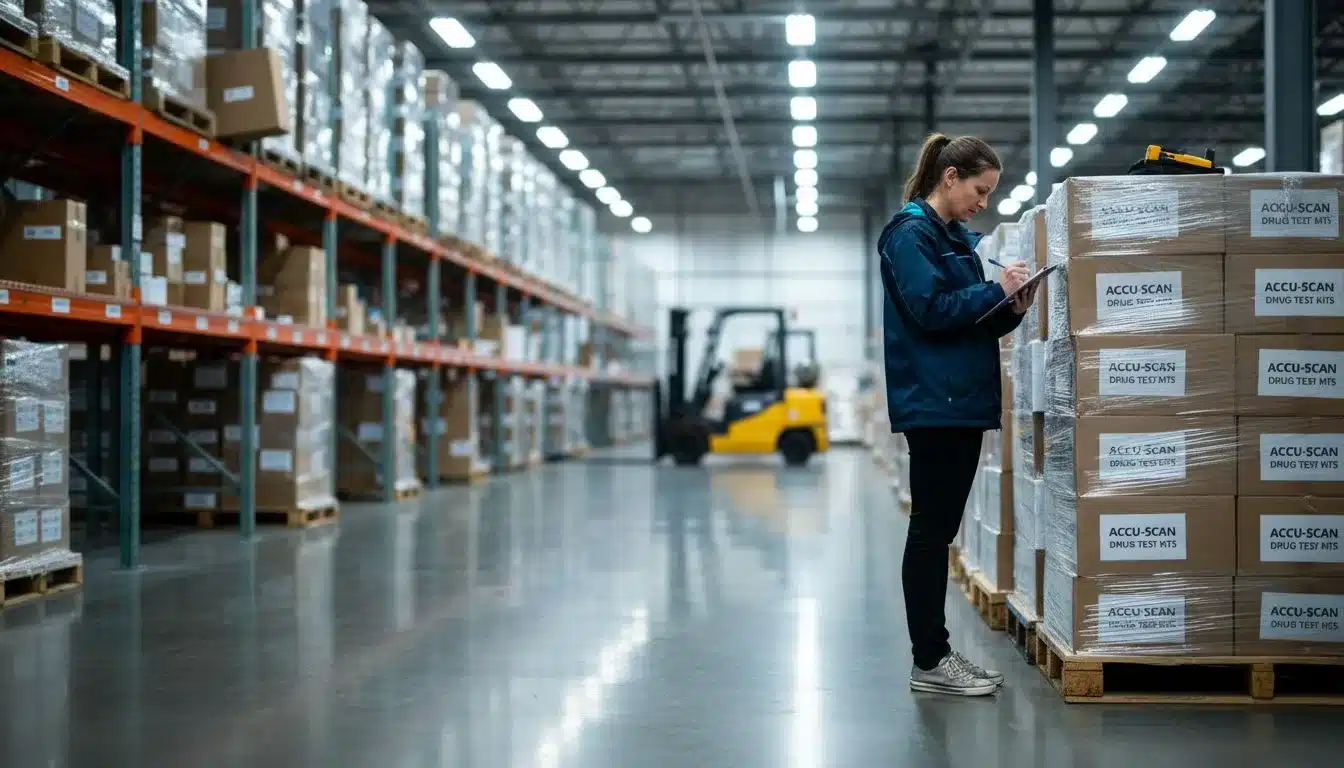
Managing drug testing supplies across multiple regions can create daily headaches for procurement managers. With supply chain disruptions and strict regulatory requirements in countries like the United States or Canada, reliable sourcing solutions are non-negotiable. Choosing OEM drug test manufacturing empowers clinics and staffing agencies with flexible, customized kits while controlling costs and maintaining compliance. This article reveals how OEM partnerships let you access advanced drug testing options, streamline orders, and uphold quality—no matter your clinic’s scale or global location.
Table of Contents
- Defining OEM Drug Test Manufacturing Models
- Types of OEM Drug Testing Kits and Technologies
- OEM Manufacturing Workflow and Customization Options
- Compliance, Certification, and Quality Standards
- Real-World Benefits and Common Pitfalls to Avoid
Key Takeaways
| Point | Details |
|---|---|
| OEM Manufacturing Flexibility | Enables clinics to adjust drug testing supplies based on fluctuating demand without incurring penalties or managing excess inventory. |
| Maintaining Quality Control | Clinics retain control over quality standards while manufacturers handle production logistics, ensuring consistent product quality. |
| Regulatory Compliance | A reliable OEM partner navigates complex regulatory frameworks, helping clinics meet legal standards across various territories. |
| Cost Efficiency | OEM manufacturing reduces per-unit costs significantly, allowing clinics to redirect savings into patient care or service expansion. |
Defining OEM Drug Test Manufacturing Models
OEM drug test manufacturing is straightforward: specialized manufacturers produce testing kits and components under your brand or exact specifications. You don’t build the factory or hire the production team—your partner handles it. This model lets clinics and staffing agencies access reliable drug testing supplies without massive capital investment.
Think of it like this. A manufacturer takes your requirements, produces the kits, and ships them to you branded as your product. You control quality standards and regulatory compliance, but they manage the operational complexity.
How OEM Models Work in Practice
OEM manufacturing approaches range from complete turnkey production to supplying specific reagents or components. Your clinic or staffing agency chooses the level of involvement that fits your operation.
Common OEM models include:
- Full turnkey production: Manufacturer designs, develops, manufactures, and packages complete drug test kits ready for distribution
- Component supply: You purchase key reagents or test strips and assemble them yourself or through a secondary partner
- Custom formulation: Manufacturer develops proprietary test formulations tailored to your clinical protocols
- Bulk coating services: Reagents are applied to your test strips or cups at scale
Why Flexibility Matters for Your Supply Chain
Your procurement needs change seasonally. Summer staffing increases. Winter treatment admissions spike. An OEM partner accommodates these fluctuations without forcing you to manage inventory bloat or production shutdowns.Flexibility in production scale and regulatory compliance integration keeps your supply chain responsive. You scale up when demand rises and scale down when it drops.
Key advantages for your operations:
- Adjust order volumes monthly without penalty
- Avoid minimum order requirements that lock inventory
- Access innovation without R&D investment
- Leverage manufacturer expertise in regulatory updates
- Focus your staff on clinical care, not production logistics
Quality Control Stays Your Responsibility
OEM manufacturing doesn’t mean losing control. You set standards. The manufacturer executes them. Regular audits, testing protocols, and documentation requirements protect your reputation and your patients.
OEM models support clinical supply chains through consistent availability and quality assurance. Your partner manufactures; you verify.
You maintain authority over:
- Test panel configurations (5-panel, 10-panel, custom combinations)
- Sensitivity and specificity thresholds
- Packaging and labeling requirements
- Adulterant detection capabilities and accuracy standards
- Shipping timelines and logistics
OEM manufacturing transfers production burden to specialists while keeping quality control firmly in your hands.
Regulatory Frameworks Across Markets
Your OEM partner must understand FDA requirements, CLIA waivers, and state-specific regulations. Global manufacturers navigate different compliance standards depending on your distribution territory.
A reliable OEM partner ensures your drug test kits meet forensic standards for legal admissibility, clinical standards for workplace programs, and treatment center standards for patient management.
Pro tip: Ask your OEM partner for a compliance roadmap showing how they handle FDA updates, CLIA requirements, and state regulatory changes. This prevents costly surprises when regulations shift mid-contract.
Types of OEM Drug Testing Kits and Technologies
OEM manufacturers produce multiple drug testing technologies, each with distinct advantages for your clinic or staffing agency. Understanding these options helps you select kits that match your operational needs, budget, and regulatory requirements.
Your choice affects testing speed, accuracy, cost per test, and patient experience. The right OEM partner offers flexibility across multiple platforms.
Urine Testing: The Backbone of Drug Screening
Urine testing remains the most cost-effective option for high-volume screening. Drug testing kits include immunoassays and rapid point-of-care tests that deliver results within minutes.
Urine-based OEM kits come in several formats:
- Integrated test cups: All reagents contained in a single cup with built-in results display
- Dip cards and strips: Reagent-coated cards dipped into collected urine samples
- Cartridge systems: Disposable cartridges inserted into portable readers
- Panel variations: 5-panel, 10-panel, or custom configurations targeting specific substances
Understanding differences between cups and dip cards helps match your workflow to the right format.
Oral Fluid and Saliva Testing
Oral fluid testing eliminates collection privacy concerns and reduces adulteration risks. Your OEM partner can supply saliva test cups that deliver reliable screening without urine collection logistics.
This technology appeals to:
- Workplace programs requiring non-invasive testing
- Treatment facilities serving patients uncomfortable with urine collection
- Mobile clinics needing portable solutions
- Organizations prioritizing dignity and compliance
Oral fluid tests typically detect drugs within 24-48 hours of use, making them ideal for recent substance detection.
Advanced Chromatographic Technologies
Chromatographic methods like GC-MS and LC-MS provide specificity and sensitivity exceeding rapid tests. These confirmatory technologies verify positive results and detect metabolites.
OEM manufacturers partner with labs offering chromatographic analysis as a secondary confirmation step. Your initial rapid screening identifies candidates; chromatography confirms results.
Hair and Blood Testing Options
Hair follicle analysis detects drug use over extended periods (90+ days), while blood tests show active drug presence. OEM manufacturers capitalize on diverse testing technologies including hair and blood kits.
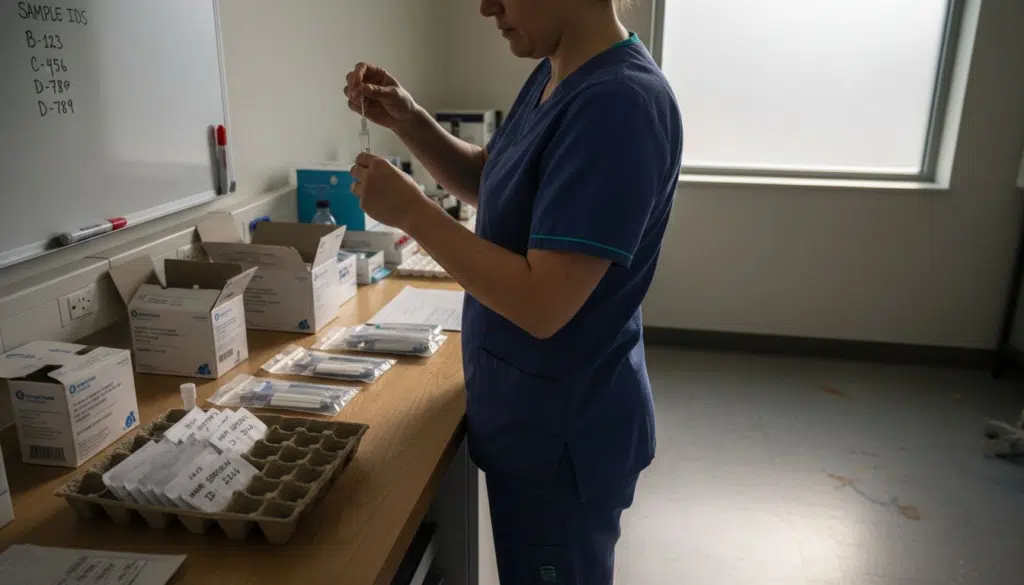
These suit specialized applications:
Here is a comparison of drug testing technologies and their ideal use cases:
| Technology Type | Speed of Results | Best for Applications | Typical Detection Window |
|---|---|---|---|
| Urine Test Cups | Minutes | High-volume screening, clinics | 1-4 days |
| Oral Fluid Tests | 5-10 minutes | Mobile/onsite, privacy-sensitive | 1-2 days |
| Chromatographic Analysis | Hours to days | Legal, forensic confirmation | 1-7 days (depends) |
| Hair Follicle Tests | Days (lab required) | Long-term use detection, forensic | Up to 90 days |
| Blood Tests | Minutes to hours | Recent use, impairment cases | Few hours to 1-2 days |
- Legal cases requiring extended detection windows
- Pre-employment screening for safety-sensitive positions
- Monitoring compliance in treatment programs
- Forensic investigations
Integrated Digital Reporting
Modern OEM kits integrate with electronic reporting systems. Results flow directly to your compliance database, eliminating manual entry errors and accelerating documentation.
Your OEM partner should offer:
- Cloud-based result tracking
- Integration with your existing EHR or LIMS
- Automated compliance reporting
- Chain-of-custody documentation
Select OEM technologies matching your testing volume, detection windows, and integration requirements—one platform rarely serves all needs.
Pro tip: Request sample kits from your OEM partner covering urine cups, oral fluid tests, and their confirmatory process. Test them in your workflow before committing to bulk orders, ensuring ergonomics and staff training align with your operations.
OEM Manufacturing Workflow and Customization Options
The OEM manufacturing workflow moves your concept from idea to finished product through systematic stages. Understanding each step helps you communicate clearly with your manufacturing partner and set realistic timelines for supply chain launches.

Customization options exist at nearly every stage. Your decisions here determine final kit performance, cost, and market positioning.
From Concept to Design
OEM manufacturing involves steps from initial concept and product design through reagent development. You bring your specifications; your partner develops the technical roadmap.
This phase includes:
- Defining target analytes and detection thresholds
- Selecting test format (cups, strips, cartridges)
- Establishing panel configurations (5-panel, 10-panel, custom)
- Determining sensitivity and specificity targets
- Planning packaging and labeling requirements
Clear specification documents prevent misalignment later. Invest time here defining exactly what you need.
Reagent Development and Pilot Testing
Your OEM partner develops or sources reagents matching your specifications. Pilot batches test performance before committing to full-scale manufacturing.
Customization options include modifications to reagents, assay components, and formulations fitting your clinical requirements. This is where your kits gain competitive advantages.
Pilot testing validates:
- Result accuracy and reliability
- Shelf-life stability
- Temperature tolerance
- Cross-reactivity profiles
- User experience with your target operators
Scale-Up and Production
Once pilot testing succeeds, manufacturing scales to commercial volumes. Your OEM partner optimizes production protocols while maintaining lot-to-lot consistency. Thermo Fisher’s OEM solutions offer turnkey manufacturing with optimization of manufacturing protocols and quality control testing. This turnkey approach compresses your time to market.
Production readiness requires:
- Equipment validation and calibration
- Staff training on your specifications
- Process documentation and standard operating procedures
- Quality benchmarking against control standards
- Supply chain security protocols
Quality Assurance Throughout
Quality assurance isn’t a single step—it runs parallel to manufacturing. Every batch undergoes testing against your approved specifications before release.
Your OEM partner maintains detailed lot documentation tracking:
- Raw material sources and specifications
- Manufacturing parameters and deviations
- Testing results and certifications
- Environmental conditions during production
- Chain-of-custody records
Lot-to-lot consistency separates reliable OEM partners from inconsistent suppliers—demand documentation proving every batch meets your standards.
Regulatory Compliance and Labeling
Workflow typically includes regulatory support enabling rapid market entry while maintaining GMP compliance. Your partner handles FDA submissions, CLIA waivers, and state-specific requirements.
Packaging and labeling customization includes:
- Branded boxes reflecting your clinic identity
- Multilingual instructions for diverse patient populations
- QR codes linking to digital results platforms
- Lot tracking and expiration dating
- Storage and handling specifications
Customization Without Complexity
Customization options shouldn’t slow production timelines. Experienced OEM partners balance flexibility with efficiency, using modular approaches that adapt quickly.
Common customizations adding minimal lead time:
- Changing panel configurations from existing reagent combinations
- Rebranding existing kits with your logo and colors
- Adjusting package quantities (50-pack, 100-pack, bulk containers)
- Adding your preferred detection thresholds
- Integrating your digital reporting requirements
Pro tip: Request a detailed timeline and customization menu from your OEM partner before negotiations begin. Know which modifications add days versus weeks to production, then prioritize changes affecting your competitive position.
Compliance, Certification, and Quality Standards
Compliance isn’t optional in OEM drug test manufacturing. Your partner must meet federal, state, and international regulations to keep your supply chain legal and your test results defensible. Non-compliance costs far more than compliance investment.
Regulatory standards vary by market and test type, but core principles remain consistent. Understanding these expectations protects your clinic or staffing agency from liability.
Current Good Manufacturing Practice (CGMP)
The FDA enforces CGMP regulations that OEM drug test manufacturers must follow to assure drug safety, quality, and efficacy. These aren’t suggestions—they’re mandatory requirements for anyone manufacturing test kits.
CGMP compliance encompasses:
- Validated manufacturing processes designed and tested to work reliably
- Quality control testing on every batch before release
- Rigorous documentation tracking materials, processes, and outcomes
- Staff training ensuring operators follow procedures consistently
- Regular inspections verifying ongoing adherence
Your OEM partner maintains detailed records proving CGMP compliance. Request audit reports before contracting.
Good Manufacturing Practice (GMP) Standards
Good Manufacturing Practice is a critical compliance standard ensuring that drug test manufacturing processes consistently produce products meeting quality requirements. The European Medicines Agency (EMA) enforces GMP globally through coordinated inspections.
GMP extends beyond individual batches to systemic quality assurance:
- Personnel qualification and continuous training
- Facility design preventing contamination and cross-contamination
- Equipment maintenance and calibration schedules
- Environmental monitoring in production areas
- Written procedures for every manufacturing step
- Change control protocols when processes are modified
If your kits distribute internationally, GMP compliance is non-negotiable.
FDA Approval and CLIA Waiver Requirements
Most OEM drug test manufacturers pursue FDA approval for their kits. Many achieve CLIA waiver status, meaning your clinic can perform testing without complex laboratory certifications.
FDA approval verifies:
- Analytical sensitivity and specificity
- Cross-reactivity with structurally similar compounds
- Clinical accuracy across diverse patient populations
- Shelf-life stability under normal storage conditions
- Instructions clear enough for actual users
CLIA waivers accelerate your path to deployment. Confirm your OEM partner’s kits hold current waivers before contracting.
State-Specific Regulations
Federal compliance doesn’t cover everything. Your state may require additional licensing, specific reporting formats, or retention periods for documentation.
Common state variations include:
- Minimum panel configurations for workplace testing
- Forensic chain-of-custody requirements
- Result confirmation timelines before reporting to employers
- Specimen retention periods (30, 90, or 365 days)
- Adverse event reporting to state health departments
Your OEM partner should assist navigating state-specific requirements in your distribution territory.
The table below summarizes key regulatory requirements and who is responsible for each within the OEM supply chain:
| Requirement | Responder in OEM Model | Purpose for Clinics/Agencies |
|---|---|---|
| FDA Approval | OEM Manufacturer | Ensures test quality and safety |
| CLIA Waiver Maintenance | OEM Manufacturer | Allows non-lab settings |
| State Compliance | Clinic/Agency & Manufacturer | Meets state-level legal needs |
| CGMP/GMP Adherence | OEM Manufacturer | Guarantees standardized production |
| Ongoing Quality Audits | Clinic/Agency | Maintains result reliability over time |
Quality Assurance Documentation
Compliance proves itself through documentation. Your OEM partner maintains quality files covering:
- Certificate of Analysis for every lot
- Raw material supplier certifications
- Manufacturing deviation logs and corrective actions
- Stability testing results and expiration dating
- Customer complaints and investigations
- Internal audit schedules and findings
Request sample quality files demonstrating their documentation rigor before signing contracts.
Regulatory compliance isn’t a checkbox activity—it’s a systematic commitment to consistent quality, documented at every step.
Pro tip: Ask your OEM partner for a compliance matrix showing which certifications and regulations apply to each kit type in your target markets. Schedule quarterly compliance reviews to catch regulatory changes before they affect your supply chain.
Real-World Benefits and Common Pitfalls to Avoid
OEM drug test manufacturing delivers tangible advantages for your supply chain, but success requires active management. Understanding both the wins and the traps helps you maximize value while avoiding costly mistakes.
The difference between thriving programs and struggling ones often comes down to anticipation and communication.
Real-World Benefits
Partnering with OEM manufacturers delivers benefits such as improved scalability, access to advanced technologies, and cost efficiencies. These advantages compound over time as your supply chain matures.
Key benefits your clinic or staffing agency gains:
- Rapid scaling without building factories or hiring production staff
- Technology access to newest immunoassay and detection methods
- Cost reduction through manufacturing efficiency and bulk purchasing
- Reduced time-to-market launching new test configurations in weeks, not months
- Flexibility adjusting volumes seasonally without penalty
- Risk transfer moving manufacturing complexity to specialists
A clinic growing from 50 tests monthly to 500 tests monthly doesn’t need to expand facilities or staff—your OEM partner scales production.
Cost Efficiency Without Quality Cuts
OEM manufacturing reduces per-unit costs significantly. Volume discounts, manufacturing expertise, and equipment optimization lower your test expenses without compromising accuracy or compliance.
Your savings reinvest into patient care or program expansion. This shifts procurement from a cost center into a competitive advantage.
The Forecasting Pitfall
Common pitfalls include poor forecasting leading to waste and insufficient quality control causing deviations. Underestimating demand strands inventory; overestimating wastes budget on expired kits.
Forecast failures happen when:
- Staffing patterns shift unexpectedly (seasonal hiring, contract wins)
- You don’t communicate forecast changes to your OEM partner promptly
- Lead times surprise you—manufacturing takes weeks, not days
- Inventory aging without tracking expiration dates
Work with your partner establishing quarterly forecasts adjusted monthly based on actual usage.
Supply Chain Visibility
Inadequate supply chain visibility delays product delivery. You can’t plan shipments or staffing if you don’t know when kits arrive.
Demand this visibility from your OEM:
- Real-time production status updates
- Confirmed shipping dates at least 14 days ahead
- Tracking numbers enabling shipment monitoring
- Notification of delays or quality holds immediately upon discovery
- Integration with your inventory management system if possible
Quality Control and Consistency
Price cuts that compromise quality create liability, not savings. OEM manufacturing requires managing product integrity through robust quality systems.
Insist on:
- Monthly certificate-of-analysis reviews
- Unannounced audits of manufacturing facilities
- Written deviations explained promptly
- Third-party testing verification if concerns arise
Real-world success comes from clear communication, realistic forecasting, and unwavering quality standards—not from squeezing vendors on price.
Regulatory Change Management
Regulations shift. Your OEM partner must track FDA updates, CLIA changes, and state-specific requirements, communicating how each affects your kits.
Some OEM partners assign compliance liaisons. Others expect you to monitor changes yourself. Clarify this before contracting.
Pro tip: Create a quarterly business review schedule with your OEM partner covering forecast accuracy, quality metrics, regulatory updates, and upcoming changes. Document agreements in writing and track promised commitments to hold both parties accountable.
Streamline Your Drug Test Supply Chain with Slash Medical
Managing fluctuating demand and strict regulatory compliance can be challenging for clinics and staffing agencies using OEM drug test manufacturing models. The article highlights critical pain points such as maintaining quality control, scaling production efficiently, navigating complex FDA and CLIA requirements, and ensuring timely delivery to avoid costly inventory waste. At Slash Medical, we understand these challenges and offer specialized solutions designed to simplify your clinical supply chain.
With over 400 FDA-approved and CLIA-waived drug testing products, including urine and oral fluid test cups, dip cards, and strips, Slash Medical empowers your organization to respond swiftly to seasonal demands without sacrificing quality or compliance. Our private label and OEM manufacturing services give you control over panel configurations, adulterant detection, and packaging, while we handle the manufacturing and logistics complexities. Explore how we support your goals of cost-effective bulk purchasing, reliable supply, and smooth integration into your testing programs by visiting our main site and learn more about our comprehensive OEM services.

Take control of your drug testing supply chain today with Slash Medical. Visit https://slashmedical.com to browse our extensive catalog, request custom quotes, and experience a partner dedicated to your operational success. Do not wait for supply disruptions or regulatory gaps to impact your programs act now and secure the steady, compliant supply your clinic or staffing agency deserves.
Frequently Asked Questions
What is OEM drug test manufacturing?
OEM drug test manufacturing involves specialized manufacturers producing drug testing kits and components under your brand specifications without requiring you to manage production facilities or hire staff.
How does flexible manufacturing benefit clinical supply chains?
Flexible manufacturing allows clinics and staffing agencies to adjust order volumes monthly, helping to manage seasonal fluctuations in demand without incurring excess inventory or production downtime.
What types of drug testing technologies are available through OEM manufacturers?
OEM manufacturers provide various drug testing technologies, including urine testing, oral fluid tests, chromatographic methods, hair follicle analysis, and blood testing, each suited for different applications and detection windows.
What roles do quality control and regulatory compliance play in OEM drug test manufacturing?
Quality control is the responsibility of the client while OEM partners must adhere to regulations like CGMP and ensure products meet FDA requirements. Proper documentation and regular audits help maintain product reliability and legal compliance.