
FDA Approval for Drug Tests: Ensuring Compliance

Meeting strict regulatory standards is a daily reality for procurement managers responsible for patient care in clinics and treatment centers. Reliable drug testing tools must not only deliver accurate results, they must also be backed by the most rigorous review in the industry. Choosing FDA-approved drug testing kits means selecting products that have been thoroughly evaluated for safety, effectiveness, and clinical reliability by the Food and Drug Administration, giving organizations confidence to meet compliance demands while protecting patient wellbeing.
Table of Contents
- What FDA Approval for Drug Tests Means
- Types of FDA-Approved Drug Testing Products
- How the FDA Approval Process Works
- Regulatory Standards and Required Documentation
- Implications for Clinics and Procurement Managers
Key Takeaways
| Point | Details |
|---|---|
| FDA Approval Ensures Reliability | FDA approval signifies that drug tests have undergone rigorous evaluation to verify their safety, effectiveness, and reliability for medical use. |
| Types of Drug Testing Products | Various FDA-approved drug tests, including urine, blood, saliva, hair follicle, and sweat patch tests, cater to different diagnostic needs across healthcare and legal environments. |
| Structured Approval Process | The FDA’s drug approval process includes multiple stages such as preclinical testing, clinical trials, and post-market monitoring, ensuring long-term safety and efficacy. |
| Importance of Compliance | Clinics must maintain compliance with FDA standards and ensure thorough documentation to uphold testing quality and patient safety in drug assessments. |
What FDA Approval for Drug Tests Means
Understanding FDA approval for drug tests represents a critical step in ensuring medical diagnostic reliability and patient safety. The Food and Drug Administration (FDA) plays a pivotal role in verifying that drug testing technologies meet stringent national standards before reaching healthcare providers.
The FDA approval process involves comprehensive evaluation to confirm a drug test’s accuracy, consistency, and clinical effectiveness. This rigorous assessment includes multiple critical stages:
- Detailed laboratory and clinical research documentation
- Comprehensive safety profile analysis
- Systematic review of test performance metrics
- Independent expert panel assessments
- Ongoing monitoring of test reliability
When conducting clinical drug test evaluations, the FDA’s Center for Drug Evaluation and Research (CDER) meticulously examines submitted data to determine whether a specific drug test provides demonstrable benefits that substantially outweigh potential risks. This thorough review ensures that medical professionals receive diagnostically precise and scientifically validated testing technologies.
The approval process is designed to protect patients by establishing strict standards for medical diagnostic tools. Healthcare organizations rely on these FDA-approved drug tests to make critical decisions about patient treatment, workplace screening, and legal compliance. Compliance verification becomes a fundamental aspect of maintaining high-quality medical testing protocols.
FDA approval means a drug test has been rigorously evaluated and determined to be safe, effective, and clinically reliable.
Pro tip: Always verify the FDA approval status of drug testing kits before procurement to guarantee maximum accuracy and legal compliance.
Types of FDA-Approved Drug Testing Products
Medical professionals and organizations have access to multiple FDA-approved drug testing products designed to detect various substances and meet rigorous diagnostic standards. Urine drug tests remain the most prevalent screening method, providing a comprehensive approach to substance detection across multiple clinical and workplace settings.
The primary categories of FDA-approved drug testing products include:
- Urine drug tests: Most common screening method
- Blood drug tests: Provide precise substance concentration measurements
- Saliva drug tests: Offer quick, non-invasive screening
- Hair follicle drug tests: Detect long-term substance use patterns
- Sweat patch drug tests: Enable continuous monitoring
These diagnostic tools serve different purposes across various environments, from healthcare monitoring to workplace screening and legal compliance. Multi-panel drug test kits have gained significant popularity, allowing simultaneous detection of multiple substance classes with a single testing procedure.
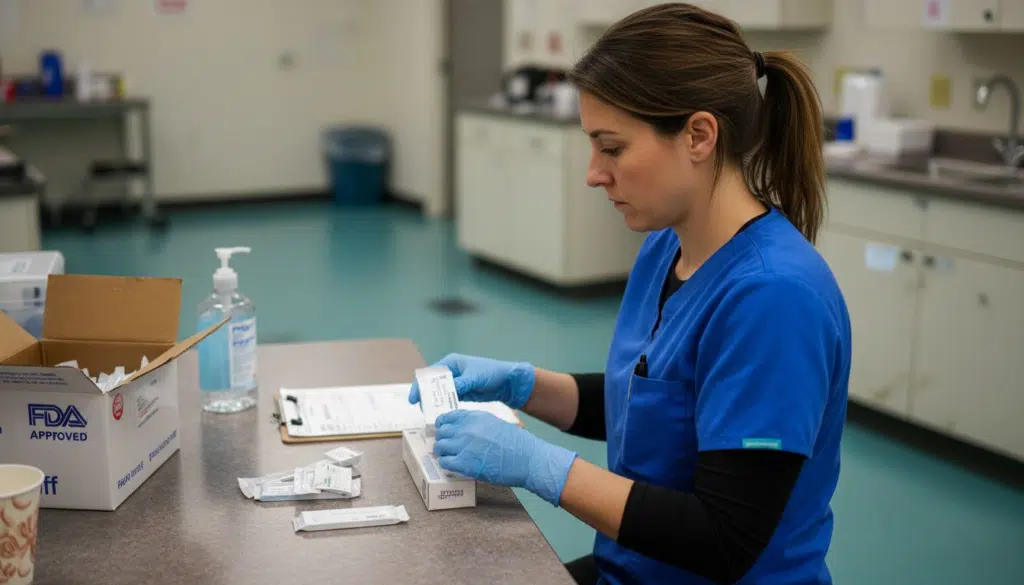
Here’s a summary of FDA-approved drug testing product types and their typical uses:
| Product Type | Main Detection Purpose | Common Environment |
|---|---|---|
| Urine Drug Tests | Broad substance screening | Clinics, workplaces |
| Blood Drug Tests | Exact substance levels | Hospitals, specialty labs |
| Saliva Drug Tests | Recent use identification | Onsite, roadside screening |
| Hair Follicle Tests | Long-term use history | Legal, forensic settings |
| Sweat Patch Tests | Continuous monitoring | Court-ordered programs |
FDA-approved diagnostic devices must demonstrate exceptional accuracy, reliability, and consistent performance across different testing scenarios.
Each FDA-approved testing product undergoes stringent evaluation to ensure clinical validity. Healthcare providers and organizations rely on these standardized tests to make informed decisions about patient treatment, employee screening, and legal requirements. The comprehensive approval process guarantees that these testing technologies meet the highest standards of diagnostic precision.
Pro tip: Consult with FDA-approved diagnostic manufacturers to understand the specific detection windows and accuracy rates of different drug testing methodologies.
How the FDA Approval Process Works
The FDA drug approval process is a meticulously structured system designed to ensure the safety and effectiveness of medical diagnostic technologies. Multiple comprehensive stages guide the evaluation of drug testing products before they receive official authorization for medical use.
The key stages of FDA approval include:
- Preclinical Testing: Initial laboratory and animal research
- Investigational New Drug Application (IND): Formal submission of research data
- Clinical Trials: Comprehensive human testing across three distinct phases
- New Drug Application (NDA): Detailed documentation review
- Post-Market Monitoring: Continuous safety assessment
During the clinical trials phase, manufacturers must demonstrate the drug testing product’s reliability, accuracy, and consistent performance. Interdisciplinary FDA experts conduct thorough assessments, examining manufacturing quality, safety protocols, and potential clinical applications.
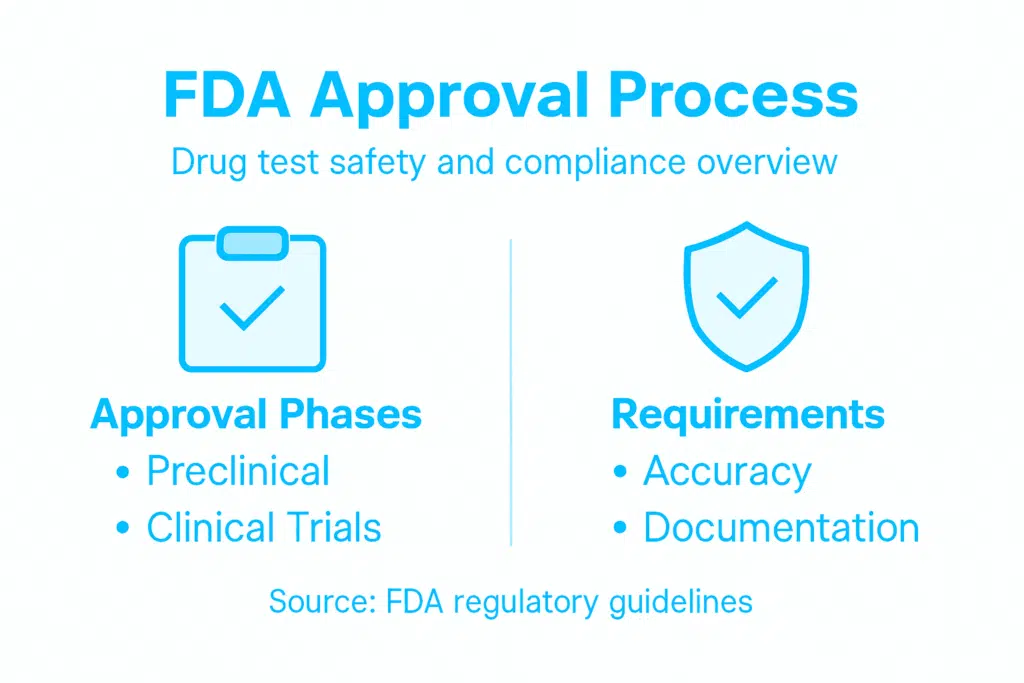
Below is a comparison of key FDA approval stages and their importance to drug testing reliability:
| Approval Stage | Core Process | Impact on Reliability |
|---|---|---|
| Preclinical Testing | Laboratory/animal studies | Identifies safety concerns |
| Clinical Trials | Human studies across phases | Confirms clinical accuracy |
| NDA Review | Documentation evaluation | Ensures regulatory oversight |
| Post-Market Monitoring | Ongoing safety assessments | Maintains product standards |
The FDA’s rigorous approval process serves as a critical safeguard, ensuring that only the most reliable diagnostic technologies reach healthcare providers and patients.
Special expedited programs exist for diagnostic technologies addressing critical medical needs. Accelerated approval pathways allow faster market introduction while maintaining stringent safety standards. These programs require manufacturers to complete post-approval confirmatory trials, providing additional evidence of the product’s effectiveness.
Pro tip: Request comprehensive documentation about a testing product’s FDA approval status, including specific trial data and performance metrics.
Regulatory Standards and Required Documentation
Drug testing manufacturers must navigate a complex landscape of regulatory documentation requirements to secure FDA approval. These stringent standards ensure that every diagnostic product meets the highest levels of safety, reliability, and clinical effectiveness.
The comprehensive documentation typically includes:
- Investigational Drug Brochures: Detailed product specifications
- Clinical Trial Reports: Comprehensive research findings
- Manufacturing Process Documentation: Precise production protocols
- Risk Assessment Summaries: Potential side effects and limitations
- Labeling and Packaging Information: Clear product instructions
Institutional Review Boards (IRBs) play a critical role in reviewing submitted documentation, ensuring that all research protocols protect participant safety and adhere to established regulatory guidelines. Manufacturers must demonstrate meticulous attention to detail, providing transparent and comprehensive evidence of their product’s performance and potential impact.
Regulatory compliance is not just a bureaucratic requirement, but a fundamental commitment to patient safety and scientific integrity.
Ongoing documentation submission remains a crucial aspect of maintaining FDA approval. Manufacturers must promptly report any changes in risk profiles, manufacturing processes, or clinical findings. This continuous monitoring ensures that approved drug testing products maintain their high standards throughout their lifecycle.
Pro tip: Maintain a comprehensive and well-organized documentation system that allows for rapid updates and transparent reporting of any product modifications.
Implications for Clinics and Procurement Managers
Clinics and procurement managers face complex challenges when selecting and implementing FDA-approved drug testing products. The regulatory landscape demands meticulous attention to detail and comprehensive understanding of compliance requirements.
Key operational considerations include:
- Regulatory Compliance: Ensuring all testing protocols meet FDA standards
- Product Validation: Verifying accuracy and reliability of testing kits
- Documentation Management: Maintaining comprehensive record-keeping
- Staff Training: Implementing rigorous testing protocols
- Risk Mitigation: Preventing potential legal and medical complications
Procurement strategies must evolve to address the intricate requirements of FDA-approved drug testing. Organizations need robust systems that can rapidly adapt to changing regulatory landscapes while maintaining the highest standards of patient care and diagnostic accuracy.
Successful implementation of FDA-approved drug testing requires a proactive approach to regulatory compliance and continuous quality management.
Institutional review processes play a critical role in ensuring that drug testing protocols protect patient rights and maintain scientific integrity. Clinics must develop comprehensive oversight mechanisms that go beyond mere regulatory checkbox compliance, focusing on creating a culture of continuous improvement and patient safety.
Pro tip: Develop a dedicated compliance team that stays current with FDA guidelines and conducts regular internal audits to ensure ongoing regulatory adherence.
Ensure FDA Compliance with High-Quality Drug Testing Supplies from Slash Medical
Staying ahead in regulatory compliance for FDA-approved drug tests requires reliable, accurate, and consistent testing products. The detailed approval process outlined in the article highlights how vital it is for clinics, treatment centers, and agencies to source drug testing kits that meet stringent FDA standards. Avoid risks related to inconsistent results or non-compliance by partnering with a provider that understands the critical importance of clinical validation, product reliability, and thorough regulatory documentation.

Discover a comprehensive selection of over 400 FDA-approved and CLIA waived drug testing products at Slash Medical. Whether you need urine drug test cups, oral test strips, or multi-panel kits, our offerings come with the assurance of scientific rigor and regulatory compliance. Benefit from our bulk purchasing options, private label manufacturing, and dependable nationwide shipping to streamline your procurement process. Take the crucial step now to equip your organization with trusted, compliant testing supplies that help you maintain the highest standards in patient care and workplace safety. Visit our platform today and secure the quality your programs demand.
Frequently Asked Questions
What does FDA approval mean for drug tests?
FDA approval signifies that a drug test has undergone rigorous evaluation to ensure it is safe, effective, and clinically reliable for use in medical diagnostics.
How does the FDA approval process work for drug testing products?
The FDA approval process involves multiple stages, including preclinical testing, submission of an Investigational New Drug Application (IND), clinical trials, New Drug Application (NDA) review, and post-market monitoring to ensure ongoing safety and effectiveness.
What types of drug testing products are FDA-approved?
FDA-approved drug testing products include urine tests, blood tests, saliva tests, hair follicle tests, and sweat patch tests, each designed for specific detection purposes within clinical and workplace environments.
Why is regulatory compliance important for clinics using drug tests?
Regulatory compliance is crucial for clinics as it ensures that the testing protocols meet FDA standards, thereby safeguarding patient safety, maintaining diagnostic accuracy, and avoiding potential legal complications.