
Role of Resellers in Drug Testing Industry Supply Chain

Finding the right balance between compliance and market demand is a daily challenge for American distributors and Canadian wholesalers supplying drug testing kits. With federal regulations shaping every transaction, understanding the role of resellers in drug testing industry as bulk buyers and strategic intermediaries is key. This article highlights the evolving business models, essential product types, and actionable risk management tactics that drive successful operations in the North American drug testing marketplace—focusing on how the role of resellers in drug testing industry bridges regulatory compliance and commercial agility.
Table of Contents
- Resellers In Drug Testing Industry Defined
- Types Of Drug Testing Products Offered
- How Resellers Enable Bulk Supply And Distribution
- Compliance Requirements For Drug Test Kit Resellers
- Financial, Legal, And Operational Risks For Resellers
Key Takeaways
| Point | Details |
|---|---|
| Role of Resellers | Resellers serve as vital intermediaries in the drug testing supply chain, providing essential services like localized market knowledge and faster product access to various organizations. |
| Compliance is Critical | Navigating complex regulatory requirements is crucial for drug test kit resellers to ensure product safety and legal distribution while protecting their business. |
| Diverse Product Portfolio | Offering a comprehensive range of drug testing methodologies helps resellers meet diverse client needs and maximize business opportunities. |
| Risk Management Strategies | Implementing proactive risk management frameworks helps resellers anticipate challenges, ensuring business sustainability and profitability. |
Resellers in Drug Testing Industry Defined
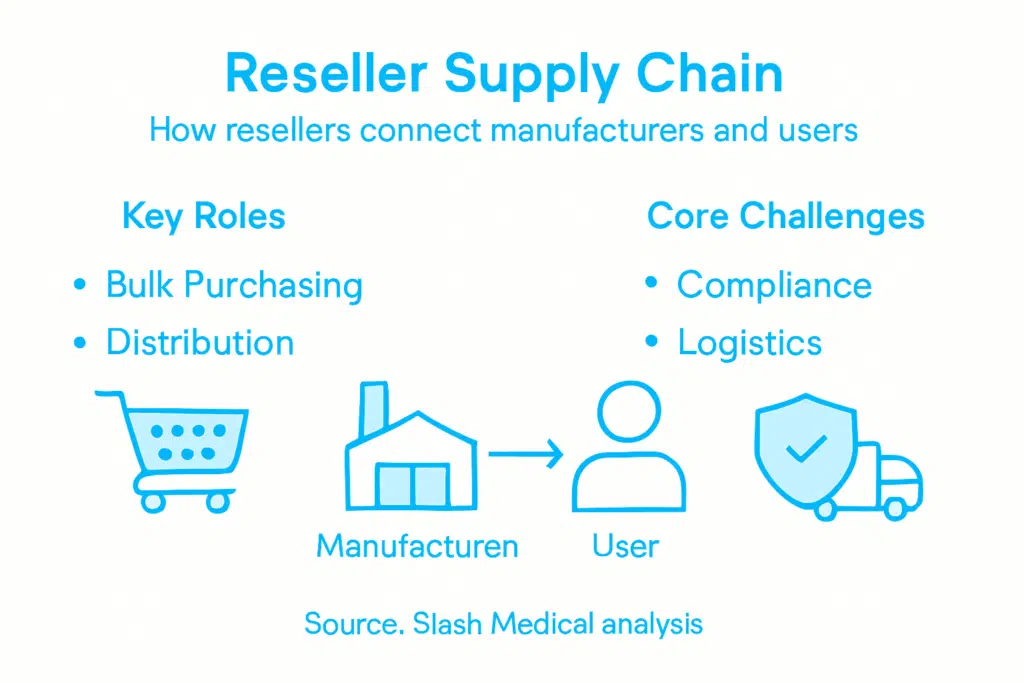
In the complex world of drug testing supply chains, resellers play a pivotal strategic role as critical intermediaries between manufacturers and end-users. Intermediary marketplace dynamics reveal that these entities purchase drug testing products in bulk from primary suppliers, then redistribute them to various organizations seeking testing capabilities.
Resellers in the drug testing industry typically operate through several distinct business models:
- Wholesale Distribution: Purchasing large quantities of test kits directly from manufacturers
- Drop Shipping: Facilitating sales without maintaining physical inventory
- Private Label Repackaging: Rebranding manufacturer products under their own company name
- Commission-Based Sales: Earning percentages from product transactions
The legal framework surrounding these resellers is tightly regulated. Controlled substances distribution guidelines mandate that these intermediaries comply with stringent federal and state regulations regarding product handling, documentation, and tracking.
Unlike direct manufacturers, resellers add significant value through:
- Localized market knowledge
- Faster product accessibility
- Customized ordering solutions
- Technical support and consultation
- Flexible purchasing options for smaller organizations
Commercial relationships in this sector require trust, compliance, and deep understanding of medical testing supply chain complexities. Successful resellers leverage industry expertise to bridge gaps between large-scale manufacturers and diverse customer needs.
Pro tip: Develop robust compliance protocols and invest in relationship-building with manufacturers to establish credibility in the drug testing reseller ecosystem.
Types of Drug Testing Products Offered
The drug testing supply chain encompasses a diverse range of testing products designed to meet varying organizational needs and detection requirements. Comprehensive drug testing methodologies reveal multiple testing approaches that cater to different contexts and detection windows.
Key drug testing product categories include:
- Urine Drug Test Cups: Most common workplace and clinical screening method
- Hair Follicle Tests: Provides extended historical substance usage detection
- Oral Fluid/Saliva Tests: Quick and non-invasive screening option
- Blood Tests: Precise current substance concentration measurement
- Sweat Patch Tests: Continuous monitoring for substance use
Each testing product offers unique advantages based on specific use cases. Occupational drug screening techniques demonstrate that organizations can select from immunoassay screening and confirmatory testing methods like gas chromatography-mass spectrometry (GC-MS).
Drug testing products typically vary across multiple dimensions:
Here’s a comparison of different drug testing product types and their business relevance:
| Testing Method | Typical Use Case | Detection Window | Business Impact |
|---|---|---|---|
| Urine Drug Test Cups | Workplace and clinical screening | Short to moderate | Cost-effective, rapid results |
| Hair Follicle Tests | Legal and forensic investigations | Long-term (months) | Historical analysis, high accuracy |
| Oral Fluid Tests | On-site, quick screening | Few hours to days | Non-invasive, immediate action |
| Blood Tests | Medical confirmation, emergencies | Very short (hours) | High precision, limited context |
| Sweat Patch Tests | Continuous monitoring programs | Days to weeks | Ongoing compliance assurance |
- Detection window length
- Substance panel complexity
- Invasiveness of collection method
- Accuracy and sensitivity
- Cost-effectiveness
- Regulatory compliance requirements
Precision and reliability are critical factors when selecting appropriate drug testing products. Resellers must understand the nuanced requirements of different industries to provide tailored testing solutions that meet specific organizational needs.

Pro tip: Develop a comprehensive product portfolio that includes multiple testing methodologies to serve diverse client requirements effectively.
How Resellers Enable Bulk Supply and Distribution
Resellers are critical infrastructure in the drug testing supply chain, transforming how testing products move from manufacturers to end-users. Wholesale distribution mechanisms require sophisticated logistics and strict regulatory compliance to ensure efficient product movement.
Key strategies resellers employ for bulk supply include:
- Aggregating product demand across multiple client segments
- Maintaining extensive warehouse inventory
- Negotiating volume-based pricing with manufacturers
- Implementing advanced inventory management systems
- Providing flexible shipping and distribution options
Global supply chain practices demonstrate that successful resellers must navigate complex regulatory environments while maintaining product integrity. This involves:
- Obtaining necessary state and federal licensing
- Implementing comprehensive traceability systems
- Ensuring proper storage and transportation conditions
- Maintaining detailed documentation for each product batch
- Compliance with Drug Supply Chain Security Act requirements
Logistical expertise is the cornerstone of effective bulk distribution. Resellers bridge critical gaps between large-scale manufacturers and diverse end-user markets, creating efficient pathways for drug testing product delivery.
Bulk distribution capabilities typically require significant infrastructure investments, including:
- Climate-controlled storage facilities
- Advanced tracking and inventory management technology
- Specialized transportation and handling equipment
- Comprehensive quality assurance protocols
- Robust compliance management systems
Pro tip: Invest in scalable technology platforms that enable real-time inventory tracking and seamless regulatory compliance monitoring.
Compliance Requirements for Drug Test Kit Resellers
Resellers in the drug testing supply chain must navigate a complex landscape of regulatory requirements to ensure product safety and legal distribution. Federal regulatory guidelines mandate strict protocols for drug test kit distribution and documentation.
Key compliance requirements encompass multiple critical areas:
- Obtaining proper state and federal licensing
- Maintaining comprehensive product documentation
- Ensuring supplier verification and legitimacy
- Implementing robust traceability systems
- Adhering to electronic interoperability standards
- Complying with Drug Supply Chain Security Act provisions
Drug Supply Chain Security regulations require resellers to maintain meticulous transaction histories and product tracking. This involves:
- Documenting each product transaction
- Verifying supplier credentials
- Tracking lot-level product information
- Maintaining electronic records for regulatory inspections
- Ensuring product authenticity and origin
Regulatory compliance is not just a legal requirement but a critical business strategy that protects both resellers and end-users. Successful drug test kit resellers must develop comprehensive systems that seamlessly integrate regulatory requirements into daily operational processes.
Complex compliance obligations typically require:
- Dedicated compliance management personnel
- Advanced digital tracking technologies
- Regular staff training on regulatory updates
- Comprehensive internal audit processes
- Proactive risk management strategies
Pro tip: Invest in automated compliance management software that provides real-time regulatory tracking and documentation capabilities.
Financial, Legal, and Operational Risks for Resellers
Drug test kit resellers navigate an intricate landscape of potential risks that can significantly impact business sustainability and profitability. Operational risk management frameworks highlight the complex challenges inherent in maintaining a robust supply chain ecosystem.
Critical risk categories for resellers include:
- Financial Risks:
- Inventory investment fluctuations
- Market demand volatility
- Pricing pressure from manufacturers
- Credit and payment collection challenges
- Potential revenue disruption
- Legal Risks:
- Regulatory non-compliance penalties
- Potential litigation from product issues
- Contract breach scenarios
- Intellectual property disputes
- Liability for product quality
Comprehensive risk management strategies emphasize the importance of proactive governance in mitigating potential business threats. Operational risks for drug test kit resellers often emerge from:
- Third-party supplier dependencies
- Cybersecurity vulnerabilities
- Supply chain disruption potential
- Rapidly changing regulatory landscapes
- Technology infrastructure limitations
Risk mitigation requires developing robust internal systems that anticipate and address potential challenges before they escalate. Successful resellers implement comprehensive strategies that include continuous monitoring, adaptive planning, and strategic risk assessment.
Effective risk management typically involves:
This summary shows major operational risks resellers face and their mitigation strategies:
| Risk Category | Example Threat | Mitigation Approach |
|---|---|---|
| Financial | Pricing volatility | Diversified supplier contracts |
| Legal | Regulatory non-compliance | Automated tracking systems |
| Operational | Supply chain disruptions | Real-time inventory management |
| Technological | Cybersecurity breaches | Secure digital infrastructure |
- Regular compliance audits
- Diversified supplier networks
- Advanced technological infrastructure
- Comprehensive insurance coverage
- Ongoing staff training programs
- Flexible contractual agreements
Pro tip: Develop a dynamic risk management framework that integrates continuous monitoring, scenario planning, and adaptive response strategies.
Streamline Your Drug Testing Supply Chain with Slash Medical
Navigating the complexities of bulk distribution, compliance, and diverse product needs as a drug test kit reseller can be challenging. The article highlights crucial pain points like maintaining robust inventory, adhering to strict regulatory requirements, and offering multiple testing methodologies to meet varied client demands. Slash Medical understands these challenges and provides a comprehensive solution through its specialized B2B platform designed to support resellers with reliable, FDA-approved products and flexible purchasing options.

Partner with Slash Medical to access over 400 SKUs of urine and oral drug test cups, dip cards, and more, all tailored for bulk ordering, private label services, and drop shipping. Visit Slash Medical today and transform your supply chain with competitive pricing, nationwide shipping, and the trusted support you need to stay compliant and meet your customers’ expectations. Start optimizing your reseller operations now by exploring our extensive product catalog and discover how we can help you grow with confidence.
Frequently Asked Questions
What types of drug testing products do resellers offer?
Resellers provide various drug testing products, including urine test cups, hair follicle tests, oral fluid tests, blood tests, and sweat patch tests. Each product type serves different purposes, detection windows, and organizational needs.
How do resellers manage compliance in the drug testing industry?
Resellers must navigate complex regulatory requirements, including obtaining proper state and federal licensing, maintaining accurate documentation, and ensuring product traceability. Compliance management systems are crucial for adhering to regulations like the Drug Supply Chain Security Act.
What are the operational risks faced by drug test kit resellers?
Resellers face several risks, including financial fluctuations, regulatory non-compliance, supply chain disruptions, and cybersecurity threats. Effective risk management strategies involve continuous monitoring, diversified supplier relationships, and robust internal systems.
What is the role of resellers in drug testing industry?
Resellers bridge the gap between manufacturers and clinics by buying drug testing kits in bulk and providing localized distribution, faster delivery, and compliance support—allowing smaller organizations to access quality supplies without direct manufacturer contracts.