Role of Private Label Drug Tests in Clinical Settings

Finding the right balance between cost savings and reliable diagnostics can feel challenging for many American clinics and treatment centers. With pressures mounting to deliver accurate drug testing while meeting strict regulatory standards, procurement officers must look beyond traditional branded options. This overview uncovers how private label drug testing solutions, engineered under rigorous FDA requirements and designed for customization, can help organizations reduce expenses and still deliver dependable results tailored to unique clinical needs.
Table of Contents
- Defining Private Label Drug Tests And Misconceptions
- Types Of Private Label Drug Testing Solutions
- Key Features And Manufacturing Processes
- Compliance, Regulatory Oversight, And FDA Concerns
- Financial Benefits And Competitive Advantages
- Common Pitfalls And Best Practice Strategies
Key Takeaways
| Point | Details |
|---|---|
| Private Label Drug Tests Are Reliable | These tests undergo the same rigorous FDA scrutiny as brand-name products, ensuring diagnostic accuracy and performance. |
| Cost-Effective and Customizable Solutions | Private label drug tests provide lower production costs and tailored options to meet specific clinical needs. |
| Important Compliance and Quality Checks | Continuous monitoring and robust quality management systems are essential to guarantee consistent test accuracy and adherence to regulations. |
| Anticipate Operational Risks | Implementing comprehensive training and documentation practices can mitigate common pitfalls that compromise testing reliability. |
Defining Private Label Drug Tests and Misconceptions
Private label drug tests represent a strategic solution for clinical settings, offering customized testing products manufactured by third-party producers but sold under a specific organization’s brand name. These specialized tests are not generic knockoffs, but carefully engineered diagnostic tools designed to meet rigorous pharmaceutical standards.
Contrary to widespread misconceptions, private label drug tests undergo the same stringent regulatory scrutiny as brand-name products. The FDA regulations mandate that these tests demonstrate equivalent safety, strength, and effectiveness as their more recognized counterparts. Clinics can confidently utilize these tests knowing they represent scientifically validated diagnostic instruments that deliver precise, reliable results.
The primary advantages of private label drug tests include cost-effectiveness and customization potential. Procurement officers can select tests tailored to specific clinical requirements, whether that means specialized panel configurations, unique packaging designs, or targeted detection parameters. Private label products maintain identical chemical compositions to established brand-name tests, ensuring no compromise in diagnostic accuracy.
Pro tip: When evaluating private label drug tests, request comprehensive validation documentation and confirm FDA compliance to guarantee diagnostic reliability and performance standards.
Types of Private Label Drug Testing Solutions
Clinical laboratories have access to a diverse array of drug testing technologies and specimen types, each offering unique advantages for diagnostic purposes. Private label drug testing solutions encompass multiple methodologies, ranging from simple immunoassay test kits to advanced chromatographic analysis, enabling healthcare providers to select precise testing approaches tailored to specific clinical requirements.

The primary categories of private label drug testing solutions include urine-based tests, blood screenings, oral fluid assessments, hair follicle analyses, and specialized breath tests. Each testing method provides distinct benefits: urine tests offer broad detection windows, blood tests deliver high accuracy, oral fluid tests ensure immediate substance detection, and hair follicle tests can reveal long-term substance use patterns. Confirmatory tests utilizing advanced chromatography and mass spectrometry provide the highest level of diagnostic precision for complex clinical scenarios.

Technology platforms for private label drug testing also vary significantly, with options including point-of-care immunoassay kits, rapid screening devices, and comprehensive laboratory-based analytical systems. Procurement officers must consider factors such as detection sensitivity, turnaround time, cost-effectiveness, and regulatory compliance when selecting appropriate testing solutions for their specific clinical environment. Specialized multi-panel configurations can simultaneously screen for multiple substance classes, enhancing diagnostic efficiency and comprehensive patient assessment.
Here’s a summary comparing primary specimen types used in private label drug testing solutions:
| Specimen Type | Detection Window | Best Use Case | Limitations |
|---|---|---|---|
| Urine | Several days | Broad substance screening | Possible adulteration |
| Blood | Hours to days | High accuracy confirmation | Invasive collection |
| Oral Fluid | Immediate to 48 hours | Rapid detection after use | Short detection period |
| Hair Follicle | Up to several months | Long-term substance history | High cost, longer analysis |
| Breath | Minutes to hours | Alcohol intoxication checks | Limited scope of substances |
Pro tip: Always validate the specific detection capabilities and accuracy rates of private label drug testing solutions before implementation to ensure optimal diagnostic performance.
Key Features and Manufacturing Processes
Private label drug testing solutions are distinguished by their rigorous manufacturing and quality control protocols, which ensure consistent performance and regulatory compliance. These specialized testing products undergo comprehensive development processes that integrate advanced scientific methodologies with stringent quality assurance mechanisms, allowing clinical settings to rely on precise and dependable diagnostic tools.
The manufacturing process for private label drug tests involves multiple critical stages, including meticulous formulation development, extensive analytical testing, and precise packaging strategies. Quality by Design principles guide each step, ensuring that every test kit meets exacting standards for sensitivity, specificity, and reliability. Clinical manufacturing standards mandate comprehensive quality oversight throughout production, with key focus areas including:
- Raw material verification
- Precise chemical formulation
- Consistent reagent preparation
- Rigorous analytical validation
- Sterile packaging protocols
- Comprehensive labeling requirements
Clinical procurement teams must carefully evaluate the manufacturing credentials of private label drug testing providers, examining their regulatory compliance, quality management systems, and track record of producing reliable diagnostic solutions. Advanced manufacturers implement continuous quality monitoring, utilize state-of-the-art laboratory technologies, and maintain certifications from recognized regulatory bodies to guarantee the highest standards of test accuracy and performance.
Pro tip: Request detailed documentation of a manufacturer’s quality control processes and third-party validation certifications before finalizing any private label drug testing solution procurement.
The following table outlines key manufacturing and compliance factors impacting private label drug tests:
| Factor | Business Impact | Procurement Consideration |
|---|---|---|
| Quality Control Systems | Ensures diagnostic reliability | Request third-party certifications |
| Regulatory Documentation | Facilitates regulatory approval | Review for FDA compliance |
| Analytical Validation | Guarantees test accuracy | Verify with validation reports |
| Custom Packaging | Supports brand differentiation | Assess for label accuracy |
Compliance, Regulatory Oversight, and FDA Concerns
Private label drug testing solutions operate within a complex regulatory landscape, where rigorous FDA safety standards govern every aspect of production and distribution. These stringent requirements ensure that every drug test, regardless of its branding, meets identical quality and safety benchmarks established for pharmaceutical diagnostics.
The current regulatory environment demands comprehensive compliance across multiple dimensions. Current Good Manufacturing Practices (cGMP) mandate detailed documentation, consistent quality control, and transparent manufacturing processes. Clinical procurement teams must understand that private label drug tests undergo the same intensive scrutiny as brand-name products, with recent FDA enforcement actions targeting laboratory-developed tests highlighting the increased regulatory oversight in the diagnostic testing sector.
Key compliance requirements for private label drug testing solutions include:
- Precise product labeling
- Comprehensive safety documentation
- Consistent manufacturing protocols
- Regular quality assurance inspections
- Transparent reporting of testing methodologies
- Adherence to research-use designation guidelines
Manufacturers must proactively demonstrate their commitment to regulatory compliance, maintaining meticulous records and implementing robust quality management systems that can withstand potential FDA inspections. The regulatory landscape continues to evolve, with increasing emphasis on premarket review and stringent quality requirements for diagnostic testing technologies.
Pro tip: Develop a comprehensive compliance tracking system that monitors regulatory changes and ensures continuous alignment with the latest FDA guidelines for diagnostic testing.
Financial Benefits and Competitive Advantages
Private label drug testing solutions represent a strategic financial opportunity for clinical procurement teams, offering substantial economic advantages beyond traditional branded products. These customized testing solutions enable healthcare organizations to optimize their diagnostic capabilities while maintaining significantly improved profit margins compared to standard brand-name alternatives.
The financial landscape for private label drug tests is characterized by multiple competitive advantages. Organizations can leverage vertical integration strategies that reduce overall testing expenses, enhance supply chain control, and create more flexible pricing models. Pharmacy benefit managers increasingly utilize private label approaches to strategically manage testing costs and improve market positioning.
Key financial benefits of private label drug testing solutions include:
- Lower production and acquisition costs
- Enhanced brand control and customization
- Improved supply chain management
- Greater pricing flexibility
- Increased customer loyalty potential
- Reduced dependency on external manufacturers
Clinical procurement teams can unlock significant economic value by strategically implementing private label drug testing programs. These solutions not only provide cost savings but also offer unprecedented opportunities for tailored diagnostic approaches that align precisely with specific organizational requirements and budgetary constraints.
Pro tip: Conduct a comprehensive cost-benefit analysis comparing private label and branded drug testing solutions to identify potential long-term financial optimization strategies.
Common Pitfalls and Best Practice Strategies
Navigating the complex landscape of private label drug testing requires a strategic approach to avoiding critical labeling and documentation challenges. Clinical procurement teams must remain vigilant about potential pitfalls that can compromise testing accuracy, regulatory compliance, and overall diagnostic reliability.
The most significant risks in private label drug testing emerge from systemic vulnerabilities in laboratory practices. Operational weaknesses can undermine entire testing programs, making it crucial to implement comprehensive quality control mechanisms. Laboratory best practices demand rigorous staff training and standardized procedures to mitigate potential errors and maintain consistent performance.
Key pitfalls to avoid in private label drug testing include:
- Inadequate staff training protocols
- Poor documentation practices
- Equipment calibration failures
- Non-compliance with regulatory guidelines
- Inconsistent standard operating procedures
- Compromised data integrity mechanisms
Successful implementation of private label drug testing solutions requires a proactive, multifaceted approach that prioritizes continuous improvement, staff education, and stringent quality assurance. Organizations must develop robust systems that anticipate potential challenges and create comprehensive mitigation strategies to ensure reliable, accurate, and compliant diagnostic processes.
Pro tip: Develop a comprehensive internal audit program that regularly reviews testing protocols, staff competencies, and equipment performance to identify and address potential systemic vulnerabilities.
Unlock Cost-Effective Accuracy with Private Label Drug Tests from Slash Medical
The article highlights challenges clinical settings face in sourcing FDA-compliant, customizable private label drug tests that deliver reliable and precise results without inflating costs. You need testing solutions that align with strict regulatory standards while offering tailored options like multi-panel configurations and packaging customization. Achieving this balance is crucial for maintaining diagnostic confidence and operational efficiency.
Slash Medical understands these critical pain points and specializes in providing over 400 FDA-approved, CLIA-waived drug testing kits designed for clinical and forensic use. Whether you require urine drug test cups, oral fluid screens, or adulterant detection, our expansive catalog supports bulk ordering and private label manufacturing to perfectly fit your specific testing requirements. Partnering with us means gaining access to a trusted supplier that prioritizes quality control, regulatory compliance, and flexible fulfillment options including OEM and drop shipping services.
Elevate your drug testing program today with solutions engineered for accuracy and cost savings. Explore our offerings at Slash Medical and benefit from:
- Competitive wholesale pricing on bulk orders
- Custom private labeling to enhance your brand presence
- Reliable nationwide shipping for seamless supply chain management
Discover how Slash Medical can help you meet clinical demands confidently and economically.
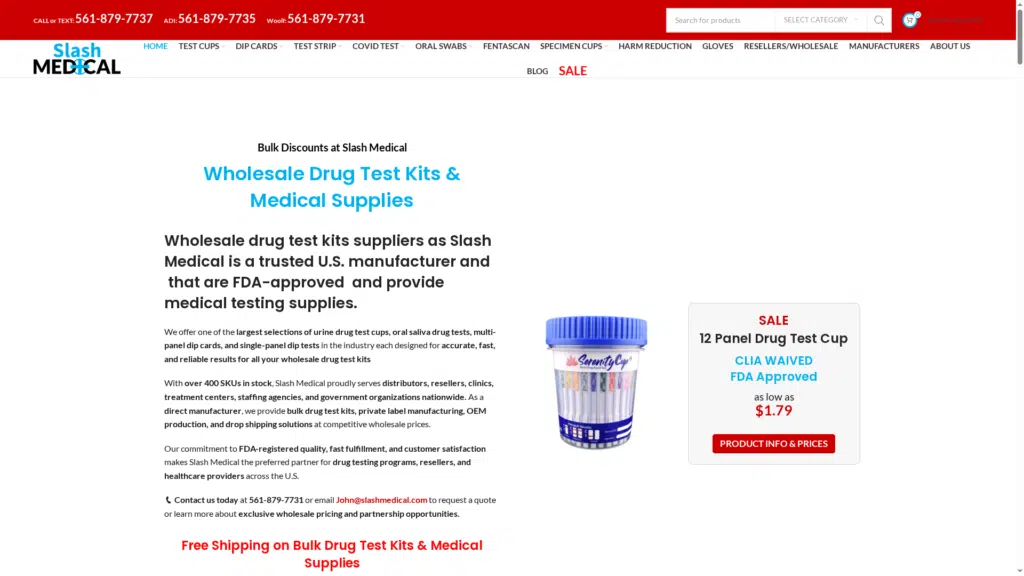
Ready to streamline your drug testing procurement with proven private label expertise? Visit Slash Medical now to browse our comprehensive catalog and get started on optimizing your testing solutions immediately.
Frequently Asked Questions
What are private label drug tests?
Private label drug tests are customized testing products manufactured by third-party companies and sold under a specific organization’s brand name, providing reliable diagnostic tools tailored to clinical needs.
How do private label drug tests compare to brand-name tests?
Private label drug tests undergo the same stringent FDA regulatory scrutiny as brand-name tests, ensuring equivalent safety, strength, and effectiveness, while often being more cost-effective and customizable.
What types of specimens can be used for private label drug testing?
Private label drug testing can utilize various specimen types, including urine, blood, oral fluid, hair, and breath, each offering unique detection windows and use cases for substance screening.
What are the key considerations for selecting private label drug tests?
When selecting private label drug tests, it’s crucial to evaluate the manufacturer’s quality control processes, regulatory compliance, detection capabilities, and the specific clinical requirements of your organization.