
Role of Distributors in Drug Testing – Impact on Program Accuracy
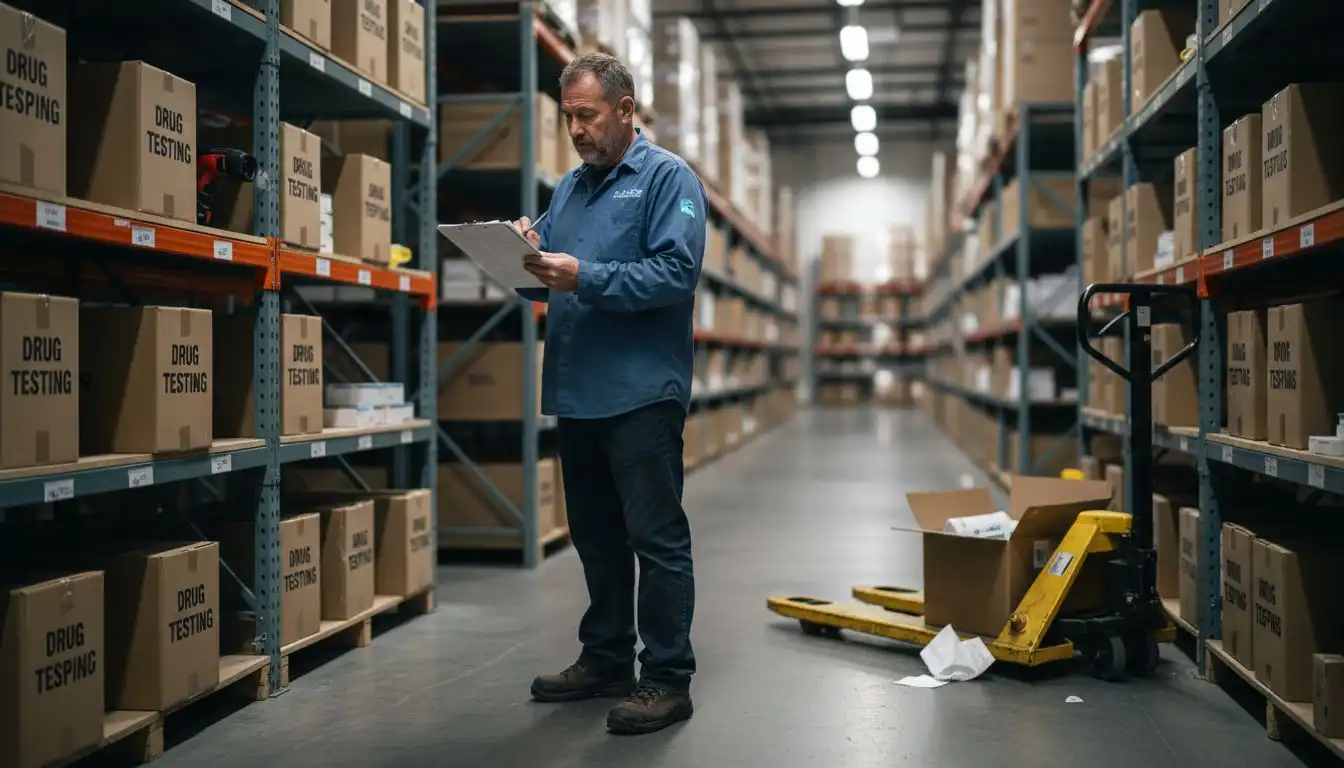
Finding reliable partners is a constant challenge for wholesale distributors and resellers in the North American drug testing market. The movement of testing kits from manufacturers to healthcare providers involves a network of responsibilities where even the smallest lapse can undermine accuracy or regulatory compliance. By understanding the crucial role of distributors in maintaining program integrity and compliance, you gain insight into the systems and best practices that help safeguard effective, secure, and scalable drug testing operations across the United States and Canada.
Table of Contents
- Distributors In Drug Testing Programs Defined
- Types Of Drug Testing Distributors Explained
- Core Functions: Sourcing, Storage, Logistics
- Compliance, Safety, And Regulatory Standards
- Risks, Liabilities, And Cost Management
- Common Pitfalls In Drug Testing Distribution
Key Takeaways
| Point | Details |
|---|---|
| Distributor Roles | Distributors are essential for ensuring the accuracy and integrity of drug testing programs through functions such as transport, quality assurance, and regulatory compliance. |
| Types of Distributors | Understanding the different types of distributors, including national, regional, specialty, and third-party logistics, helps in selecting the best fit for specific needs. |
| Core Functions | The core functions of sourcing, storage, and logistics are crucial for maintaining high-quality drug testing materials and compliance with regulatory standards. |
| Risk Management | Effective risk management strategies, including robust tracking systems and compliance training, are vital for mitigating potential risks and ensuring program integrity. |
Distributors in Drug Testing Programs Defined
In the complex landscape of drug testing, distributors play a crucial role in maintaining program accuracy and integrity. These specialized trading partners are responsible for moving drug testing materials through the supply chain, ensuring that testing kits, equipment, and related products reach healthcare providers, treatment centers, and regulatory bodies efficiently and securely.
According to FDA guidance on drug supply chain, distributors serve several key functions within drug testing programs:
- Transporting testing materials from manufacturers to end-users
- Maintaining chain of custody documentation
- Ensuring product quality and regulatory compliance
- Managing inventory and distribution logistics
- Supporting traceability of testing materials
Distributors are not merely passive intermediaries but active participants in maintaining drug testing program standards. Their responsibilities extend beyond simple product movement, encompassing critical aspects of quality control and regulatory adherence. The World Anti-Doping Agency’s testing standards emphasize the distributor’s role in preserving sample integrity and supporting comprehensive testing protocols.
Modern drug testing distributors must navigate complex regulatory environments, working closely with manufacturers, healthcare providers, and regulatory agencies to ensure each testing kit meets stringent accuracy requirements. This involves rigorous quality checks, proper storage conditions, and detailed tracking mechanisms that prevent contamination or compromise of testing materials.
Pro tip: Always verify a distributor’s certifications, regulatory compliance records, and quality assurance processes before selecting a partner for your drug testing program.
Types of Drug Testing Distributors Explained
The drug testing supply chain involves multiple types of distributors, each playing a unique and critical role in maintaining program accuracy and reliability. Healthcare Distribution Alliance research identifies several key distributor categories that contribute to comprehensive drug testing infrastructure.
The primary types of drug testing distributors include:
- National Distributors: Large-scale operations serving healthcare systems nationwide
- Regional Distributors: Focused on specific geographic territories with specialized market knowledge
- Specialty Distributors: Concentrating on specific testing products or niche healthcare segments
- Third-Party Logistics Providers (3PLs): Managing complex distribution and storage requirements
Each distributor type brings distinct capabilities to drug testing programs. Pharmaceutical supply chain guidelines emphasize the importance of understanding these variations, as they directly impact testing material traceability, compliance, and overall program effectiveness.
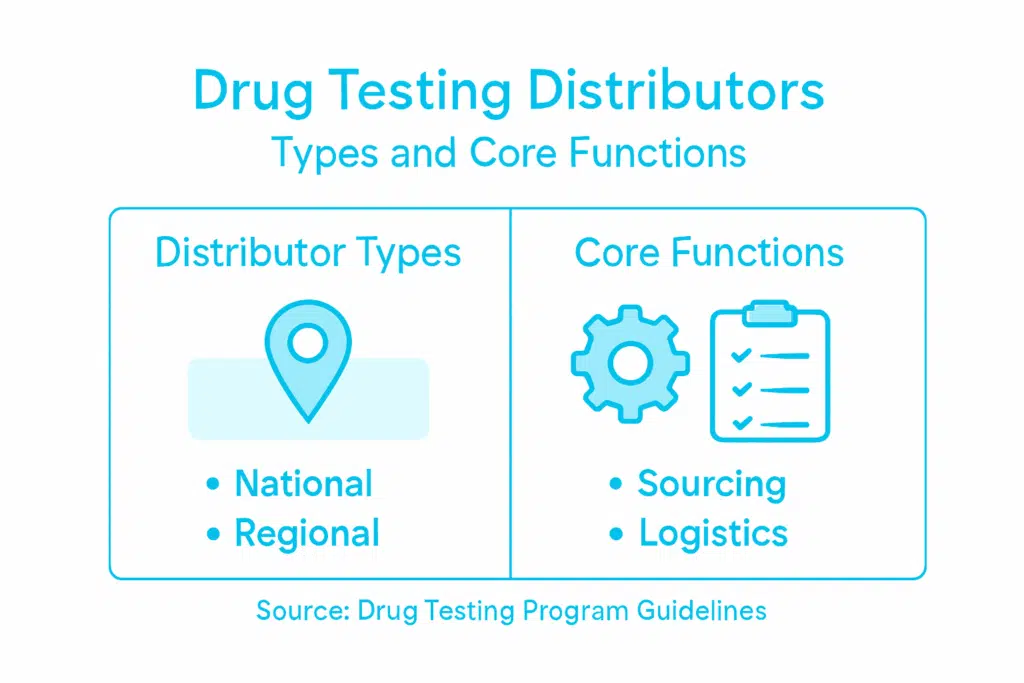
National distributors typically handle large-volume orders and serve major healthcare networks, while regional distributors offer more localized expertise and faster response times. Specialty distributors play a crucial role in managing unique or complex testing requirements, ensuring that specific organizational needs are met with precision and technical expertise.
Here’s a quick comparison of drug testing distributor types and their unique strengths:
| Distributor Type | Geographic Reach | Specialization | Typical Strengths |
|---|---|---|---|
| National Distributor | Nationwide | General drug testing materials | High volume, broad coverage |
| Regional Distributor | Limited regions | Local market knowledge | Quick response, tailored support |
| Specialty Distributor | Varies by niche | Specific testing products | Technical expertise, customization |
| Third-Party Logistics | Global or regional | Inventory, storage, coordination | Advanced tracking, scalable ops |
Distributor selection can significantly impact the accuracy, reliability, and efficiency of drug testing programs.
Third-Party Logistics Providers (3PLs) have emerged as critical players, offering sophisticated inventory management, temperature-controlled storage, and advanced tracking systems that maintain the integrity of testing materials throughout the supply chain.
Pro tip: Evaluate potential distributors based on their technological capabilities, compliance records, and specialized expertise in drug testing materials distribution.
Core Functions: Sourcing, Storage, Logistics
Distributors in drug testing programs perform three critical core functions that ensure the integrity and reliability of testing materials: sourcing, storage, and logistics. Pharmaceutical supply chain guidelines outline the intricate responsibilities that make these functions essential to maintaining high-quality drug testing programs.
The key components of these core functions include:
- Sourcing: Identifying and procuring authentic, high-quality testing materials from verified manufacturers
- Storage: Maintaining secure, temperature-controlled environments that preserve product integrity
- Logistics: Coordinating precise, timely distribution of testing materials to healthcare providers
- Compliance: Ensuring all operations meet regulatory standards and traceability requirements
Healthcare Distribution Alliance research highlights the complexity of sourcing, which involves rigorous vendor selection, quality verification, and continuous monitoring of pharmaceutical supply chains. Distributors must carefully evaluate manufacturers, checking for consistent product quality, regulatory compliance, and the ability to meet specific testing program requirements.
Storage represents a critical function where distributors protect the integrity of drug testing materials. This involves maintaining precise environmental conditions, implementing robust inventory management systems, and developing comprehensive tracking mechanisms to prevent contamination, degradation, or loss of testing supplies.
Effective distribution goes beyond simple product movement – it’s about maintaining the highest standards of quality and reliability.
Logistics functions require sophisticated coordination, including order consolidation, rapid distribution, and management of return and recall processes. Advanced tracking technologies and strategic warehouse management ensure that testing materials reach healthcare providers efficiently and securely.

Pro tip: Develop a comprehensive audit process that regularly evaluates your distributors’ sourcing, storage, and logistics capabilities to maintain optimal testing program performance.
Compliance, Safety, and Regulatory Standards
Drug testing distributors operate within a complex regulatory landscape that demands strict adherence to multiple safety and compliance standards. Federal Drug Supply Chain Security guidelines establish comprehensive requirements that distributors must follow to ensure the integrity and accuracy of drug testing programs.
Key compliance and regulatory standards include:
- Electronic Tracking: Implementing sophisticated tracking systems for product authentication
- Sample Integrity: Maintaining strict protocols to prevent contamination or tampering
- Privacy Protection: Adhering to federal regulations protecting individual testing information
- Documentation Standards: Creating comprehensive, verifiable records of testing materials
- Certification Requirements: Meeting laboratory and distribution certification standards
Workplace Drug Testing Program Standards emphasize the critical nature of maintaining rigorous compliance mechanisms. Distributors must develop robust systems that not only move testing materials efficiently but also protect the legal and ethical integrity of the entire drug testing process.
The complexity of regulatory compliance extends beyond simple product movement. Distributors must navigate intricate federal requirements, including precise documentation protocols, secure transportation methods, and continuous quality verification processes that ensure every testing material meets the highest standards of accuracy and reliability.
Regulatory compliance is not just a legal requirement – it’s a fundamental commitment to maintaining the highest standards of testing accuracy and safety.
Technological advancements have dramatically transformed compliance mechanisms, enabling distributors to implement sophisticated electronic tracking, real-time monitoring, and advanced authentication systems that provide unprecedented transparency and security in drug testing supply chains.
Pro tip: Invest in continuous compliance training and automated tracking technologies to stay ahead of evolving regulatory requirements and maintain the highest standards of drug testing integrity.
Risks, Liabilities, and Cost Management
Drug testing distributors face a complex landscape of potential risks and financial vulnerabilities that require strategic management and proactive mitigation. FDA drug distribution security guidelines highlight the critical importance of understanding and addressing these multifaceted challenges to maintain program integrity and minimize potential legal and financial exposures.
Key risk categories for drug testing distributors include:
- Product Diversion Risks: Preventing unauthorized redistribution of testing materials
- Compliance Violation Penalties: Potential financial and legal consequences of regulatory non-compliance
- Supply Chain Contamination: Managing potential quality control breaches
- Liability Exposure: Protecting against potential legal actions from compromised testing processes
- Operational Cost Fluctuations: Managing unpredictable economic and regulatory environment changes
DEA inspection guidelines underscore the critical nature of comprehensive risk management strategies. Distributors must develop robust systems that anticipate potential vulnerabilities, implement preventative measures, and create transparent documentation processes that demonstrate proactive compliance and risk mitigation.
Financial risk management extends beyond simple regulatory compliance. Sophisticated distributors invest in advanced tracking technologies, comprehensive employee training programs, and integrated quality control systems that not only reduce potential liabilities but also optimize operational efficiency and cost structures.
Effective risk management transforms potential vulnerabilities into strategic opportunities for enhanced operational excellence.
Technological innovations have revolutionized risk management approaches, enabling distributors to implement real-time monitoring, predictive analytics, and automated compliance tracking systems that provide unprecedented transparency and rapid response capabilities.
The following table summarizes common risk areas for drug testing distributors and best practice mitigation strategies:
| Risk Area | Potential Impact | Best Practice Mitigation |
|---|---|---|
| Product Diversion | Loss of inventory, liability | Secure tracking, strict controls |
| Compliance Violations | Fines, legal action | Regular audits, compliance training |
| Supply Chain Contamination | Invalid tests, reputational damage | Quality checks, proper storage |
| Liability Exposure | Lawsuits, financial losses | Insurance, documented procedures |
| Cost Fluctuations | Unpredictable expenses | Cost analysis, diversified suppliers |
Pro tip: Develop a comprehensive risk management framework that integrates technological solutions, continuous staff training, and proactive compliance monitoring to minimize potential financial and legal exposures.
Common Pitfalls in Drug Testing Distribution
Drug testing distribution involves numerous potential vulnerabilities that can significantly compromise testing accuracy and reliability. University research on field testing reveals critical challenges that distributors must proactively address to maintain program integrity.
Common distribution pitfalls include:
- Improper Sample Handling: Compromising specimen integrity during transportation
- Chain of Custody Breaches: Inadequate documentation and tracking mechanisms
- Temperature Control Failures: Compromising testing material stability
- Cross-Contamination Risks: Inadequate separation of testing materials
- Logistical Tracking Errors: Inaccurate inventory and distribution management
World Anti-Doping Agency standards emphasize the critical nature of maintaining rigorous protocols throughout the distribution process. Distributors must implement comprehensive systems that prevent potential errors and ensure the highest levels of testing accuracy.
Technological limitations and human error represent significant risks in drug testing distribution. Presumptive field tests, for instance, can produce false positives that lead to serious consequences, underscoring the importance of confirmatory laboratory testing and meticulous distribution protocols.
Distribution errors can transform reliable testing processes into fundamentally unreliable systems.
Advanced tracking technologies, comprehensive staff training, and robust quality control mechanisms are essential for mitigating these distribution-related risks and maintaining the integrity of drug testing programs.
Pro tip: Implement a multi-layered quality assurance process that includes real-time tracking, regular staff training, and systematic verification of distribution protocols.
Strengthen Your Drug Testing Program with Trusted Distribution Partners
The article highlights how critical distributors are in maintaining drug testing program accuracy through sourcing, storage, logistics, and regulatory compliance. Challenges such as sample integrity, chain of custody, and risk management require reliable, FDA-approved testing supplies and outstanding distribution capabilities. If you want to overcome pitfalls like temperature control failures or compliance violations you need partners who understand these specific complexities and deliver dependable products on time.
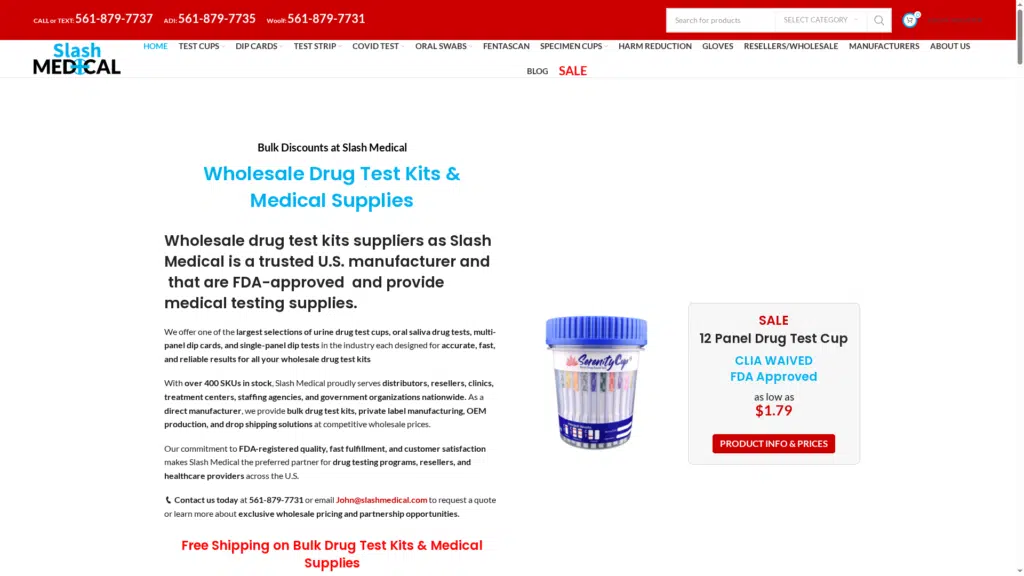
Slash Medical offers a comprehensive range of over 400 FDA-approved drug testing kits and supplies designed to support your program’s accuracy and compliance needs. Whether your organization requires bulk ordering, private label manufacturing, or drop shipping, our specialized wholesale medical testing supplies ensure you receive high-quality products like urine and oral drug test cups, dip cards, and adulterant tests with detailed documentation. Take control of your sourcing and distribution challenges now by visiting Slash Medical to browse our catalog and experience seamless ordering tailored for clinics, treatment centers, staffing agencies, and government programs.
Frequently Asked Questions
What is the role of distributors in drug testing programs?
Distributors serve as essential partners in drug testing programs, transporting testing materials, maintaining chain of custody documentation, ensuring product quality and regulatory compliance, and managing distribution logistics.
How do distributors ensure the accuracy of drug testing materials?
Distributors implement rigorous quality control processes, maintain proper storage conditions, and utilize detailed tracking mechanisms to prevent contamination or compromise of testing materials, thereby ensuring accuracy.
What types of distributors are involved in drug testing?
There are several types of distributors in drug testing, including national distributors, regional distributors, specialty distributors, and third-party logistics providers (3PLs), each with unique strengths and market niches.
What are the core functions that drug testing distributors perform?
The core functions of drug testing distributors include sourcing quality testing materials from verified manufacturers, storing them in secure and temperature-controlled environments, and managing timely logistics to ensure efficient distribution to healthcare providers.