
Master the Private Label Drug Test Process Easily

Choosing the right private label drug testing kits can feel complex when you need to balance cost savings and strict medical standards. Procurement managers in clinics and treatment centers across North America know that reliable, accurate testing directly affects patient care and compliance. This guide highlights the most important steps for building a trustworthy drug test brand, from defining rigorous testing requirements to securing a consistent supply—helping you maintain quality while supporting your bottom line.
Table of Contents
- Step 1: Define Your Branding And Testing Requirements
- Step 2: Select Suitable Drug Test Kits And Features
- Step 3: Partner With A Reliable Private Label Manufacturer
- Step 4: Customize Packaging And Product Labeling
- Step 5: Approve Samples And Verify Test Accuracy
- Step 6: Arrange Bulk Ordering And Ongoing Supply
Quick Summary
| Key Point | Explanation |
|---|---|
| 1. Define Your Brand Strategy | Carefully plan your branding to convey trust and quality to your specific target market. Tailor your messaging to reflect professional identity and consumer relationships. |
| 2. Select Quality Test Kits | Choose drug test kits with high sensitivity and multi-substance detection capabilities. Ensure they provide rapid results with minimal inaccuracies for your intended use case. |
| 3. Partner with Reliable Manufacturers | Evaluate private label manufacturers on quality standards, production capacity, and regulatory compliance. Transparency and technical expertise should guide your selection process. |
| 4. Customize Compliance Packaging | Design packaging and labeling that meets FDA standards while being visually appealing. Focus on clarity of instructions and safety information to build brand credibility. |
| 5. Implement Robust Supply Chain Strategies | Arrange strategic bulk ordering and develop a reliable supply chain. Maintain flexibility for market fluctuations and ensure regulatory compliance in inventory management. |
Step 1: Define your branding and testing requirements
Defining your private label drug testing brand starts with strategic planning and clear quality standards. This crucial step helps you create a distinctive product that stands out in the competitive medical testing market.
Begin by understanding the evolving trends in private label branding. Modern private labels are no longer just budget alternatives but represent comprehensive brand identities with emotional consumer connections. Your drug test brand needs to communicate more than just price competitive specifications it must convey trust, reliability, and professional quality.
To establish your testing requirements, leverage international testing guidelines that ensure comprehensive safety and efficacy assessments. Focus on creating a detailed testing protocol that covers physical characteristics, chemical stability, accuracy rates, and regulatory compliance. Consider developing a standardized checklist that addresses key performance indicators such as detection sensitivity, panel count variations, adulterant testing capabilities, and shelf life stability.
Think strategically about your brand positioning. Will you target treatment centers emphasizing precision? Staffing agencies needing rapid screening? Your branding should reflect the specific market segment you are serving, with packaging, marketing materials, and product specifications tailored to those professional needs.
Pro tip: Invest time in creating comprehensive testing documentation that can be shared with potential clients to demonstrate your commitment to quality and regulatory standards.
Step 2: Select suitable drug test kits and features
Selecting the right drug test kits is a critical decision that can significantly impact your testing program’s effectiveness and reliability. This step requires careful evaluation of multiple factors to ensure you choose kits that meet your specific professional requirements.
Start by understanding the essential drug testing guidelines that outline critical selection criteria. Professional drug testing demands kits with high sensitivity, specificity, and reliable detection capabilities. Look for test kits that can analyze multiple substance panels, provide rapid results, and minimize false positive or negative outcomes. Your selection should balance technical precision with practical usability.
Consider the diverse testing scenarios you might encounter. Forensic drug analysis protocols recommend a two-step testing approach that includes initial screening and confirmatory testing. This means selecting kits that offer both preliminary and definitive detection methods. Evaluate features like detection window length, cutoff levels, specimen compatibility (urine, saliva, hair), and regulatory compliance.
When comparing drug test kits, assess key performance indicators such as panel diversity, adulterant detection capabilities, ease of administration, and storage requirements. Professional grade kits should provide comprehensive substance screening while maintaining user friendly design for healthcare and workplace testing environments.
Here’s a quick comparison of drug test kit specimen types and their professional applications:
| Specimen Type | Detection Window | Typical Use Case |
|---|---|---|
| Urine | 1-3 days | Workplace, clinical screening |
| Saliva | Up to 24 hours | Post-accident, roadside tests |
| Hair | Up to 90 days | Forensic, court-ordered tests |
| Blood | Hours | Hospital, acute care setting |
Pro tip: Request sample kits from manufacturers to personally verify performance and usability before making a bulk purchasing commitment.
Step 3: Partner with a reliable private label manufacturer
Partnering with the right private label manufacturer can make or break your drug testing product line. This critical step requires careful evaluation and strategic decision making to ensure you select a manufacturer who meets your quality and compliance standards.

Begin by examining international manufacturing quality standards that define crucial selection criteria. Look for manufacturers who demonstrate rigorous adherence to specifications, comprehensive test procedures, and strict acceptance criteria. These quality indicators will help you identify partners capable of consistently producing reliable drug testing products that meet professional medical standards.
Carefully review potential manufacturers using FDA pharmaceutical manufacturing guidelines as your benchmark. Professional manufacturers should implement robust quality assurance frameworks that emphasize process understanding, systematic validation, and proactive risk management. Request detailed documentation about their quality control processes, including certification records, manufacturing protocols, and compliance histories.
When evaluating potential partners, assess their technical capabilities, production capacity, regulatory compliance, and ability to customize products to your specific branding requirements. Consider factors such as minimum order quantities, production timelines, packaging options, and flexibility in panel configurations. A truly reliable manufacturer will offer transparent communication, demonstrate technical expertise, and show genuine commitment to meeting your unique business needs.
Below is a summary of key manufacturer evaluation criteria for private label drug test kits:
| Evaluation Area | Importance | Example Considerations |
|---|---|---|
| Technical Expertise | High | Custom panel configurations |
| Compliance History | Critical | Regulatory certification records |
| Production Capacity | High | Ability to meet bulk orders |
| Communication | Essential | Responsiveness and transparency |
Pro tip: Schedule on-site factory visits or request comprehensive quality audit documentation to verify a manufacturer’s actual production standards before finalizing your partnership.
Step 4: Customize packaging and product labeling
Customizing your drug test kit packaging and labeling is a critical opportunity to establish brand identity and ensure regulatory compliance. This step transforms your product from a generic item to a professional, trustworthy medical testing solution.

Start by understanding FDA packaging and labeling requirements that govern medical testing products. Your labels must include clear product identification, comprehensive ingredient listings, precise usage instructions, and essential safety warnings. Pay special attention to creating labels that are not just legally compliant but also visually appealing and professionally designed.
Carefully review the regulatory guidelines for over the counter drug labeling to ensure your private label meets all necessary standards. This includes listing ingredients in descending order, using clear language, and avoiding any potentially misleading claims. Your packaging should communicate technical accuracy while also reflecting your brand’s unique market positioning and professional image.
Consider the practical aspects of packaging design beyond regulatory requirements. Think about durability, moisture resistance, tamper evidence, and how your packaging will protect the test kits during shipping and storage. Your design should balance aesthetic appeal with functional protection, creating a package that looks professional and maintains product integrity.
Pro tip: Work with a graphic designer who has experience in medical packaging to create labels that are both visually striking and fully compliant with regulatory standards.
Step 5: Approve samples and verify test accuracy
Approving drug test kit samples is a meticulous process that demands rigorous scientific evaluation and careful validation. Your goal is to ensure each batch meets the highest standards of reliability and performance before moving forward with full production.
Begin by implementing clinical drug testing guidelines that provide comprehensive frameworks for assessment. Conduct thorough pilot testing to verify the kits sensitivity, specificity, and accuracy across different substance detection scenarios. This involves systematically checking detection concentrations, measuring response times, and confirming the kits can reliably identify target substances within expected parameters.
Utilize international laboratory accreditation standards as your benchmark for sample verification. These standards require methodical testing protocols that evaluate every aspect of the drug test kit performance. Focus on key metrics such as false positive rates, detection window precision, panel consistency, and reproducibility of results across multiple testing conditions.
Develop a comprehensive validation checklist that covers technical performance, regulatory compliance, and real world testing scenarios. This should include stability testing under various environmental conditions, shelf life assessments, and comparative analyses against established reference standards. Your approval process must go beyond basic functionality to ensure the drug test kits will perform consistently in professional healthcare and workplace screening environments.
Pro tip: Retain comprehensive documentation of your sample testing and validation processes to demonstrate quality assurance and support potential regulatory inquiries.
Step 6: Arrange bulk ordering and ongoing supply
Arranging bulk ordering and establishing a reliable ongoing supply chain is crucial for maintaining consistent product availability and meeting your customers professional needs. This step requires strategic planning and careful coordination to ensure seamless inventory management.
Begin by understanding drug supply chain security requirements that govern medical product distribution. Develop a comprehensive procurement strategy that includes precise inventory tracking, predictive demand forecasting, and robust documentation processes. Your goal is to create a supply system that can quickly respond to market fluctuations while maintaining strict regulatory compliance.
Implement manufacturing quality management systems that support consistent product availability. This involves establishing clear communication channels with your manufacturer, setting realistic production timelines, and creating flexible ordering protocols that accommodate varying demand levels. Consider developing tiered ordering options that provide volume discounts and prioritize larger clients while maintaining sufficient inventory for smaller customers.
Establish contingency planning that addresses potential supply disruptions. This includes identifying backup manufacturers, maintaining safety stock levels, and creating flexible contract terms that protect your business during unexpected market changes. Your bulk ordering strategy should balance cost efficiency with reliability and adaptability.
Pro tip: Negotiate volume based pricing tiers and flexible minimum order quantities to optimize your purchasing strategy and maintain financial flexibility.
Simplify Your Private Label Drug Test Journey with Slash Medical
Mastering the private label drug test process involves navigating complex challenges such as selecting the right kits, ensuring regulatory compliance, and maintaining consistent quality. If you are looking to overcome these hurdles while meeting high standards for sensitivity, specificity, and professional branding, Slash Medical is your trusted partner. We understand the importance of customized packaging, accurate test validation, and bulk supply coordination to build a reliable product line that stands out in the competitive healthcare market.
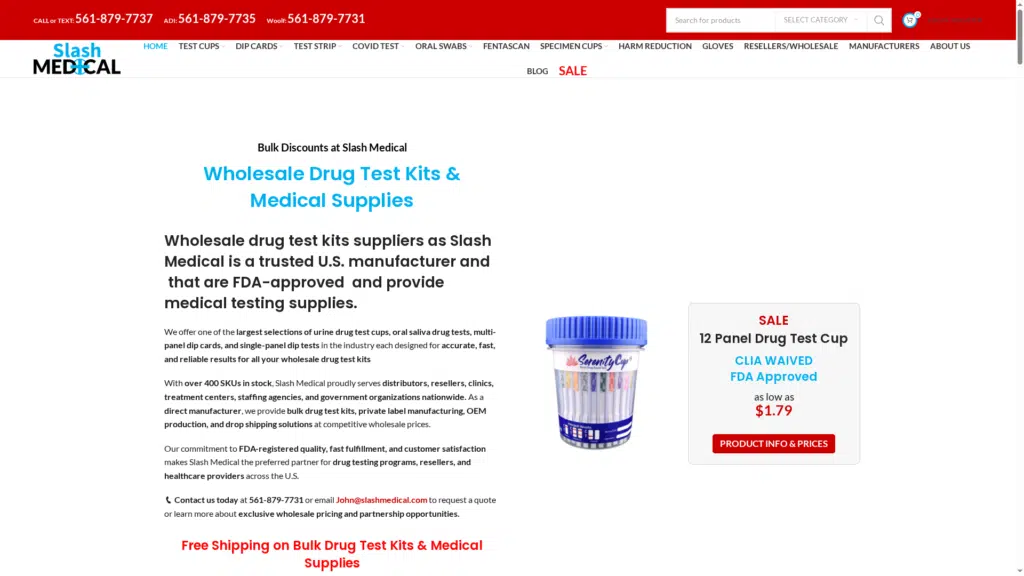
Explore our extensive catalog of FDA-approved drug testing supplies and leverage our private label manufacturing and OEM services tailored to your unique specifications. Whether you need multi-panel urine test cups, oral fluid test strips, or adulterant detection kits, we deliver with competitive wholesale pricing and nationwide shipping. Take control of your drug testing program today by visiting Slash Medical and discover how our comprehensive solutions can help you launch and sustain your private label brand with confidence.
Frequently Asked Questions
What is the first step in mastering the private label drug test process?
To master the private label drug test process, begin by defining your branding and testing requirements. Establish a strategic plan that outlines quality standards and identifies your target market segment.
How do I select the right drug test kits for my needs?
Choose drug test kits by evaluating their sensitivity, specificity, and detection capabilities. Prioritize kits that offer fast results and can accommodate various testing scenarios, ensuring they align with your intended use.
What should I look for in a private label manufacturer?
When selecting a private label manufacturer, assess their compliance with international quality standards and their technical capabilities. Ensure they have a proven history of quality assurance and are flexible in meeting your product specifications.
How can I customize the packaging and labeling of my drug test kits?
Customize your drug test kit packaging and labeling by following FDA requirements and ensuring high-quality design. Focus on clear product identification, ingredient listings, and professional appearance to reinforce trust and compliance.
What steps should I take to approve drug test kit samples?
To approve drug test kit samples, implement clinical guidelines that evaluate performance across multiple detection scenarios. Conduct rigorous pilot testing to confirm the sensitivity and accuracy of each kit before moving to full production.
How do I ensure ongoing supply and bulk ordering of drug test kits?
Establish a reliable bulk ordering process by developing a clear procurement strategy and maintaining open communication with your manufacturer. Implement inventory tracking and forecasting methods to help manage supply fluctuations effectively.