
Interpretation of Drug Test Results: Ensuring Compliance and Care

Most clinics face the challenge of accurate Interpretation of Drug Test Results, especially when patient care and compliance are on the line. In American healthcare settings, strict protocols mean that even minor errors in these findings can lead to serious repercussions. Understanding how screening limitations, confirmatory procedures, and result variations impact decisions will help procurement managers make informed choices that protect both patients and their organizations.
Table of Contents
- Core Principles Of Drug Test Result Interpretation
- Types Of Drug Tests And Result Variations
- Essential Steps In Understanding Test Outcomes
- Clinical Significance Of Positive And Negative Results
- Legal Responsibility And Risk Management In Result Handling
- Common Pitfalls In Drug Test Interpretation
Key Takeaways
| Point | Details |
|---|---|
| Systematic Interpretation | Drug test results require a careful approach that integrates scientific data with clinical context to avoid misinterpretation. |
| Importance of Confirmatory Testing | Initial screening tests should always be followed by confirmatory testing to validate results and minimize false positives. |
| Understanding Test Variation | Different testing methods have unique detection windows and applications; selecting the appropriate method is crucial for accurate results. |
| Legal and Ethical Responsibilities | Maintaining a clear chain of custody and thorough documentation is essential for legal compliance and ensuring result integrity. |
Core Principles of Drug Test Result Interpretation
Drug test result interpretation requires a systematic and nuanced approach that balances scientific precision with clinical understanding. Accurate drug testing methodology involves multiple critical steps designed to minimize errors and maximize reliability. Healthcare procurement managers must recognize that drug test results represent complex biochemical interactions, not simple binary outcomes.
The fundamental principles of drug test interpretation center on understanding two primary testing stages: presumptive screening and confirmatory testing. Initial screening tests provide rapid preliminary results using immunoassay techniques, which detect drug metabolites through antibody reactions. However, these initial screens have inherent limitations in specificity and sensitivity. False positive results can occur due to cross-reactivity with similar chemical structures or trace substance interactions.
Confirmatory testing becomes essential to validate initial screening outcomes. Techniques like Gas Chromatography Mass Spectrometry (GC-MS) offer definitive identification by separating and precisely measuring individual chemical compounds. Drug analysis protocols require both screening and confirmation tests to agree before reporting a conclusive result. This two-step verification process ensures scientific integrity and reduces potential misinterpretation risks.
Pro Tip: Always maintain a comprehensive chain of custody documentation for drug test samples to preserve legal and medical validity.
Types of Drug Tests and Result Variations
Comprehensive drug testing methodologies encompass multiple biological sample analysis techniques, each with distinct characteristics and detection capabilities. Healthcare procurement managers must understand the nuanced differences between various testing approaches to ensure accurate substance screening and interpretation. Modern drug testing strategies extend beyond traditional screening methods, incorporating sophisticated technological approaches that provide increasingly precise results.
Four primary drug testing methods dominate clinical and forensic applications: urine, blood, hair follicle, and saliva tests. Urine testing remains the most prevalent due to its cost-effectiveness and broad detection window. Drug test variations reveal unique detection characteristics that impact result interpretation. Blood tests offer high accuracy for recent substance use but require invasive collection procedures. Hair follicle tests can detect long-term substance history spanning up to 90 days, while saliva tests provide rapid screening for recent drug exposure.
Each testing method presents specific advantages and limitations. Urine tests can detect multiple substance classes simultaneously but may have shorter detection windows for certain compounds. Blood tests provide the most immediate and precise measurement of current substance concentration. Hair follicle testing offers extended historical tracking, making it valuable for comprehensive substance use assessments. Saliva tests excel in workplace and roadside screening scenarios, providing quick and minimally invasive results.

The following table summarizes the key differences between primary drug testing methods:
| Test Type | Detection Window | Invasiveness | Ideal Application |
|---|---|---|---|
| Urine | 1–3 days (most drugs) | Non-invasive | Routine workplace screening |
| Blood | Hours to 1–2 days | Invasive | Accident investigation, impairment |
| Hair Follicle | Up to 90 days | Minimally invasive | Long-term substance history |
| Saliva | 24–48 hours | Minimally invasive | Roadside or recent use detection |
Pro Tip: Always validate drug test results through confirmatory testing and consider multiple testing methods for comprehensive substance screening accuracy.
Essential Steps in Understanding Test Outcomes
Systematic drug test interpretation requires a comprehensive approach that goes beyond simple positive or negative results. Healthcare procurement managers must develop a nuanced understanding of the complex factors influencing drug screening outcomes. Effective interpretation demands a holistic view that considers individual patient contexts, potential medication interactions, and the specific limitations of testing methodologies.
The process of understanding test outcomes involves several critical stages. Drug screening result analysis begins with a thorough review of the initial screening results, which serve as preliminary indicators rather than definitive conclusions. Cutoff thresholds play a crucial role in determining potential substance presence, with each drug class having specific measurement standards. Professionals must carefully evaluate initial positive screens through confirmatory testing, which provides more precise chemical identification and eliminates potential false positives.
Critical evaluation involves multiple interconnected considerations. Medical and legal professionals must assess factors including recent medication use, potential cross-reactivity, sample collection procedures, and individual metabolic variations. Understanding the detection windows for different substances becomes paramount in accurately interpreting test results. Some substances remain detectable for extended periods, while others have extremely short detection windows, requiring sophisticated interpretation techniques that go beyond simple binary assessments.
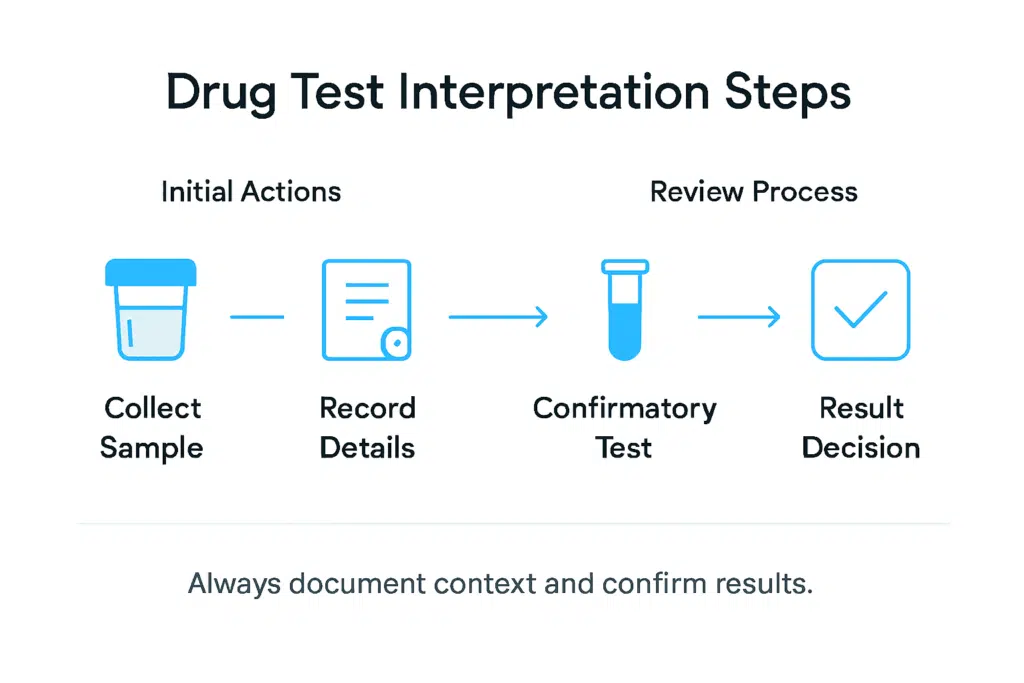
Pro Tip: Develop a standardized documentation protocol that captures all contextual details surrounding drug test collection and interpretation to ensure comprehensive and defensible results.
Clinical Significance of Positive and Negative Results
Drug test result interpretation represents a complex medical and legal landscape where nuanced understanding transcends simple binary outcomes. Healthcare procurement managers must recognize that positive and negative results carry significant implications that extend far beyond initial screening. The clinical significance of these results demands comprehensive analysis, considering multiple interdependent factors that influence substance detection and potential patient interventions.
Positive test results require meticulous evaluation to distinguish between actual substance use and potential anomalies. Clinical drug screening protocols emphasize the critical need for confirmatory testing to validate initial findings. A positive result does not automatically indicate current impairment or frequency of substance use. Factors such as metabolic variations, prescription medication interactions, and individual physiological differences can significantly impact test interpretation. Medical professionals must approach positive results with a holistic perspective, understanding that context is paramount in determining appropriate clinical responses.
Negative results similarly demand sophisticated interpretation. Contrary to common assumptions, a negative test does not definitively prove substance abstinence. Sophisticated drug users might exploit testing limitations through various adulteration techniques or timing their substance use to avoid detection. Detection windows vary dramatically across different substances, metabolic rates, and testing methodologies. Some substances may be undetectable due to rapid metabolism, while others can persist in biological samples for extended periods. This complexity underscores the importance of comprehensive screening approaches that go beyond single-point testing.
Pro Tip: Implement a multilayered testing protocol that combines initial screening with advanced confirmatory methods to enhance result reliability and minimize interpretation errors.
Legal Responsibility and Risk Management in Result Handling
Federal drug testing regulations establish critical frameworks that healthcare procurement managers must navigate with extreme precision. Legal responsibility in drug test result handling extends far beyond simple documentation, encompassing complex ethical and procedural obligations that can have significant professional and institutional consequences. The intricate landscape of drug testing demands a comprehensive approach that balances scientific accuracy with stringent legal compliance.
The chain of custody represents a fundamental legal protection mechanism in drug testing protocols. Every stage of specimen collection, transportation, storage, and analysis must be meticulously documented to maintain evidentiary integrity. Potential legal challenges can arise from procedural errors, making it essential for organizations to implement robust tracking systems that provide transparent, defensible documentation. Certified laboratory protocols, rigorous staff training, and systematic quality control become critical components in mitigating potential legal risks associated with drug test result management.
Risk management strategies must anticipate potential challenges across multiple domains. Institutional policies should address scenarios including specimen contamination, privacy concerns, potential discrimination claims, and the nuanced interpretation of test results. Healthcare organizations must develop comprehensive frameworks that balance individual rights with organizational responsibilities. This includes establishing clear protocols for handling confidential information, creating transparent appeal processes for contested results, and maintaining consistent, scientifically validated testing methodologies that can withstand potential legal scrutiny.
This table highlights key risk management actions for drug test result handling:
| Risk Area | Preventive Action | Business Impact |
|---|---|---|
| Chain of custody errors | Use digital tracking forms | Avoids evidence disputes |
| Specimen contamination | Implement double-check procedures | Reduces invalid test results |
| Staff misinterpretation | Schedule regular training sessions | Improves test reliability and defense |
| Privacy breaches | Secure confidential data systems | Maintains legal compliance, trust |
Pro Tip: Develop a comprehensive written policy that explicitly outlines each step of drug testing procedures, ensuring all staff understand their legal and ethical responsibilities in result handling and interpretation.
Common Pitfalls in Drug Test Interpretation
Drug test result misinterpretation risks represent a critical challenge in clinical and forensic settings. Healthcare procurement managers must develop a sophisticated understanding of the complex factors that can compromise test accuracy. The landscape of drug testing is fraught with potential errors that extend far beyond simple positive or negative readings, requiring a nuanced and methodical approach to result interpretation.
Immunoassay screening techniques introduce multiple inherent limitations that can lead to systematic misunderstandings. Clinical drug testing challenges often stem from inadequate comprehension of test sensitivity, specificity, and potential cross-reactivity. Common pitfalls include misinterpreting metabolic variations, failing to recognize medication interactions, and overlooking the critical difference between presumptive and confirmatory test results. Certain prescription medications can trigger false positive outcomes, while individual metabolic differences can substantially alter substance detection windows.
Cutoff thresholds represent another sophisticated dimension of potential misinterpretation. Each substance has unique metabolic characteristics that influence detection, making standardized interpretation impossible. Professionals must recognize that drug testing is not a binary process but a complex biochemical analysis requiring contextual understanding. Factors such as hydration levels, individual metabolism, recent dietary intake, and specific physiological conditions can dramatically impact test results, necessitating a holistic and cautious approach to interpretation.
Pro Tip: Implement a comprehensive staff training program that emphasizes the nuanced nature of drug test interpretation, focusing on understanding contextual complexities beyond simple positive or negative readings.
Simplify Accurate Drug Test Interpretation with Reliable Supplies
Understanding the complexities of drug test result interpretation requires precision and confidence in your testing supplies. The article highlights challenges such as false positives, confirmatory testing needs, and legal compliance which demand trustworthy products that deliver consistent and accurate results. Whether managing screening for workplaces, treatment centers, or legal settings, having access to FDA-approved and CLIA waived drug test kits plays a vital role in reducing errors and upholding regulatory standards.

Take control of your drug testing program today by choosing from over 400 high-quality products at Slash Medical. Our extensive selection includes urine and oral drug test cups, dip cards, test strips, and adulterant tests designed to meet rigorous clinical and forensic demands. Explore our variety of panel counts and benefit from bulk purchasing options, private label services, and nationwide shipping to ensure your organization stays compliant and efficient. Visit Slash Medical now and empower your team with the best testing solutions for precise drug test result interpretation.
Frequently Asked Questions
What are the key stages in drug test result interpretation?
The key stages in drug test result interpretation are presumptive screening and confirmatory testing. Presumptive tests provide rapid preliminary results, while confirmatory tests, such as Gas Chromatography Mass Spectrometry (GC-MS), validate these outcomes to ensure accuracy and reliability.
Why are false positive results a concern in drug testing?
False positive results can occur due to cross-reactivity with similar substances or trace interactions, leading to inaccurate conclusions regarding a person’s substance use. This emphasizes the importance of confirmatory testing to distinguish between actual use and potential errors.
How do different drug testing methods affect detection capabilities?
Different drug testing methods—such as urine, blood, hair follicle, and saliva tests—have unique detection windows and characteristics. For instance, urine tests are the most common and can detect multiple drugs over 1-3 days, while hair follicle tests can provide a history of substance use over up to 90 days.
What steps should be taken to ensure legal compliance in drug testing?
To ensure legal compliance in drug testing, it’s crucial to maintain a comprehensive chain of custody documentation, adhere to federal regulations, and implement robust tracking systems. Additionally, establish clear protocols for handling confidential information and conduct regular staff training to mitigate potential legal risks.