
7 Key Guidelines for Government Drug Testing Programs
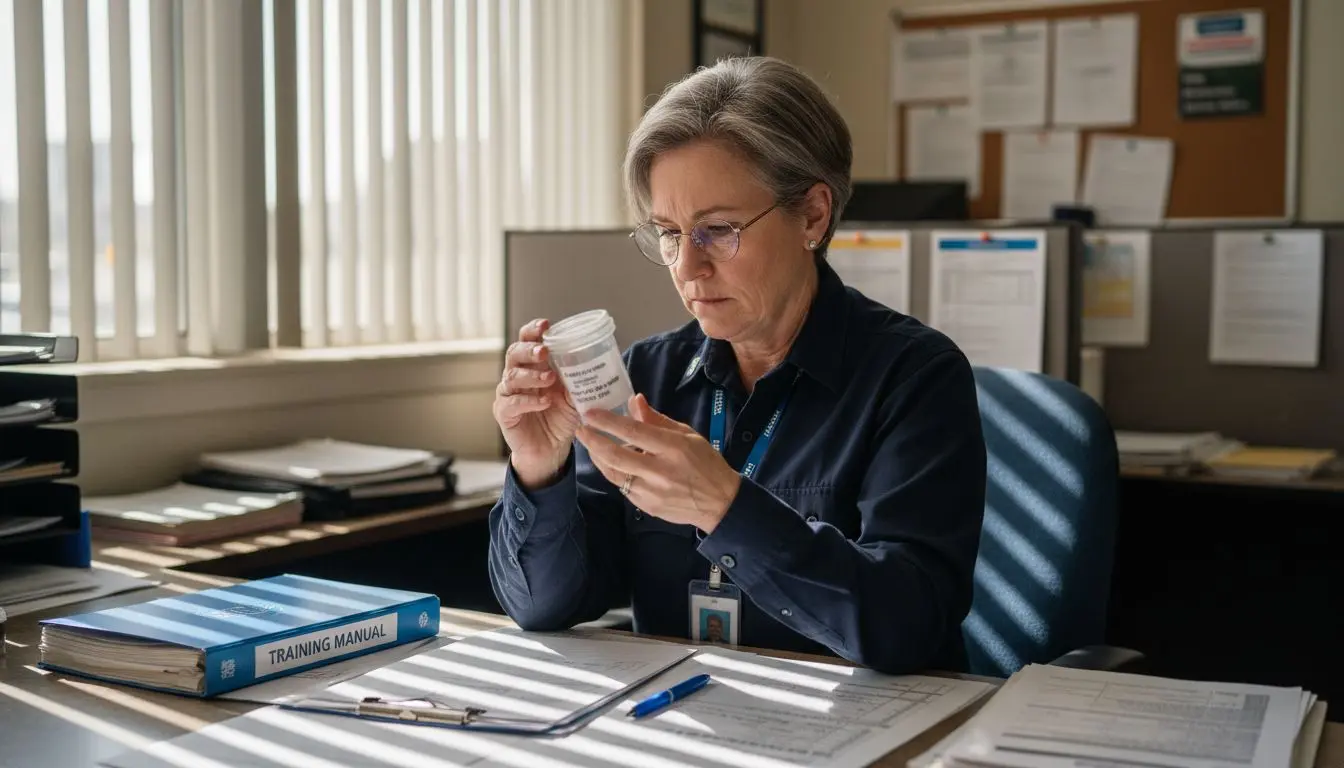
Managing a government drug testing program comes with strict rules and high expectations. Every step, from choosing the right test kits to securing sensitive records, can leave you open to compliance mistakes if you miss a detail. The Department of Health and Human Services has issued updated Mandatory Guidelines for Federal Workplace Drug Testing Programs effective February 1, 2024, setting clear scientific and technical standards that your agency must follow.
If you want to run a reliable, defensible testing program, you need to know exactly how to handle regulations, select FDA-approved tools, and build a strong chain of custody. The following guidance highlights the key actions that help you avoid costly errors and keep your drug testing procedures in line with federal and state requirements. Get ready to unlock practical strategies that make compliance manageable and your testing program stronger.
Table of Contents
- Understand Federal And State Drug Testing Regulations
- Select Fda-Approved And Clia Waived Testing Kits
- Choose Bulk Purchasing And Reliable Supply Partners
- Establish Clear Chain Of Custody Procedures
- Implement Adulterant Detection And Quality Controls
- Train Staff For Accurate Test Administration
- Maintain Secure And Confidential Recordkeeping
Quick Summary
| Takeaway | Explanation |
|---|---|
| 1. Understand Federal and State Regulations | Ensure your drug testing program complies with both federal and state laws, as requirements vary significantly by location and testing type. |
| 2. Choose FDA-Approved and CLIA-Waived Kits | Select testing kits that are FDA-approved and CLIA-waived to reduce regulatory burdens and maintain testing accuracy in less controlled environments. |
| 3. Establish Reliable Supply Partnerships | Build relationships with supply partners for bulk purchasing to ensure consistency, reliability, and cost-effectiveness in your testing program. |
| 4. Document Chain of Custody Procedures | Maintain detailed records of specimen handling to ensure test credibility and comply with legal standards, preventing validity challenges. |
| 5. Train Staff Thoroughly | Invest in comprehensive training for staff to ensure accurate test administration and adherence to compliance procedures. |
1. Understand Federal and State Drug Testing Regulations
Your drug testing program operates within a complex web of federal rules and state laws that vary significantly depending on your agency’s location and the type of testing you conduct. Getting this right from the start prevents costly compliance violations and ensures your testing results hold up under scrutiny.
The federal framework for government drug testing has specific requirements you must follow. The Department of Health and Human Services published revised Mandatory Guidelines for Federal Workplace Drug Testing Programs effective February 1, 2024. These guidelines establish the scientific and technical standards that federal agencies must follow, including certification requirements for laboratories, authorized drug testing panels, and specimen collection procedures.
Here’s what these federal guidelines cover:
- Laboratory certification standards and quality assurance protocols
- Authorized drug testing panels for federal workplace programs
- Specimen collection, handling, and chain-of-custody procedures
- Medical Review Officer (MRO) processes and qualifications
- Testing methodologies for both urine and oral fluid specimens
- Standards that apply globally where federal regulations mandate testing
Federal guidelines establish the minimum floor for government drug testing programs, but state regulations often add additional requirements that your program must satisfy.
State regulations layer on top of federal requirements, and these vary dramatically across different jurisdictions. Some states impose stricter employee protections, require different notice procedures, mandate specific testing intervals, or restrict which substances can be tested. A compliance officer in California faces entirely different requirements than one in Texas or Florida. You need to know your specific state’s regulations before implementing your program.
The distinction between federal, state, and local requirements matters tremendously for your operations. Federal agencies must comply with the HHS Mandatory Guidelines, which provide detailed instruction on everything from panel configurations to MRO qualifications. State agencies operating within their jurisdictions might have different rules depending on whether they’re conducting safety-sensitive testing (like for transportation or nuclear regulatory positions) or general workplace testing. Local government entities often follow their state’s regulations but may have additional municipal requirements.
One practical step is mapping your testing program against both federal and state requirements. Create a checklist that documents which rules apply to your specific situation. If you conduct DOT testing, you’re subject to federal transportation regulations. If you test nuclear regulatory employees, different federal rules apply. If you test general government employees, state law becomes your primary compliance driver.
Consulting the actual regulatory documents is non-negotiable. The federal guidelines aren’t suggestions or best practices; they’re mandatory standards backed by Public Law 100-71 and Executive Order 12564. Your testing laboratory must be certified according to these standards, your collection procedures must match the specifications, and your MROs must follow the required processes. Any deviation creates compliance risk.
Many compliance officers miss that regulations also govern what happens after testing. The Medical Review Officer requirements, the procedures for handling negative results, the protocols for split specimen testing, and even the storage and destruction of specimens all have regulatory specifications. Your procedures need to address the complete testing lifecycle, not just the collection phase.
Pro tip: Document your regulatory compliance framework in writing, listing each applicable federal regulation, state law, and local requirement, then assign responsibility for monitoring updates to these regulations as they change throughout the year.
2. Select FDA-Approved and CLIA Waived Testing Kits
Your choice of testing equipment directly impacts both compliance and accuracy. Selecting the right kits means choosing products that meet FDA standards and carry CLIA waiver status, which allows your agency to conduct testing in varied settings without the overhead of maintaining a highly regulated laboratory facility.
Understanding what FDA approval and CLIA waiver status actually mean is critical for making informed purchasing decisions. The FDA categorizes laboratory tests by complexity, and CLIA-waived tests represent the simplest, lowest-risk testing systems that can be used outside complex laboratory environments. These are not inferior tests; they’re specifically designed and validated for use in less controlled settings while maintaining reliability and accuracy standards.
CLIA waiver status offers significant operational advantages for government agencies:
- Reduced laboratory certification requirements and associated costs
- Ability to conduct testing in office settings, clinics, and field locations
- Simplified personnel requirements and training procedures
- Faster turnaround times without waiting for centralized lab processing
- Lower overhead compared to maintaining a full clinical laboratory
- Flexibility in deployment across multiple agency locations
FDA-approved, CLIA-waived testing kits eliminate the regulatory burden of operating a certified laboratory while maintaining the accuracy standards your agency requires.
When evaluating drug testing kits, you need to verify both the FDA approval status and the CLIA waiver designation. Not every drug testing product carries both certifications. A kit might be FDA-approved but not CLIA-waived, which would require you to use it only in a certified laboratory setting. Conversely, some products may not be FDA-approved at all. Your procurement process should demand documentation proving both certifications before purchasing.
The practical value becomes clear when you consider how your agency actually operates. If you conduct testing at multiple field locations, you cannot rely on centralized laboratory facilities. CLIA-waived kits allow your authorized personnel to perform tests at the point of service. This means faster results, reduced sample handling complexity, and fewer opportunities for specimen degradation or chain-of-custody issues.
Panel configuration matters as much as the certification status. Different government agencies test for different substances and adulterants based on their mission. Your federal counterparts might require specific panel compositions mandated by their regulations. State agencies might have different requirements. You need to find CLIA-waived kits available in the panel configurations your program actually requires, not settle for whatever happens to be convenient.
Laboratory standards still apply even with CLIA-waived tests. CDC and FDA guidelines specify proper administration procedures, quality control measures, and documentation requirements for these kits. Waiver status means less regulatory overhead, not less responsibility. Your staff still needs training, your collection procedures still need documentation, and your results still require proper reporting.
One common mistake is assuming all CLIA-waived products are equivalent. Accuracy rates, ease of use, cost per test, shelf life, and customer support vary significantly among manufacturers. As a compliance officer, you’re balancing cost reduction with reliability. The cheapest CLIA-waived kit might create problems if false results increase your administrative burden or if supply chain issues force you to switch products mid-year.
Pro tip: Request performance data and validation studies from manufacturers before purchasing, and confirm that your selected CLIA-waived kits are specifically approved for the panel types and specimen types your program requires.
3. Choose Bulk Purchasing and Reliable Supply Partners
Bulk purchasing isn’t just about saving money on unit costs. When you establish relationships with reliable supply partners, you gain consistency, predictability, and the negotiating power to shape your testing program exactly how you need it. This strategic approach separates well-managed programs from those constantly scrambling to meet supply demands.
The economics of bulk purchasing work in your favor when you understand volume-based pricing structures. As a government agency, your testing volumes are substantial and predictable. Suppliers recognize this and offer significantly lower per-unit pricing for large orders compared to smaller purchases. This cost reduction directly impacts your program’s budget and allows you to conduct more tests with the same funding allocation.
Beyond price, bulk purchasing with committed partners provides operational stability that matters more than most compliance officers initially realize. When you establish framework agreements with suppliers, you secure guaranteed inventory availability, priority order fulfillment, and supply chain continuity. You avoid the situation where a critical shortage forces you to accept inferior products or pay emergency pricing.
The benefits of reliable supply partnerships extend across multiple operational dimensions:
- Negotiated pricing that improves as your volume increases
- Consistent product quality and regulatory compliance across all shipments
- Priority access during high-demand periods or supply constraints
- Technical support and product training for your staff
- Customization options including private labeling for your agency
- Streamlined ordering and invoicing processes
- Supply chain visibility and delivery predictability
A reliable supply partner becomes an extension of your program’s operations, not just a vendor fulfilling orders.
Regional governments across multiple countries have implemented successful bulk purchasing models. Framework agreements like those established by public health agencies ensure quality standards while locking in favorable pricing for large-scale procurement. The global drug testing market demonstrates that volume-based pricing and supply chain management are critical considerations for government buyers seeking both cost-effectiveness and regulatory compliance.
When evaluating potential supply partners, you should assess more than just unit price. Examine their FDA approval portfolio to ensure they carry all the product variations your program requires. Review their quality assurance processes and certifications. Verify their capacity to handle your agency’s typical order volumes plus surge capacity for unexpected increases. Ask for references from other government agencies using their products.
The risk of switching suppliers mid-program deserves serious consideration. Changing product lines introduces operational disruption, staff retraining requirements, and potential inconsistencies in your testing procedures. A reliable partner commitment minimizes these switching costs and provides stability that protects your compliance record.
Private labeling arrangements offer particular value for larger government agencies. Some suppliers customize packaging with your agency’s branding, create custom panel configurations, or adjust product specifications to match your exact requirements. This level of customization typically requires bulk volume commitments but delivers a testing program tailored to your operational needs.
Negotiating payment terms and delivery schedules forms another critical element of partnership management. Bulk purchases should include favorable terms that align with your agency’s budget cycles and cash flow patterns. Reliable partners work with you on delivery scheduling, helping you maintain appropriate inventory levels without excessive storage costs.
Pro tip: Request written service level agreements with your supply partner that specify delivery timeframes, quality guarantees, minimum inventory commitments, and escalation procedures for supply disruptions, then review performance against these metrics quarterly.
4. Establish Clear Chain of Custody Procedures
Chain of custody is the backbone of test result credibility. If you cannot document exactly who handled each specimen, when they handled it, and where it went at every step, your test results become legally vulnerable. A single broken link in the chain can invalidate months of testing work and undermine your program’s integrity.
Chain of custody refers to the documented sequence of individuals responsible for handling a specimen from collection through final disposition. Federal regulations require you to limit access to authorized personnel, maintain continuous documentation of custody transfers, and inspect specimens upon receipt to detect any tampering. This isn’t bureaucratic busywork; it’s the mechanism that proves your results are reliable and defensible.
Think of chain of custody like a detailed logbook for each specimen. When a collector gathers a sample, they document it. When that sample transfers to storage, someone signs it over. When it moves to analysis, another person accepts responsibility and documents the transfer. When results are reported, the chain is complete. Any gap or missing signature creates reasonable doubt about whether that specimen remained unaltered throughout the process.
The core procedures you need to establish include:
- Initial specimen labeling with unique identifiers before or immediately after collection
- Documented initials or signatures from every person handling the specimen
- Timestamps for each custody transfer showing date and time
- Clear notation of specimen location and storage conditions at each step
- Inspection protocols for detecting evidence of tampering or degradation
- Secure storage with restricted access limited to authorized personnel only
- Final documentation of specimen disposition, including testing or destruction
A specimen with gaps in its chain of custody documentation must be treated as compromised, regardless of test results.
Federal regulations under 10 CFR 26.129 establish specific requirements for specimen security and custody that apply to nuclear regulatory licensees and extend as best practices across government drug testing programs. These regulations mandate that licensees must assure specimen security and chain of custody with documented preservation throughout the testing process. Any specimens showing signs of tampering are rejected and must be recollected to guarantee test validity.
Implementing chain of custody procedures requires physical infrastructure and administrative systems working together. You need secure storage areas with limited access, controlled by key locks, badge readers, or other access restrictions. You need standardized custody forms or digital systems that every handler completes consistently. You need training for all personnel on proper procedures. You need audit processes to verify compliance with documented procedures.
The documentation system you choose matters significantly. Paper forms create audit trails but require careful physical handling and storage. Digital systems offer better searchability and harder-to-alter records but require technology infrastructure and cybersecurity protections. Many government programs use hybrid approaches with both paper documentation and digital backup systems.
Specimen inspection upon receipt represents a critical checkpoint often overlooked. Your receiving personnel must examine each specimen for signs of leakage, discoloration, temperature damage, or tampering. They must document any anomalies immediately. Specimens showing legitimate damage are flagged for recollection rather than proceeding to analysis with questionable integrity.
Storage conditions matter as much as documentation. Different specimen types require different temperature ranges and storage durations. Urine specimens degrade over time, affecting test reliability. Your procedures must specify maximum storage periods before specimens must be tested or destroyed. You must document refrigeration temperatures if applicable and maintain records showing proper storage conditions throughout custody.
When custody breaks occur, your procedures must specify the response protocol. Do you reject the specimen immediately and require recollection? Do you document the break and proceed with testing while noting the issue? Different regulatory environments may allow different approaches, but federal programs typically require rejection and recollection for broken chains.
Pro tip: Use a custody form template that mirrors the order of specimen movement through your facility, ensuring handlers complete information sequentially rather than retrospectively, which reduces documentation errors and gaps in the chain.
5. Implement Adulterant Detection and Quality Controls
Adulterants are substances added to drugs to stretch supply, mask use, or trigger false negatives on testing. Without adulterant detection built into your testing program, you’re only capturing part of the picture. A specimen might test negative for the target drug while containing adulterants that indicate tampering or manipulation, rendering your test results unreliable and your program defenseless against challenge.
Adulterant detection serves multiple critical functions in your drug testing program. It identifies specimens that have been diluted with water or other liquids to reduce drug metabolite concentrations below detection thresholds. It flags specimens containing oxidizing agents like bleach or hydrogen peroxide that degrade drug metabolites. It detects added substances like glutaraldehyde or nitrites that interfere with testing accuracy. Each adulterant represents an attempt to defeat the test, and your procedures must catch these attempts.
Your testing kits need built-in adulterant detection capabilities from the moment of collection. Modern multi-panel drug test cups include adulterant markers that change color or produce readings if specific adulterants are present. This means collectors can flag compromised specimens immediately rather than discovering adulteration after expensive laboratory analysis. Specimens showing adulterant markers are rejected and must be recollected.
The types of adulterants your program should detect include:
- Dilution markers that detect excessive water or fluid content
- Oxidizing agents like bleach that attempt to destroy drug metabolites
- Nitrites that interfere with testing chemistry
- Glutaraldehyde and other chemical additives
- pH abnormalities indicating tampering
- Specific gravity variations showing specimen dilution
- Creatinine levels that indicate whether the specimen represents genuine urine
Adulterant detection transforms your program from one that tests for drugs to one that tests for legitimate specimens, fundamentally strengthening your credibility.
Quality control processes work alongside adulterant detection to ensure your testing maintains accuracy and reliability. Quality controls include regular verification of test kit functionality, calibration of any equipment used in your program, proficiency testing for personnel conducting tests, and periodic audits of procedures. International forensic laboratories continuously monitor global trends in drug markets and toxic adulterants to update detection strategies, providing your program with current intelligence about emerging adulterants and appropriate response protocols.
Implementing adulterant detection requires selecting appropriate testing equipment and training your personnel to interpret results correctly. When a test kit indicates adulterant presence, the result is straightforward: reject the specimen and require recollection. Your collectors need training on what adulterant indicators look like, how to properly observe and document them, and how to communicate results to tested individuals.
Quality control measures should include regular testing of control specimens with known adulterants to verify your kits detect them properly. You should maintain documentation showing that your testing equipment functions correctly and produces reliable results. You should conduct periodic proficiency testing where staff members test samples with known results to ensure accuracy. You should audit procedures to verify that collection, handling, and analysis follow documented standards.
The cost of implementing adulterant detection is minimal compared to the protection it provides. Modern multi-panel test cups with adulterant detection cost only slightly more than basic panels without these features. The insurance value of adulterant detection far exceeds the minimal cost difference. When a tested individual challenges results, you can produce documentation showing the specimen passed adulterant testing, strengthening your position significantly.
Some government programs mistakenly believe adulterant detection is optional or secondary to drug detection. This misses a critical point: adulterant detection represents your primary defense against specimen manipulation. An individual testing negative for drugs but showing adulterant markers is attempting to defeat the test through sophistication. Your documentation of adulterant detection becomes crucial evidence of program integrity.
Keep your adulterant detection procedures current as drug market tactics evolve. New adulterants and evasion strategies emerge regularly. Your program should maintain awareness of emerging trends and update testing procedures accordingly. This might mean upgrading to test panels with expanded adulterant detection capabilities or adding supplemental adulterant testing procedures.
Pro tip: Create a visual reference guide for your collectors showing what normal specimens look like compared to specimens with detected adulterants, then conduct quarterly training reviews to ensure consistent recognition and documentation of adulterant markers.
6. Train Staff for Accurate Test Administration
Your testing program is only as strong as your staff’s ability to execute procedures correctly. A single mistake during specimen collection, handling, or analysis can invalidate results and expose your program to legal challenge. Comprehensive training transforms your team from people performing tasks into skilled professionals who understand why each step matters.
Staff training needs to cover multiple dimensions of your drug testing program. Collectors must understand proper specimen collection techniques, how to verify specimen integrity, what adulterant markers indicate, and how to document procedures. Medical Review Officers need training on interpreting results, understanding false positives and negatives, and communicating with tested individuals. Support staff need to understand chain of custody requirements and proper documentation. Every role contributes to program integrity.
The revised Mandatory Guidelines establish specific training requirements for federal drug testing programs. These guidelines require that Medical Review Officers and testing staff receive updated training on new drug and biomarker testing panels, with emphasis on adherence to collection protocols and quality assurance procedures. This training requirement applies to all government agencies conducting federal workplace drug testing, making staff competency a regulatory mandate rather than optional best practice.
Your initial training program should address these core competency areas:
- Proper specimen collection techniques and positioning
- Identifying and documenting signs of specimen tampering or adulterants
- Understanding chain of custody requirements and documentation procedures
- Recognizing privacy considerations and maintaining professional demeanor
- Following quality assurance and control procedures
- Interpreting test results and understanding limitations
- Communicating results appropriately to tested individuals
- Handling challenging situations with difficult or uncooperative participants
- Maintaining confidentiality and compliance with regulatory requirements
Well-trained staff don’t just perform procedures; they serve as your program’s quality assurance system, catching errors and deviations before they become compliance violations.
Dedicated training courses specifically designed for government drug testing programs provide the most comprehensive preparation. These courses, complying with Executive Order 12564 and Mandatory Guidelines, equip program managers, collectors, and service agents with knowledge of specimen collection, proper testing procedures, regulatory compliance, and error correction. Organizations offering specialized government drug testing training understand the unique regulatory environment your program operates within and tailor content accordingly.
Ongoing training matters as much as initial training. When your testing procedures change, when new test panels become available, when regulatory requirements update, your staff needs refresher training to maintain competency. Regulatory updates like the revised Mandatory Guidelines require that your team understand new procedures before implementation. Scheduling annual refresher training ensures your program maintains consistent quality.
Documentation of training completion protects both your program and your staff. Maintain records showing when each employee completed required training, what topics were covered, who provided the training, and any assessment results demonstrating competency. These records protect your program by establishing that you took staff preparation seriously. They protect individuals by documenting their qualification to perform their roles.
Training should include both theoretical understanding and hands-on practice. Staff members need to understand why procedures exist, what can go wrong, and how to recognize problems. They also need to practice proper techniques repeatedly until they become automatic. This combination of knowledge and skill builds confidence and consistency.
When introducing new testing equipment or procedures, provide specific training on those changes before staff use them in your program. Don’t assume that staff with general drug testing experience automatically understand your particular test kits or processes. Train on the specific equipment your program uses, the specific procedures you follow, and the specific documentation your system requires.
Incorporate real-world scenarios and challenges into training when possible. Rather than just explaining how to collect a specimen, walk through scenarios like testing an individual who is nervous, testing someone with physical limitations, managing situations where a specimen appears compromised, and responding to individuals who refuse cooperation. Scenario-based training builds practical problem-solving skills your collectors need.
Assess staff comprehension rather than assuming understanding. Use written tests, practical demonstrations, or competency evaluations to verify that staff members understand the material and can apply it. This assessment identifies gaps in knowledge and provides documentation of training effectiveness.
Pro tip: Create a training checklist for each role in your program, document completion dates, and schedule annual refresher sessions before regulatory changes take effect, ensuring your team stays ahead of compliance requirements rather than scrambling to catch up.
7. Maintain Secure and Confidential Recordkeeping
Drug testing records contain sensitive personal information about individuals and their health. How you store, access, and protect these records determines whether your program respects privacy rights and complies with federal requirements. Inadequate recordkeeping security exposes tested individuals to privacy violations and exposes your agency to legal liability and regulatory penalties.
Records from your drug testing program include specimen collection documentation, test results, Medical Review Officer communications, and administrative files. These records reveal information about individuals’ health status, substance use patterns, and personal circumstances. Federal regulations explicitly require that you maintain these records securely with restricted access to authorized personnel only. This isn’t optional; it’s a legal mandate protecting both individuals and your program.
Your recordkeeping system must address multiple security dimensions simultaneously. Physical security means storing paper records in locked filing cabinets or secure rooms with limited access. Digital security means protecting electronic records with password protection, encryption, and access controls. Personnel security means ensuring only authorized staff members access records and documenting who accessed what information. Retention security means following required retention schedules and properly destroying records when retention periods expire.
Federal regulations establish specific requirements for record retention and security. The Mandatory Guidelines require that drug testing records be maintained securely and confidentially with access restricted to authorized personnel, and Federal Motor Carrier Safety Administration regulations detail retention requirements ranging from one to five years depending on record type. Different record types have different retention periods, so your system must track which records require which retention schedules.
Your record management system should include these core elements:
- Locked physical storage with key or badge access controls
- Password-protected digital systems with user authentication
- Access logs documenting who accessed records and when
- Encryption for sensitive electronic data
- Backup systems protecting against data loss
- Regular security audits verifying protection measures function properly
- Clear retention schedules specifying how long to keep each record type
- Secure destruction procedures for records reaching end of retention period
Records are confidential not because regulations require it, but because the individuals in those records have a fundamental right to privacy about their health and personal information.
Access controls form the foundation of your recordkeeping security. Not every staff member needs to see every record. Collectors might access their own collection documentation but not results. Medical Review Officers need access to results but perhaps limited access to personal information. Human Resources personnel might access final determinations but not detailed test chemistry. Design your access controls so individuals see only the information necessary for their specific responsibilities.
Documenting access creates accountability and allows you to audit your system’s security. When someone accesses sensitive records, your system should log who accessed what information at what time. These logs help you identify unauthorized access attempts and demonstrate that your program takes security seriously. They also support investigations if records are compromised.
Digital recordkeeping offers both advantages and security challenges compared to paper systems. Digital records are easier to organize, search, and retrieve. They reduce physical storage space requirements. They enable better access controls through authentication systems. But they require cybersecurity protections against hacking, malware, and data breaches. Many government agencies use hybrid systems combining digital records with paper backups for critical information.
Retention schedules can vary significantly based on record type and regulatory environment. Test results might require five-year retention. Specimen collection documentation might require different periods. Negative test results might have different requirements than positive results. Your system must track these variations and ensure records are destroyed according to schedule rather than kept indefinitely.
Destruction procedures matter as much as storage procedures. Destroying records improperly exposes sensitive information. Paper records should be shredded or incinerated rather than simply thrown away. Digital records should be permanently deleted using secure deletion methods that prevent recovery. Document your destruction procedures and maintain records showing that destruction occurred as required.
Privacy regulations beyond drug testing requirements also apply to your records. Depending on your jurisdiction, health privacy laws, personnel records laws, and data protection regulations might impose additional obligations. Your recordkeeping system should comply with all applicable privacy requirements, not just drug testing regulations.
Train your staff on recordkeeping security as thoroughly as you train them on testing procedures. Many security breaches result from staff carelessness rather than intentional misconduct. Staff need to understand why confidentiality matters, what constitutes proper handling, and what to do if they suspect unauthorized access or security problems.
Pro tip: Create a detailed record retention and destruction schedule in writing, assign responsibility for implementing the schedule to specific personnel, and audit compliance quarterly to ensure records are retained appropriately and destroyed securely according to regulatory requirements.
Below is a comprehensive table summarizing the essential strategies and procedures for implementing and managing drug testing programs as discussed in the article.
| Topic | Details | Key Considerations |
|---|---|---|
| Federal and State Compliance | Drug testing programs must align with federal guidelines and state-specific regulations. | Ensure compliance with specific jurisdictional requirements to avoid violations. |
| FDA and CLIA Certifications | Use testing kits approved by FDA and waived for CLIA. | Enhances accuracy and operational flexibility. |
| Bulk Purchasing Strategies | Negotiated bulk supply arrangements reduce costs and ensure stable inventory. | Evaluate supplier reliability and product quality certifications. |
| Chain of Custody Procedures | Maintain accurate records and secure specimen handling processes. | Protects specimen integrity and program credibility. |
| Adulterant Detection | Implement tests that identify specimen adulteration. | Prevents manipulation and ensures reliable outcomes. |
| Staff Training | Provide comprehensive training on procedures and compliance requirements. | Strengthens overall program reliability and reduces legal risks. |
| Secure Recordkeeping | Establish strict confidentiality and access control policies for testing records. | Ensures compliance with privacy laws and maintains trust. |
Elevate Your Government Drug Testing Program with Trusted Supplies from Slash Medical
Navigating federal regulations and state-specific requirements takes more than just understanding guidelines. Your government drug testing program demands reliable, FDA-approved, and CLIA-waived testing kits that deliver accuracy while simplifying compliance. From chain of custody integrity to adulterant detection and staff training, every detail matters to maintain the credibility and legal defensibility of your testing operations.

Discover how Slash Medical’s extensive catalog of over 400 carefully vetted drug testing products can support your mission. Benefit from bulk purchasing discounts, private label options, and nationwide shipping tailored specifically for government agencies aiming to streamline procurement without sacrificing quality. Act now to secure dependable testing supplies that empower your team and protect your program’s integrity. Explore our offerings today at Slash Medical and experience the difference in purpose-built drug test kits and service excellence.
Learn more about our drug testing products and why partnering with a direct manufacturer and distributor makes your compliance easier and more cost-effective.
Frequently Asked Questions
What federal and state regulations do I need to consider when implementing a government drug testing program?
Understanding both federal and state regulations is crucial for compliance. Start by mapping your testing program against the specific requirements of the HHS Mandatory Guidelines, ensuring you know your state’s additional regulations before proceeding.
How can I select FDA-approved and CLIA-waived testing kits for my drug testing program?
Choose testing kits that are both FDA-approved and CLIA-waived to ensure compliance and reliability. Verify these certifications during procurement and assess the panel configurations required by your specific testing program.
What are the best practices for establishing chain of custody procedures in drug testing?
Implement a clear chain of custody procedure by documenting every handoff of a specimen, including timestamps and signatures. Use a standardized custody form to ensure traceability at every step of the testing process.
How can I effectively train staff for accurate drug test administration?
Develop a comprehensive training program that covers all aspects of drug testing procedures, including specimen collection and chain of custody requirements. Schedule annual refresher sessions to keep your team updated on new regulations and practices.
What measures should I take to maintain secure and confidential recordkeeping?
Secure drug testing records by utilizing locked storage for physical files and password protection for digital records. Establish a clear access control system to ensure only authorized personnel can view sensitive information, and regularly audit these measures for compliance.