
How to Get CLIA Waived Kits for Bulk Medical Testing

Choosing reliable CLIA waived kits for drug testing can feel overwhelming when regulatory requirements and patient care are on the line. When every test not only affects clinical outcomes but also facility compliance, finding a cost-effective solution becomes even more vital. This practical guide breaks down the fundamental steps for assessing your facility’s testing needs, verifying supplier accreditation, and meeting CLIA regulations so bulk procurement decisions align with both quality standards and budget priorities.
Table of Contents
- Step 1: Assess CLIA Waived Testing Needs For Your Facility
- Step 2: Verify Supplier Accreditation And Product Listings
- Step 3: Submit Bulk Purchasing Requests Online
- Step 4: Review Compliance Documentation And Certifications
- Step 5: Confirm Product Delivery And Quality Assurance
Quick Summary
| Key Point | Explanation |
|---|---|
| 1. Assess Facility Testing Needs | Conduct a thorough evaluation of your testing volume, patient demographics, and clinic objectives to establish testing protocols. |
| 2. Verify Supplier Accreditation | Ensure suppliers meet FDA and CLIA standards through careful validation of their credentials and product listings to avoid inaccuracies. |
| 3. Streamline Bulk Purchasing Online | Create accounts on authorized platforms and prepare necessary documentation to expedite the online procurement of medical testing supplies. |
| 4. Maintain Compliance Documentation | Regularly review and organize crucial compliance documents to avoid regulatory gaps and ensure your facility meets healthcare standards. |
| 5. Confirm Product Quality on Delivery | Inspect received supplies meticulously for accuracy and quality to uphold the integrity of your diagnostic testing processes. |
Step 1: Assess CLIA Waived Testing Needs for Your Facility
Determining the right CLIA waived testing strategy requires a systematic approach to understanding your facility’s specific diagnostic requirements and operational capabilities. By carefully evaluating your testing volume, patient population, and clinical objectives, you can make informed decisions about implementing waived testing protocols.
Start by conducting a comprehensive assessment of your facility’s testing needs through these critical steps:
- Review current testing volume and frequency
- Analyze patient demographics and common health screening requirements
- Evaluate staff training capabilities and resources
- Consider budget constraints and cost-effectiveness of testing kits
Understanding the regulatory requirements for waived testing is crucial for maintaining compliance. The Clinical Laboratory Improvement Amendments (CLIA) mandate specific guidelines for performing these tests, which include simple examinations with minimal risk of erroneous results.
When assessing your testing needs, prioritize accuracy, efficiency, and regulatory compliance. Different facilities will have unique requirements, so a one-size-fits-all approach won’t work. Consider factors like the complexity of tests needed, staff expertise, and the specific health conditions prevalent in your patient population.
Selecting the right CLIA waived testing strategy isn’t just about compliance—it’s about providing accurate, timely healthcare diagnostics.
Pro tip: Conduct a quarterly review of your testing needs to ensure your current CLIA waived testing strategy remains aligned with your facility’s evolving healthcare requirements.
Step 2: Verify Supplier Accreditation and Product Listings
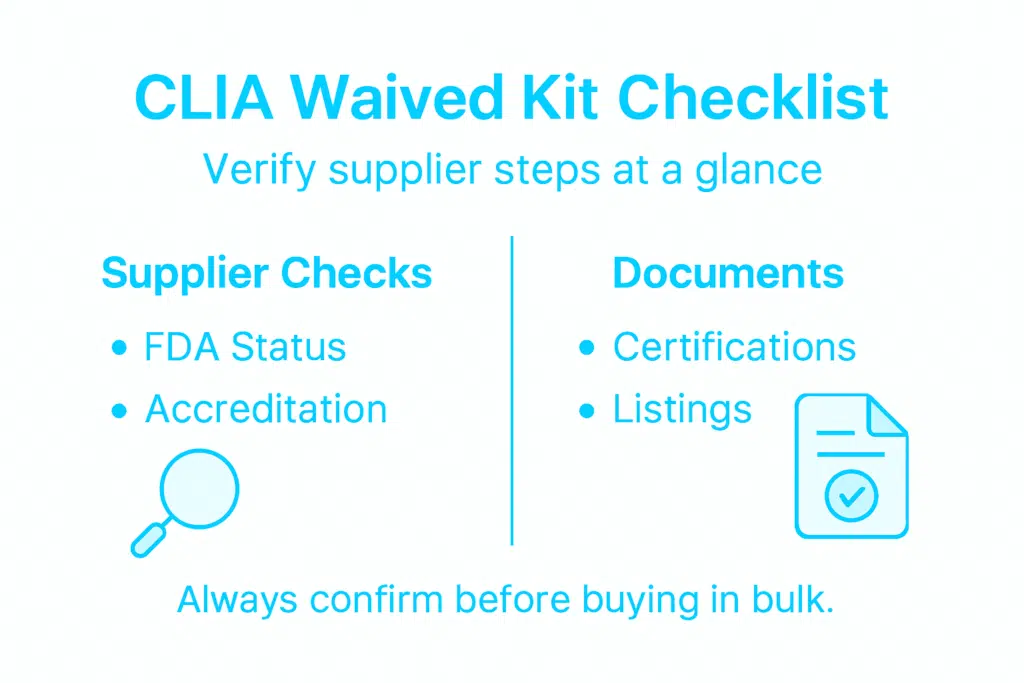
Ensuring the reliability and regulatory compliance of your medical testing supplies requires a meticulous approach to verifying supplier credentials and product authenticity. Your facility’s diagnostic accuracy depends on selecting vendors who meet stringent FDA and CLIA standards for waived testing products.
To effectively verify supplier accreditation, focus on these critical validation steps:
- Check FDA authorization for diagnostic tests
- Confirm manufacturer’s CLIA waiver status
- Review official product listings and compliance documentation
- Validate the manufacturer’s quality control processes
Comprehensive supplier verification involves examining multiple layers of regulatory documentation. Manufacturers seeking CLIA waiver must demonstrate that their tests meet specific criteria for simplicity and minimal error risk. This means looking beyond surface-level claims and diving deep into official records and certification documents.
Not all suppliers are created equal – thorough verification is your first line of defense against potential testing inaccuracies.
Pay special attention to manufacturers who provide transparent documentation about their testing protocols, quality assurance mechanisms, and regulatory compliance. Cross-reference their claims with official FDA and CMS resources to ensure complete alignment with current healthcare testing standards.
Pro tip: Maintain a detailed tracking system for supplier certifications, including renewal dates and version changes, to ensure continuous compliance with regulatory requirements.
Use this reference to compare supplier accreditation checkpoints:
| Verification Area | What to Check | Risk if Missed |
|---|---|---|
| FDA Authorization | Test platform listing | Use of non-approved kits |
| CLIA Waiver Status | Manufacturer’s documentation | Invalid testing procedures |
| Compliance Records | Official certifications | Failure in regulatory review |
| Quality Control | Proof of protocols | Higher probability of inaccurate results |
Step 3: Submit Bulk Purchasing Requests Online
Streamlining your bulk medical testing kit procurement requires a strategic approach to online purchasing that ensures regulatory compliance and operational efficiency. Navigating the digital procurement landscape demands attention to detail and understanding of the specific requirements for CLIA waived testing supplies.
To successfully submit your bulk purchasing requests online, follow these essential steps:
- Gather all necessary CLIA certification documentation
- Prepare your facility’s tax identification and procurement details
- Research FDA-authorized diagnostic test platforms
- Create accounts on authorized medical supply procurement websites
- Verify your organization’s eligibility for bulk purchasing
Online purchasing platforms for medical testing supplies often require detailed verification processes. You’ll need to demonstrate your facility’s credentials, including CLIA certification status and specific testing authorization levels. This means having digital copies of your licensing documents readily available during the online submission process.
Your online purchasing strategy is more than a transaction—it’s a critical component of your facility’s diagnostic infrastructure.
Carefully review each online platform’s specific requirements, payment terms, and shipping policies. Some medical supply platforms might require additional documentation or have specific protocols for bulk medical testing kit orders. Pay close attention to minimum order quantities, volume discounts, and delivery timelines that could impact your facility’s testing capabilities.

Pro tip: Maintain a digital folder with pre-scanned compliance documents to expedite online purchasing requests and reduce processing delays.
Step 4: Review Compliance Documentation and Certifications
Ensuring your facility’s ongoing regulatory compliance requires a systematic and thorough approach to reviewing and maintaining critical documentation. The process of verifying compliance documentation goes beyond simple paperwork—it’s a fundamental safeguard for maintaining the integrity of your medical testing operations.
Key documentation you’ll need to review and organize includes:
- CLIA Certificate of Waiver
- Staff training and competency records
- Quality control documentation
- Manufacturer’s test system instructions
- FDA compliance certification details
Careful examination of these documents involves more than a cursory glance. You’ll want to verify each document’s current status, ensuring all certifications are up to date and align with the latest regulatory requirements. Pay special attention to expiration dates, staff training records, and any recent updates to testing protocols or manufacturer guidelines.
Compliance documentation is not just administrative overhead—it’s your facility’s defensive shield against potential regulatory challenges.
Establish a systematic review process that includes regular audits of your documentation. This means creating a comprehensive tracking system that flags upcoming expiration dates, monitors staff certification timelines, and ensures all required documentation remains current and readily accessible during potential inspections.
Pro tip: Create a digital compliance dashboard that automatically tracks document expiration dates and sends proactive renewal reminders to prevent any potential regulatory gaps.
Step 5: Confirm Product Delivery and Quality Assurance
Successfully receiving and validating your medical testing supplies involves a comprehensive approach to product delivery verification and rigorous quality assurance protocols. Your facility’s diagnostic accuracy depends on meticulously confirming each aspect of the received testing materials.
Critical steps for confirming product delivery and quality include:
- Inspect shipping packaging for any signs of damage
- Verify product quantities against original purchase order
- Check test kit compliance and regulatory standards
- Confirm product expiration dates
- Document all received inventory immediately
Each shipment requires careful examination beyond simple visual inspection. You’ll want to cross-reference received items with your original order, verifying not just quantities but also specific lot numbers, manufacturing dates, and storage requirements. Temperature-sensitive testing kits demand extra attention to ensure they haven’t been compromised during shipping.
Quality assurance isn’t a single moment—it’s an ongoing commitment to maintaining the highest standards of diagnostic integrity.
Establish a standardized receiving protocol that includes detailed documentation of each incoming shipment. This means creating a robust tracking system that logs receipt details, performs immediate quality checks, and flags any potential issues before they can impact your testing capabilities.
Pro tip: Develop a digital tracking system that automatically logs product receipt details and sends immediate alerts for any discrepancies or potential quality concerns.
Here’s a summary of how each step impacts facility operations:
| Step | Main Objective | Operational Impact | Compliance Importance |
|---|---|---|---|
| Assess Testing Needs | Identify facility requirements | Improves diagnostic accuracy | Ensures proper test selection |
| Verify Suppliers | Validate product legitimacy | Reduces supply risk | Maintains regulatory standards |
| Bulk Purchasing | Streamline procurement | Enhances cost efficiency | Ensures eligible facility purchases |
| Review Documentation | Confirm regulatory compliance | Prevents regulatory gaps | Protects facility against audits |
| Delivery & QA | Validate received products | Ensures testing reliability | Maintains ongoing compliance |
Simplify Your CLIA Waived Bulk Medical Testing Supply Needs with Slash Medical
Navigating the complexities of CLIA waived testing requires trusted suppliers who understand your facility’s unique challenges. From verifying supplier accreditation to ensuring seamless bulk purchasing and quality assurance, the process demands precision and reliability. If you need FDA-approved and CLIA waived testing kits that meet strict regulatory standards and come with the convenience of bulk ordering, Slash Medical offers solutions tailored to your operational needs. With over 400 SKUs including drug test kits, COVID-19 tests, and more, we provide transparency, competitive pricing, and nationwide shipping.
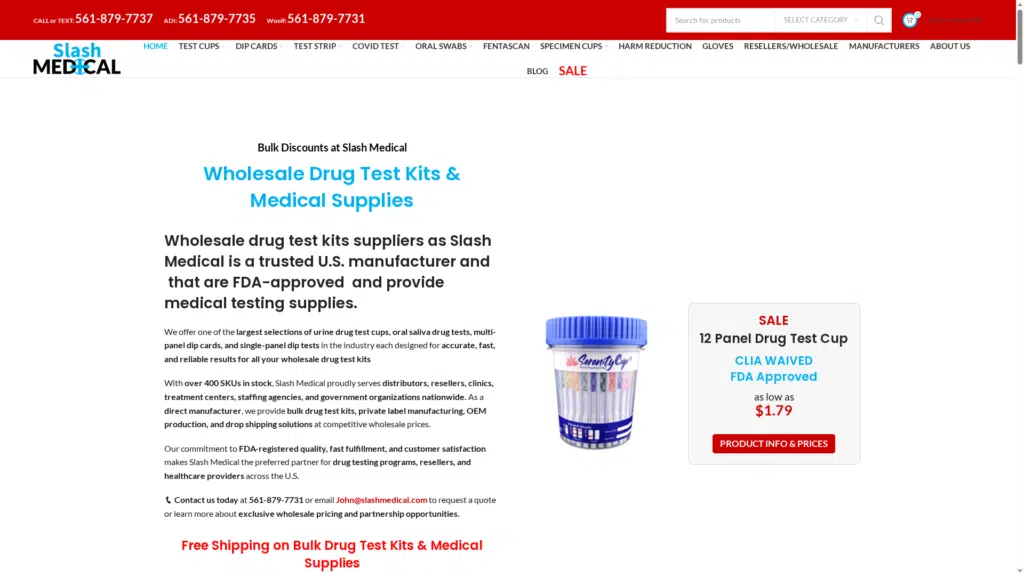
Take control of your diagnostic supply chain today by exploring our full product catalog. Whether you require private labeling, OEM services, or just want to streamline your bulk orders, Slash Medical is your partner for compliant and cost-effective testing supplies. Visit Slash Medical now to secure your next CLIA waived testing kit order and ensure uninterrupted, accurate testing at your facility.
Frequently Asked Questions
How can I assess my facility’s CLIA waived testing needs?
To assess your facility’s CLIA waived testing needs, start by reviewing current testing volume and patient demographics. Analyze common health screening requirements and resource availability to inform your testing strategy.
What steps should I take to verify the accreditation of suppliers for CLIA waived kits?
Check for FDA authorization and confirm the manufacturer’s CLIA waiver status. Review official product listings and compliance documentation to ensure that the suppliers meet the necessary regulatory standards.
How do I efficiently submit online requests for bulk CLIA waived testing kits?
Prepare all necessary documentation, including your CLIA certification and procurement details, before submitting requests. Create accounts on authorized medical supply websites, as this will streamline your purchasing process and reduce waiting time.
What compliance documentation do I need to maintain for CLIA waived testing?
Maintain a CLIA Certificate of Waiver, staff training records, and quality control documentation. Regularly review these documents for accuracy and ensure they are current to avoid any compliance issues.
How can I confirm the delivery and quality of received CLIA waived testing supplies?
Inspect the shipping packaging for damage and verify the product quantities against your original purchase order. Document all received inventory immediately to track compliance and ensure accuracy in your testing operations.